December 16, 2016

Today I head off to Quebec City. So after breakfast I packed my suitcases and caught a taxi to the Montreal Central Station. I had a coffee and read the newspaper until my train was called.

I boarded and loaded my suitcases and camera backpack in the shelves at the end of the carriage, and then sat down for the 4 hour trip. Mostly on the journey I listened to my “Your Deceptive Mind” course from The Greater Courses collection. I have about 25 of their courses on DVD or mp3 and am slowly working my way through them. This particular course is very interesting, and the lessons I listened to were mainly on pseudoscience, grand conspiracy theories, and denialism – rejecting science.

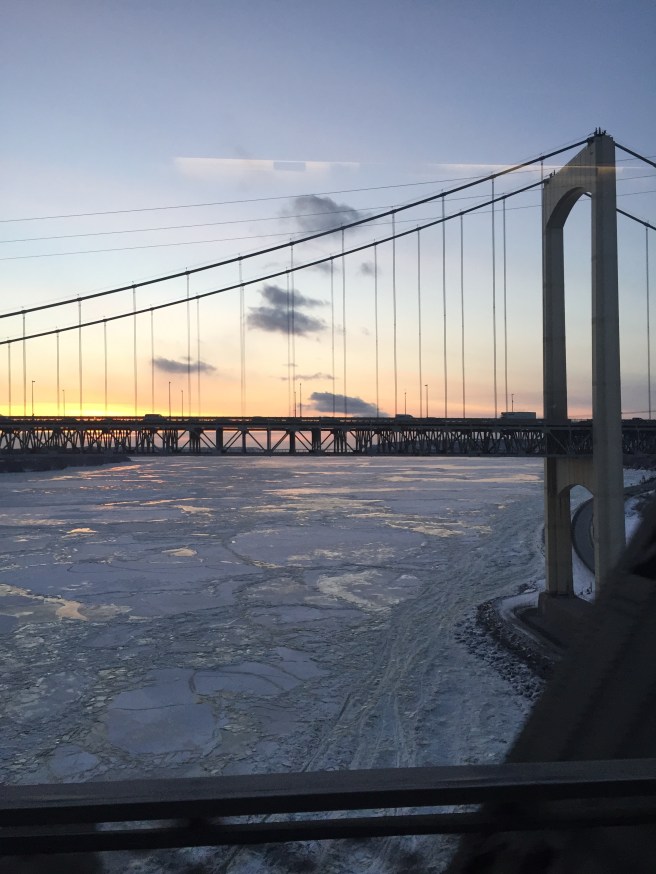
I took a few pictures out of the train window with my iPhone during the trip. One is of some houses beside the railway, another is of the mighty (iced-up) Saint Lawrence River alongside which Quebec City is nestled.

img_4847

img_4883

We arrived in Quebec City on time (1615 hours) and so I lined up with the masses in the cold to await my taxi. It came after about 20 minutes and so I caught it to my accommodation – Auberge Internationale de Quebec (the International Inn or Hostel).

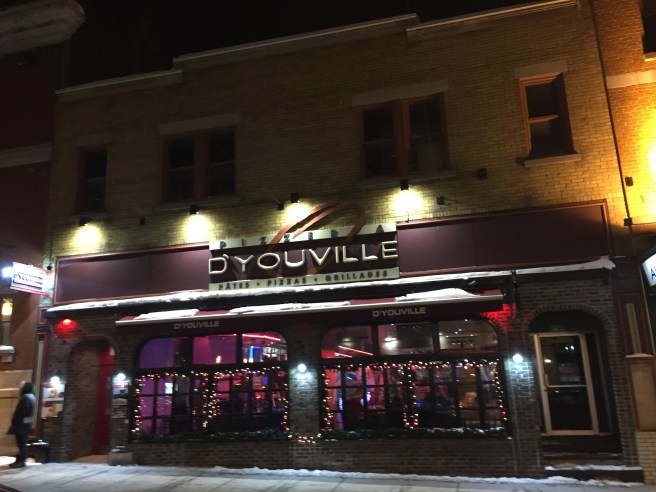
After unloading, I headed down the hill (literally) to have some dinner. By this time it was 5.30pm. I chose an Italian Restaurant.

img_4910

I had an entrée of Camembert croutons with honey and walnuts, followed up with a spaghetti and meatballs with vegetables (sliced capsicum and red onions), all washed down with a 2015 Chianti rouge. I only remember Chianti from my younger days being quite bitter, but this one was delicious.

I then headed back up the hill and went to bed.


December 15, 2016

Today is my last full day in Montreal, and my trip was to Parc Olympique (buildings mainly built in early 1970s to host the 1976 Summer Olympic Games). The buildings include:

  • the Olympic Stadium (which after the Olympics became the home for various sporting teams, including Major League Baseball, Canadian Hockey, North American Soccer League, and now the Major League Soccer as home of the Montreal Impact;
  • the Biodome (built as the velodrome for the 1976 Games);
  • the Rio Tinto Alcan Planetarium (opened in 2013 – built to replace the Montreal Planetarium which closed in 2011.

Across the road are the Botanic Gardens, so that was also part of my plans.

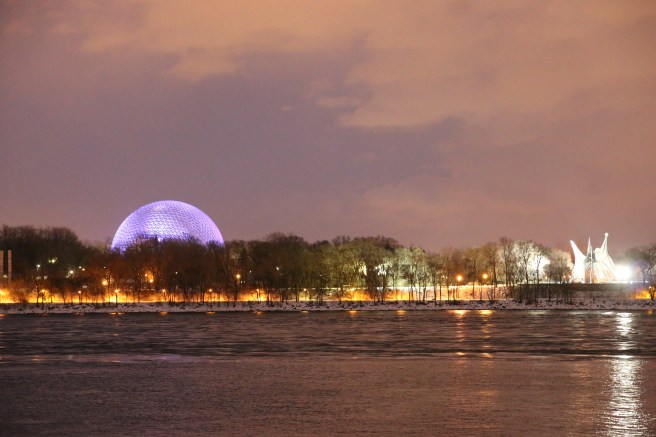
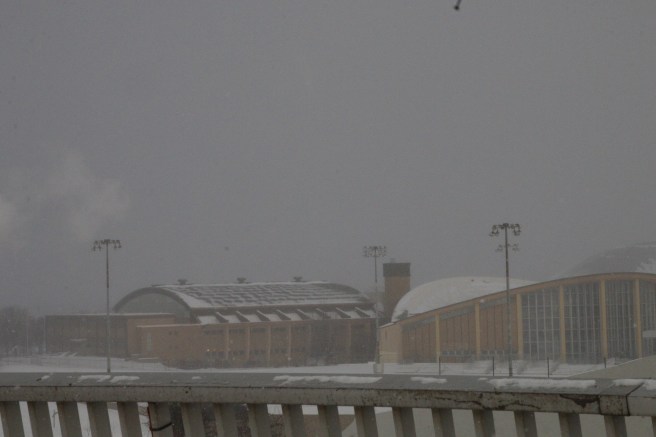
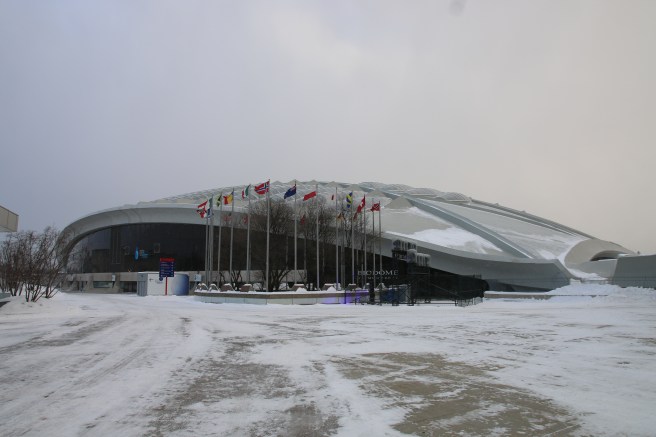
I caught the train out to the Parc Olympique, and decided to head for the Botanical Gardens first, as they were furthest away, plus they and the Biodome closed at 5pm and I wanted to see through them both prior to that time. The photo here is partially the Olympic stadium with the Biodome in the background.

img_6394

Visiting a botanical garden in winter, when there is a lot of snow, may sound like a silly idea, since there’d be no flowers, or water ponds / fish, etc. – everything would be (and was) covered in a good 30+ centimetres of snow. But they did have both an Insectarium and a Greenhouse open, and I wanted to see those.

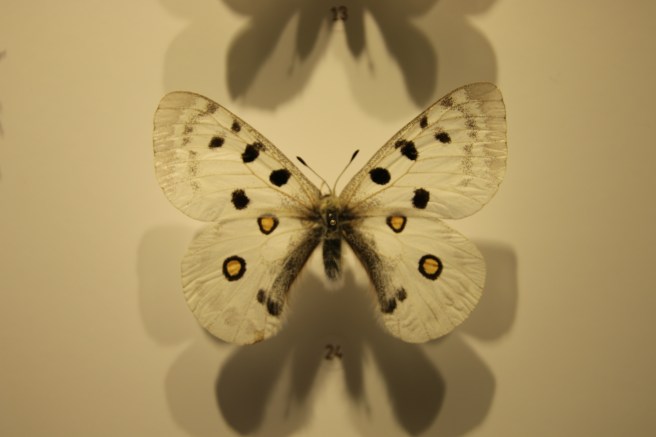
I got into the Insectarium and went over to the bugs and butterfly section. As usual these are made up of display cases filled with insects pinned to the back board. I always like to see the butterflies and moths given their delicate nature, multiple colours and designs. I especially like the ones with what look like eyes on their wings. The displays were split between insects from tropical, temperate, and other zones as well as those that are generally out during the day separate from those out at night. I did enjoy browsing through the different zones and the glass cases with live insects of different sizes (including spiders and ant colonies).

img_6435

img_6444

img_6454

I then headed over to the greenhouses. Like most of these that I have seen, it started with a tropical rainforest (which reminded me of the forest areas north of Cairns in Queensland), and then moved into different zones. Given the greenhouse was around 500 metres from the insectarium, my camera showed its displeasure of moving from very cold to the warmish temperatures and humidity you get with tropical gardens, by deciding to constantly fog up and therefore be of no use in this area. So I took it out of the bag and just let it slowly settle to the appropriate temperature – and used my iPhone to take some photos.

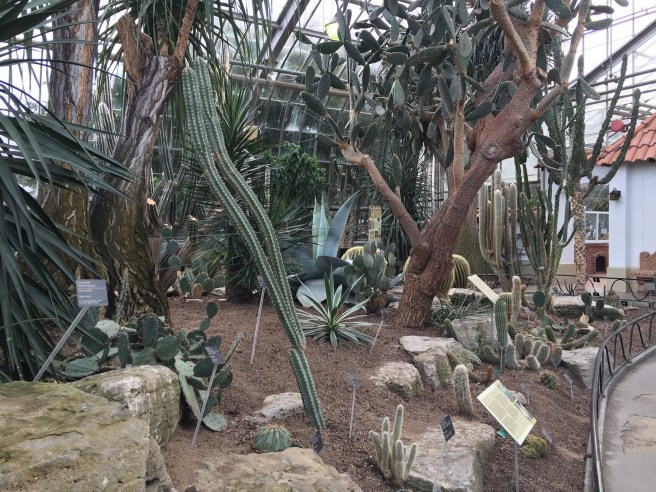
One of my favourite sections was in the arid zone, where there were a significant number of succulent species. I had not realised that the trade in these items had gotten so large that it has made it onto the Convention on International Trade in Endangered Species of Wild Flora and Fauna. I have been wanting to start a succulents as well as a native wildflower section in my garden next year, so I’ll be more wary of where the plants come from.

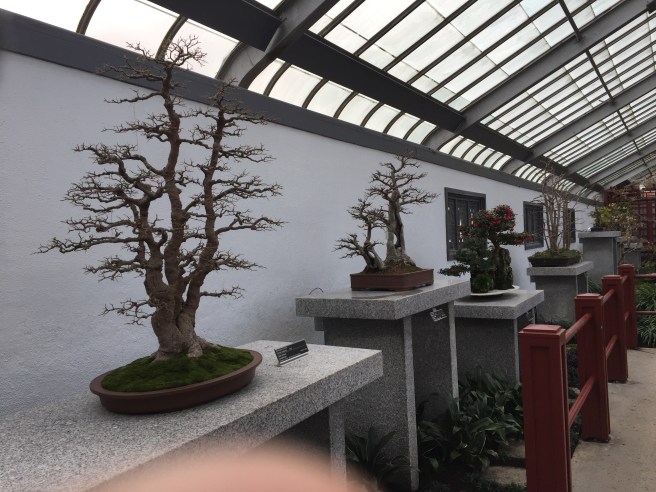
After this section I went into a zone that included bonsais and a Japanese and a Chinese garden. I was surprised to read that bonsai actually came from China (as penjing) and were introduced into Japan around 1000 years ago. The Chinese version apparently can have more than just one plant, sometimes a mini-garden, and sometimes miniature furniture. The Chinese penjing plants are also allowed to grow a little wilder than the bonsai, apparently. So I sat down for around 15 minutes to contemplate nature.
img_4714

img_4719-copy

After I left the greenhouses, I headed back to the Olympic stadium. It was about 300 metres away but took a little over half an hour as a severe snowstorm with strong winds decided that that was the perfect time to come down. Luckily after about 5 minutes I came across an enclosed bus-stop to rest in.
_mg_6507

Once I got back to the site, I entered the Biodome.
img_6517

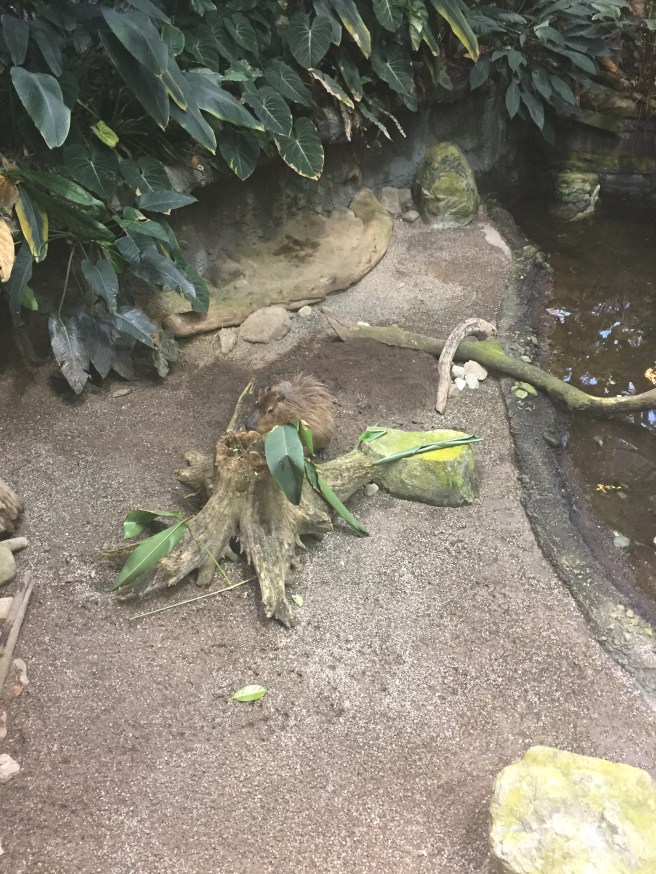
The Biodome has four sections with the aim to recreate the ecosystems from the Americas: tropical rainforest, maple forest, Gulf of Saint Lawrence, Laborador coast, and Sub-Antarctic islands. It houses over 4500 animals from over 250 species, and includes 500 plant species. It was a very interesting tour, starting with the tropical rainforest (again) but this time with a range of animals including beavers and capybaras (a large rodent – hiding behind the tree trunk below) – again my camera decided to fog up so I took iPhone photos here too.
img_4731

This section of the biodome (the Gulf of Saint Lawrence) had a range of animals, plants and aquariums in it to show a broad range of what it is like. I then headed into the aquarium section, which had a massive curved tank, I would estimate around 10 metres wide and 12-15 metres deep (front to back), and around 3 metres from the floor to the top of the tank. It had a wide range of fish of all different sizes (it wasn’t the only tank in the biodome), with a rocky section in the middle. There was a school of fish that swam around the aquarium, and so I took as video of them that I am thinking of putting to music. They took around 1 minute and 20 seconds to get from one side of the tank to the other.

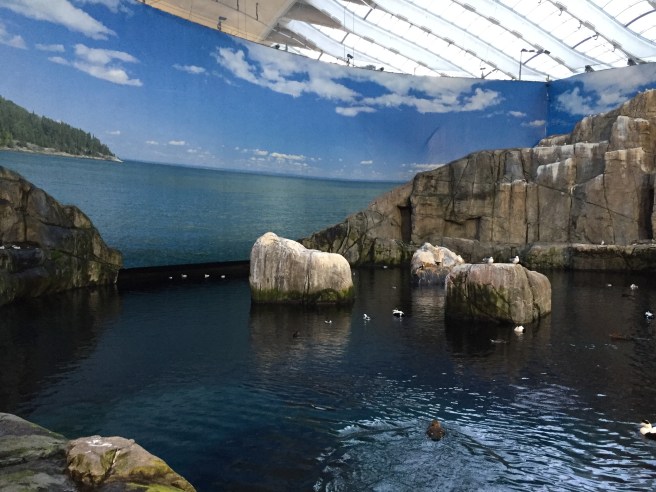
The next section was set up with an “ocean” and rock mounds in the water, with a large mural of the ocean, sand and some hills as a background, with many seagulls and other birds inside. This one you would walk through, and some of the birds flew onto the wooden planking as I walked across. I reminded me of the beach (and I guess it was the area that represented the Sub-Antarctic islands). There was also some seating in this area, but no touch screens like in the previous sections to learn more about the plants and animals.
img_4792

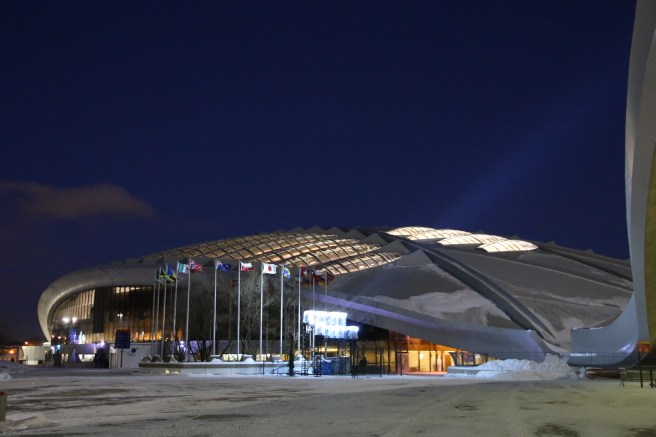
All in all, a very interesting experience and well worth a visit. When I exited the biodome, it was 4.30pm, and my first Planetarium exhibit was not starting until 5.30pm, so I had something to eat at the biodome café and then headed outside to take photos of the buildings with the sun down. I made the major mistake of deciding to leave my gloves off for this period, so I could take photos without having to take my gloves off and on and off and on, etc. . The air was extremely cold, and by the time I had finished taking photos, I couldn’t move my fingers, they were like ice. I raced into the Planetarium with visions of having to amputate some fingers off both hands, and it took 15 minutes of rubbing and massaging them inside before they would work again. I can now partially imagine how bad it is for those people who freeze to death on Mount Everest and other spots in the cold.
img_6551

img_6559

Whilst waiting for the first Planetarium exhibit (it would be a film) I wandered around the lobby and looked at the various bits of asteroids, mars rocks, etc. that they had in cases. There were some interesting stories of the finding of some of these fossils and bits of rock, as well as a replica of a piece that was around 275 million years old. Next I sat down at a screen with a lever and a button, and drove the Mars Rover vehicle around on the screen (with visuals of being in a crater on Mars) looking for water. It was quite fun, and I can imagine in a decade or so as Virtual Reality makes these games more real.

I then headed into the first of the theatres to watch a 25 minute film titled “Asteroid: Mission Extreme”, narrated by Sigourney Weaver. The theatre had a semi-spherical roof, with one row of seats on the rim and a bunch of bean bags in the middle. I chose to lay on a bean bag and look up at the screen. The premise of the film was that asteroids as well as posing a threat to humankind, also create an opportunity. With specialists having decided that humans cannot take a trip to Mars and return, due to the inability to take along the amount of fuel required for the return trip – could asteroids be used as supply points for future space missions? They could include some bits of infrastructure and either be cut through or blown through to access water, and convert it into hydrogen, or they could be like a mini-space station storage facility which could then be used to access the fuel – obviously needing the asteroids to be going in the right direction and travelling past at the right time to access the fuel. It is believed this may be necessary for us to colonise new worlds.

After that finished, I headed out to the café for small carton of milk to drink and then awaited the next exhibit. It was in another theatre, which also had a semi-spherical room, but with seats in about 5 circles, on an angle to look up at the screen. This exhibition was narrated by a gentleman in the middle of the room next to a large spherical object. It turns out that this was a large projector, and was used to project the Montreal night sky onto the roof / screen. It looked so clear, much better than you’d get looking outside even on a clear night. Two other projectors then overlaid other information, including the constellations, the milky way and various planets, and showing the different ways to find where you are and to find the planets at night. It was extremely interesting, however I’m still happy to use maps and GPS to find my way around. But I may look at taking some photos of the sky in the Pilbara when camping just to see how they go.

After this, I headed back to the hotel and went to bed.


December 14, 2016

Today was a rest day. So I used the morning to catch up on my blogs. I’ve found that whilst I can write in the evening, the photos will not upload into WordPress then – maybe due to me using the hotel wireless which is more likely to be used by many others at the same time. So now I do that in the mornings.

The only plan I had for today was (a) go back to Au Summet Place Ville Marie to take photos if the sky was clear (it was when I got up but was overcast and snowing by the time I got out of my shower),

_mg_6146-copy

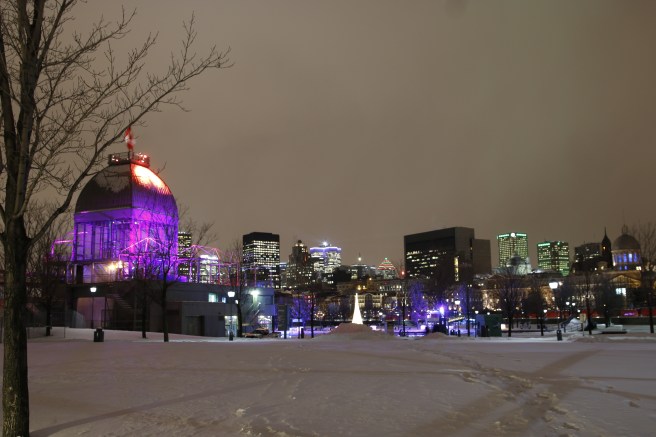
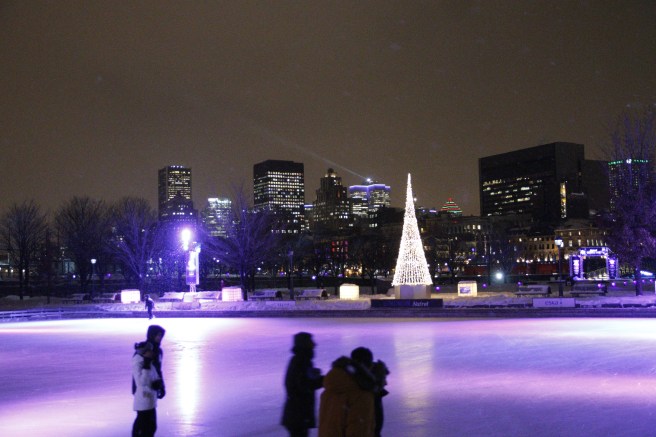
and (b) take a walk down to the Old Port in the afternoon with the intention of being near the ice rink as the sun goes down for some photos.

So at lunchtime I headed down to the Old Port. There are lots of the old buildings from the 1800s and it looks great. In the right light, the photos come out well to but by this time the clouds were very grey. I did get some nice shots of partial buildings which again I’ll have a play with stitching together when I make some time to do so.

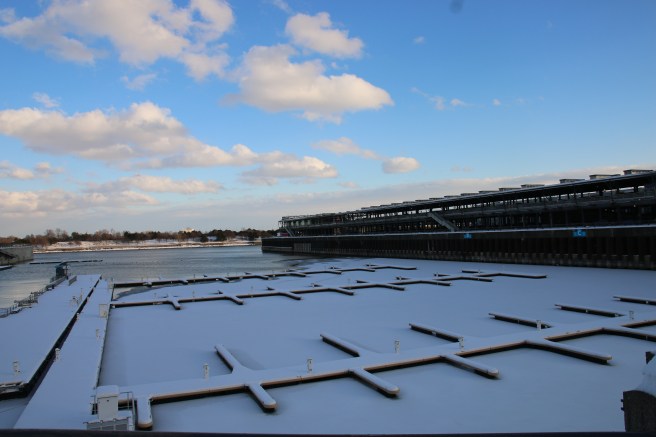
When I reached the Old Port, I headed over to the “fun” area. On the way, I took a photo of the berths that had all frozen up.

img_6189

Then I reach the fun placed. They have lots of great things to do when the weather is fine, including a flying fox (zipline), jet boats, various other water craft, large shore-bound sail boats to play on, and smaller ones to hire, ferries, ice skating rink etc. Herewith one of the sail ships that you can play on. There was also a large black pirate ship, but I could not get to that.

img_6196

And here is the ice rink when I arrived.The wires at the top right of the frame are for the zpline.

img_6272

I then went and had a hot chocolate whilst waiting for the sun to go down. Then I wandered around and took a few photos.

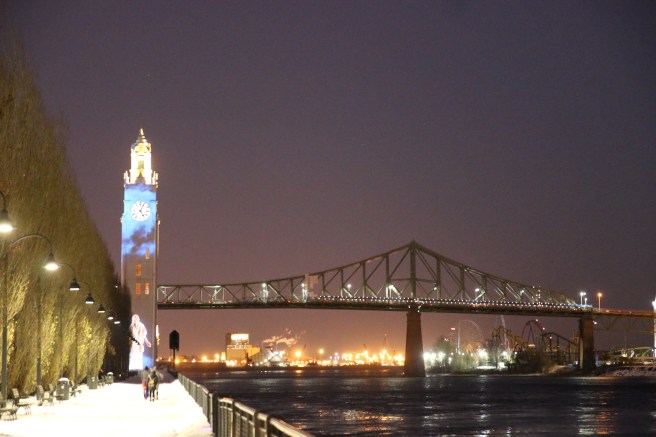
This first photo is of the Point Jacques-Cartier Bridge – with a projection on the tower (there were short films of images moving, rather than pictures just rotating through), so I stayed to watch some of those.

img_6296

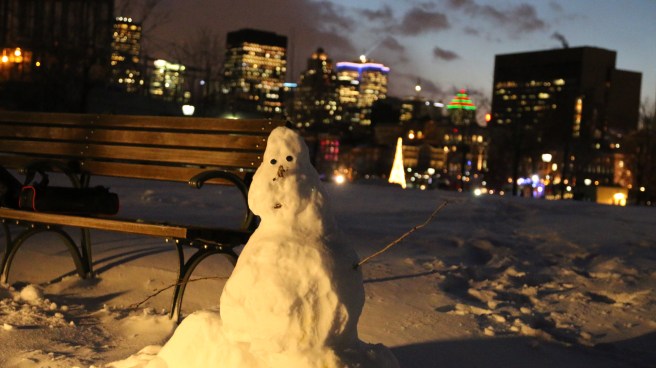
Somebody had made a snowman (not me, my hands were too cold).

img_6287

The Biosphere, musee de l’environnement. Unfortunately this was closed during my visit.

img_6299

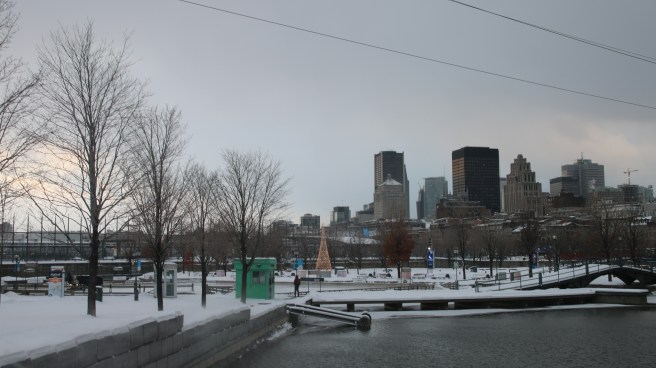
And a couple of photos of a part of the city through and including the ice rink. In the second photo you may just be able to see some of the snowflakes come down as another snow shower had just commenced.

_mg_6328

_mg_6353

After this I headed home. On the way, I popped into an Italian restaurant close to the hotel for dinner. I started off with my first taste of one of the great Canadian foods – mac and cheese (truffle infused of course). I had it with a side salad.

img_4670

I then had a main course of mushroom risotto, finishing with a chocolate parfait and an Irish Cream coffee. The perfect end to a lazy day.

December 13, 2016

The sky was blue when I got up today, so I decided to head up to Parc Mont Royal (Mount Royal Park). I knew that there was predicted snowfall late this afternoon so I wanted to get up the hill before midday. It’s only a few kilometres from my hotel, and apart from the ice and snow turning into sludge on the footpaths, it would be a nice walk.

It looked like more snow had fallen overnight. The snow moving machines were still out this morning.

13dec01

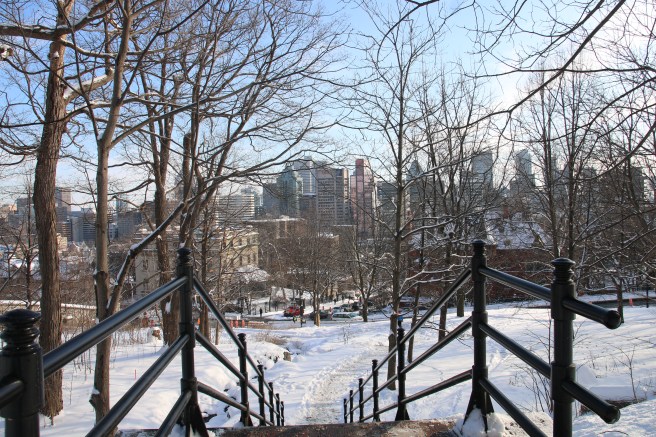
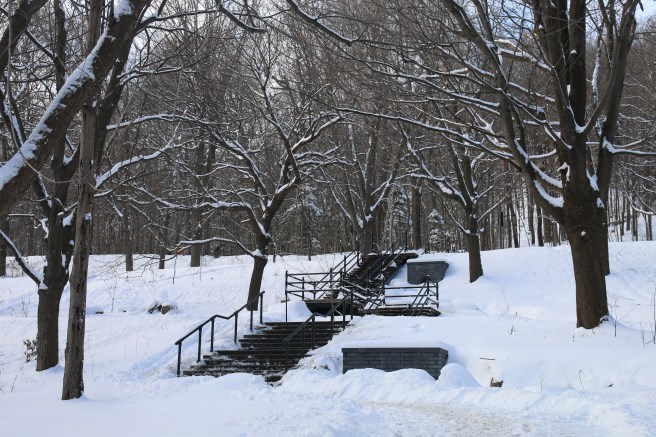
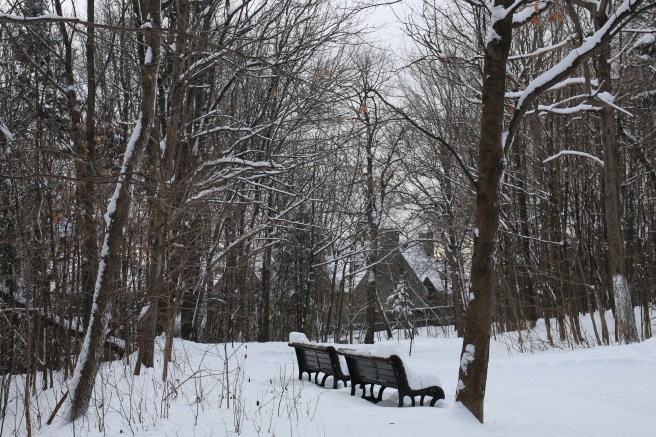
I took some photos as I ascended the tracks to the top of the Park. It was heavier going than I thought. There were nice easy pathways around the mount with very low gradients, but I wanted to get to the Chalet du Mont-Royal to get some good photos with a bright blue sky. Thus I took some of the steeper trails. At the bottom of the mount, the sky was about 80% blue, and 20% cloud. By the time I got to the Chalet, it was 100% cloud. Bummer.

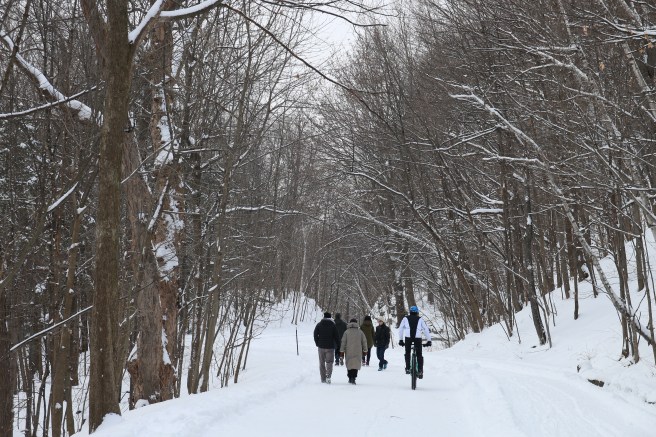
But the reality is that I got so much enjoyment from the journey, that was what counted. So many couples, groups of friends wandering along the pathways, some skiers too. And on the way back, more skiers and a cyclist. They have bicycles with fat wheels that ride really well on the snow. Unfortunately the cycle hire shops are usually closed in December so I have not been able to hire one myself.

Some photos from the journey upwards.


13dec02

13dec03

13dec04

13dec05

13dec06

In the second last photo (also in the last but not as easy to see), is the separation of the track for skiers (to the right) from those on foot or bicycle.

Some photos from the front of the Chalet.


13dec09

13dec07

13dec08

The first of the above photos shows a plaque to Jacques Cartier (1494-1557). He was a French explorer who is known as being the one who claimed Canada (Iroquois word “kanata” meaning village) for the French.

I had unfortunately not layered my clothing properly this morning. My outside top was inside against my skin, with my inside top being outside. The role of the inside top is to keep the moisture inside so my outer top would be dry. Instead, after an hour at the summit, I was soaking wet and this was giving me chills, so instead of wandering over to the iced up pond on the top of Mont Royal, I headed into the chalet for a coffee and biscuit and then headed back down to my hotel to change.

I swapped gear for a new set of thermals and different jacket, and then headed off to the Underground City. Not having been there before, it took me a little while to work out how to get into the underground city. In the end, I just took the stairs of a hotel down to their basement and looked around for some direction signs. I was then able to follow a group of other people until I got my bearings (I had a map of the underground city on my phone to follow).

All of the large buildings in the city area have underground shops, linked together by tunnels, mostly filled with more shops (including some multistorey shopping centres) and the underground railway, but some being literal tunnels. These are linked together so that you can get around half of the city underground without having to walk along the streets with the snow, cold, wet etc.

I walked about 4 kilometres through the various shops and tunnels and train stations.  I don’t know how busy it is in spring and summer, but it was certainly extremely busy when I went for my walk.

13dec10

13dec11

13dec12

13dec13

I ended up at the Eaton Centre which is a 5 storey shopping complex with a food hall taking up most of the lower floor, and a max museum at the very top. I wandered around for about half an hour and then bought a newspaper and headed off to the food hall for dinner. I ended up at a Japanese stall and bought a beef noodle and vegetables plate.

The one thing I notice about the pricing here is that, even though Canada has a 15% VAT like our GST, unlike in Australia they don’t add it into any pricing that is advertised. You have to remember to add it yourself or they will ask you for it, and sometimes it takes a couple of seconds to remember why they are asking for more money that they advertise the good or service for.

The main items in the newspaper were Liberal fundraising, University hazing and initiation rituals and how bad they are, what voting system they want, and agreeing on the terms under which Canada is going to legalise marijuana. So nothing really different from Australia. The university initiation has been banned for a period of time due to one of the events being quite out there. But they don’t seem to want to ban them forever, instead only when the media gets hold of a story. So next year, it’ll all be on again in all likelihood.

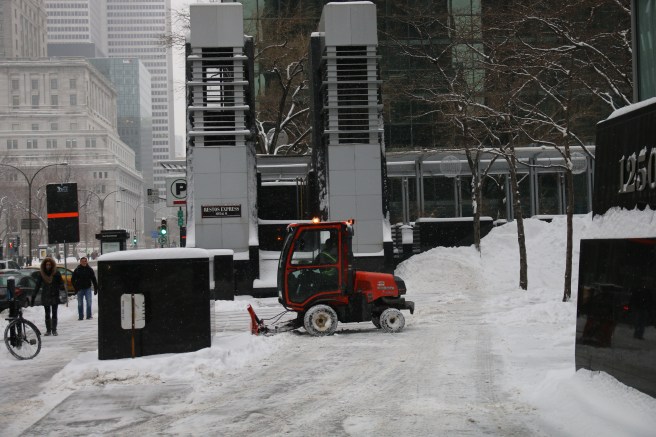
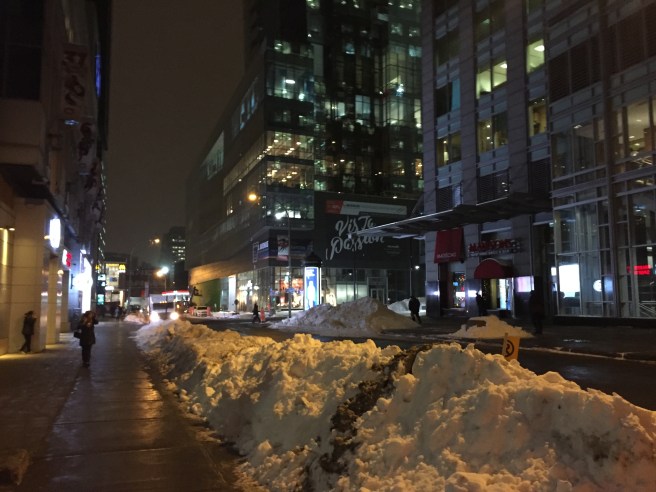
I then wandered back to the hotel. On the way I took a few shots of Christmas decorations, and a pile of snow (scraped up by the machines into piles along the side of the road – presumably waiting for it to melt and flow into the drainage), outside the Bell Centre (home of the Montreal Canadiens hockey team). The rotating beacon that throws the light at the top of the first photo sits on the top of the Place Ville Marie, where the Observation Deck is also situated.

13dec14

13dec15

13dec16


December 12, 2016

When I woke up this morning, it was snowing! And obviously had been when I looked outside the hotel and saw a large amount of snow on the streets, and some equipment driving along the pathways and the road moving the snow into piles by the side of the road.

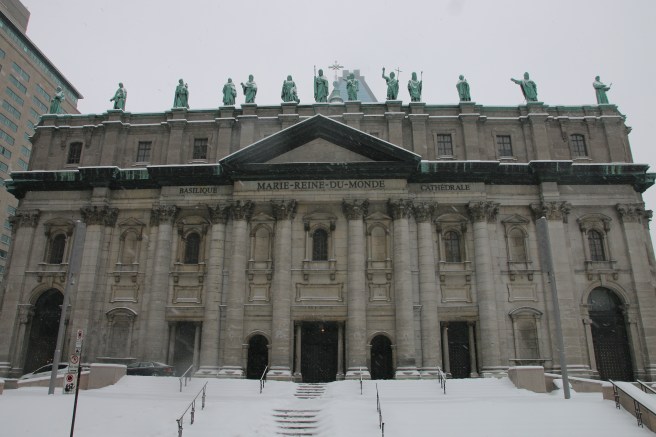
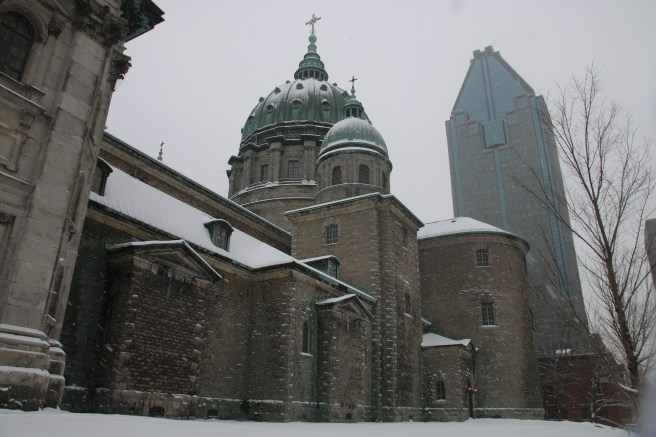
The sky was covered in clouds, so I decided to take the opportunity to go out and take a few photos of some cathedrals no more than 6 blocks from my hotel. I had a plastic camera cover so I decided to take one camera, with a single lens, and my tripod.

The closest was Cathedrale Marie-Reine du Monde (Mary, Queen of the World Cathedral). Here are a couple of photos. Even though it looks like an old concrete building, in reality it has a spectacular presence.

img_5816


img_5822

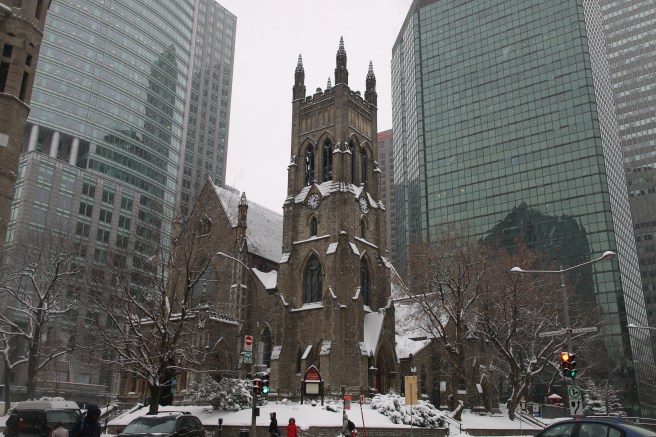
I then headed downhill to the Eglise anglicane Sainte-Georges (Saint George’s Anglican Church).

img_5859

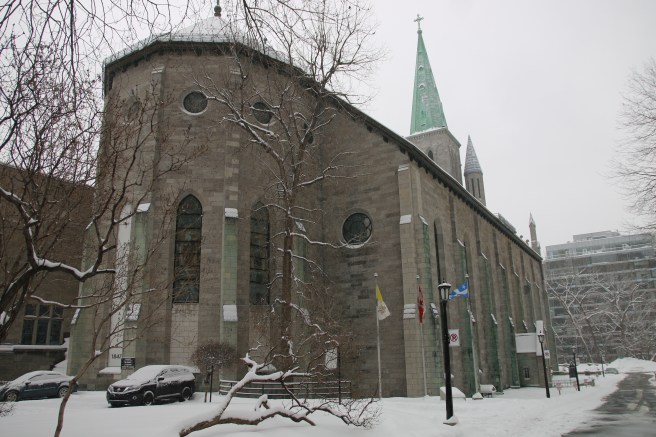
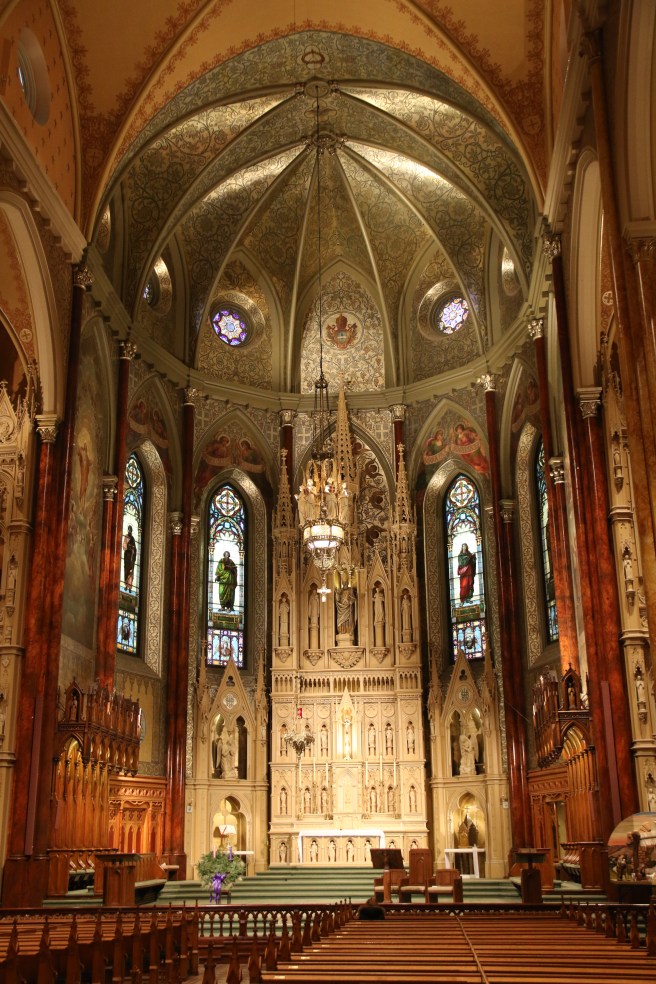
I then moved on to Basilique Saint Patrick (Saint Patrick’ Basilica). This is a very well known Basilica in Montreal. And as I was pretty well covered in snow, after some outside photos I headed inside, removed the outer gear, then took some inside photos after which I sat down in the pews for 20 minutes of quiet contemplation.

img_5873

img_5889

img_5899

img_5896

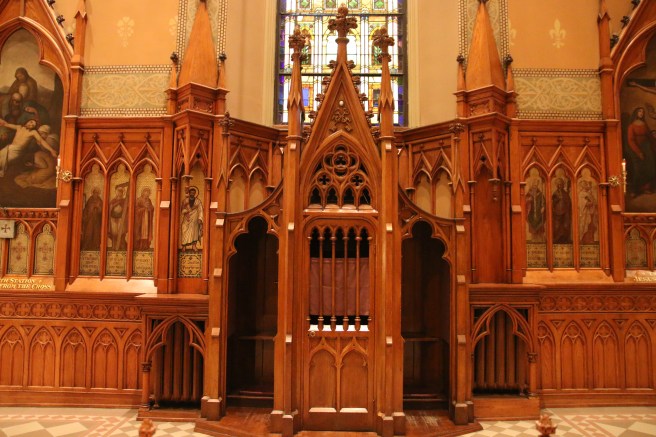
The last of these photos is of a confessional. The Basilica has 6 of them. The woodwork was just magnificent.

Whilst each of these old churches / cathedrals are now physically dwarfed by modern buildings around them, they all stand out due to their architecture and overall magnificence compared to the glass and steel they are surrounded by. And to see them in snow and whilst snowing was just such a pleasure.

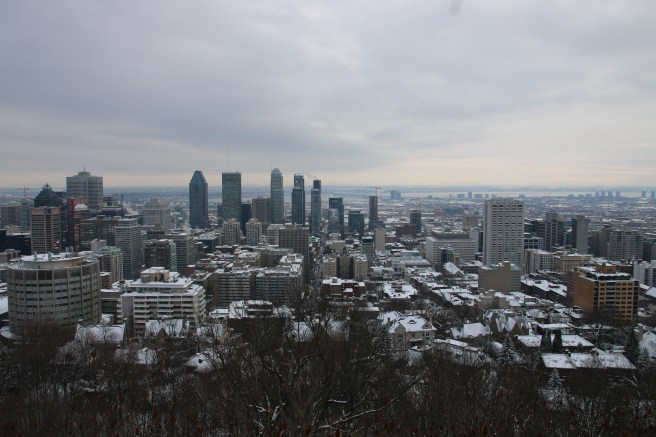
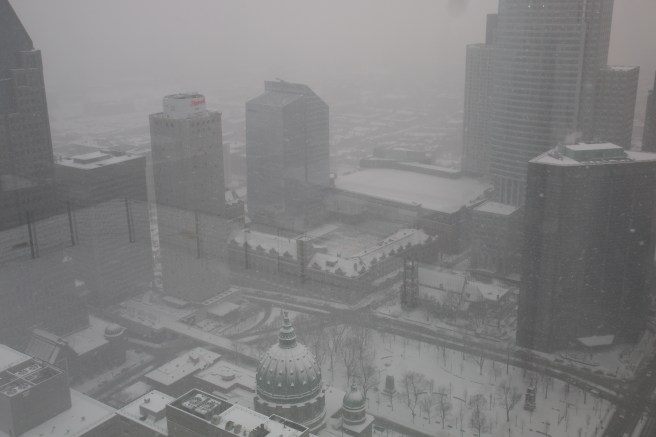
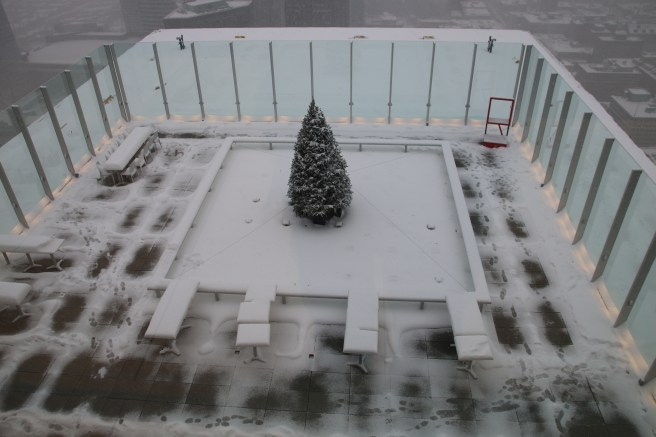
I decided after this to head over to the Summet Place Ville Marie (Observation Deck at Ville Marie Place). Normally this Observation Deck would provide amazing views. However, with the snow coming down, the visibility was down to around 40%. But the snow is due to fall for at least the next couple of days and I couldn’t see everything I wanted to see without going out during the snowfall. So I headed up there and below are a couple of photos. The visibility was definitely relatively short, and very grey visuals. But there was only a couple there, so I had space to sit down and watch the snowflakes as they floated past the windows.

img_5907

img_5935

img_5924

Again, the outside looks a dull grey – which it was for me too. But I think this tells its own story. The snow has caused a significant amount of chaos in Montreal – fire trucks being used at accident sites, police officers directing traffic, tow trucks transporting vehicles for repair etc., so this is a snapshot of what it is really like in Montreal at this time.

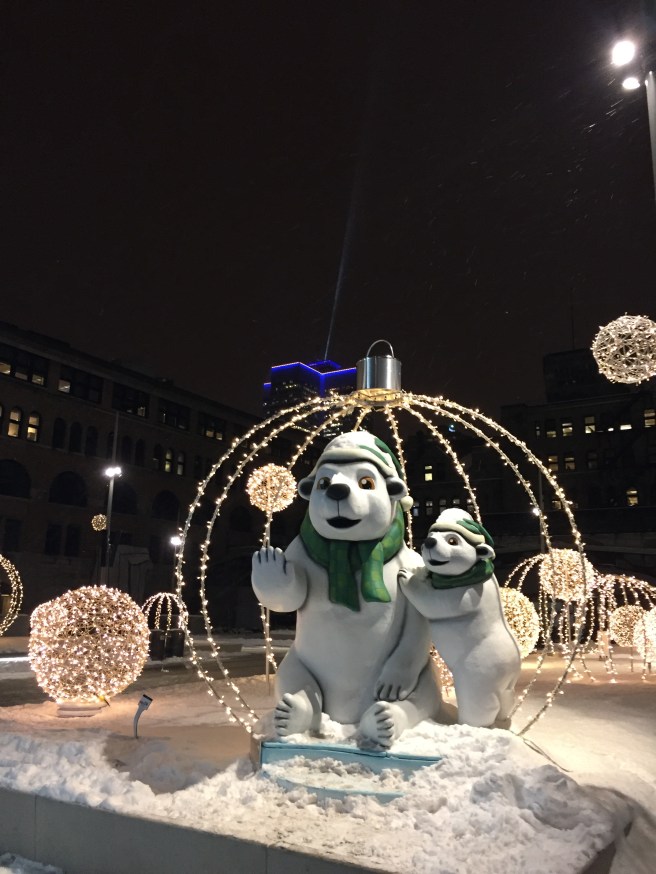
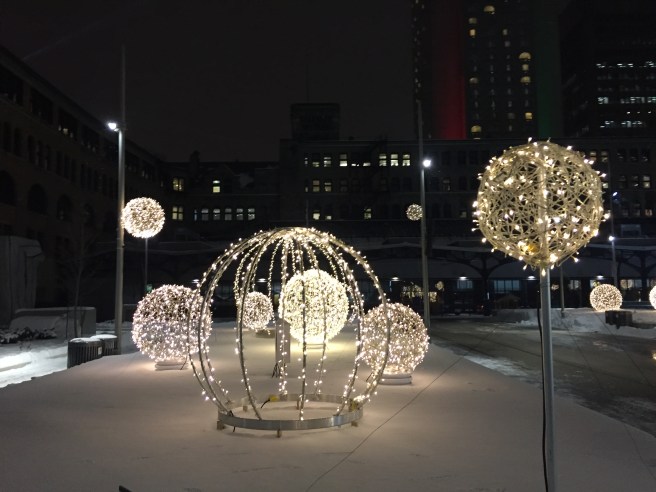
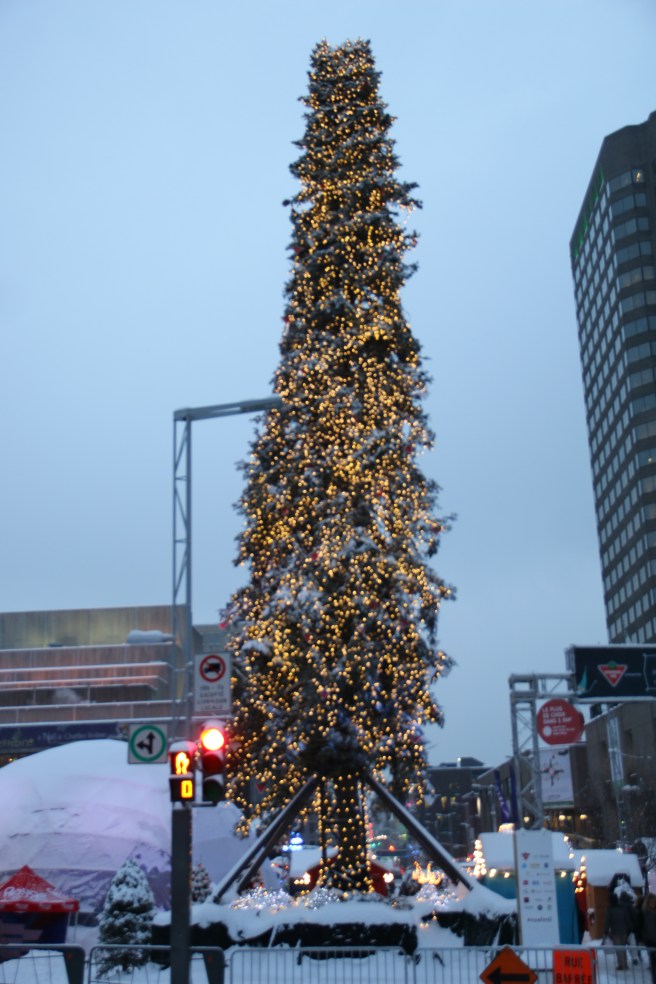
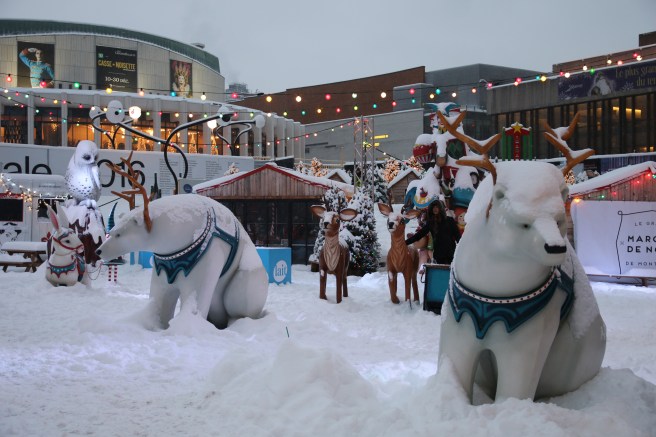
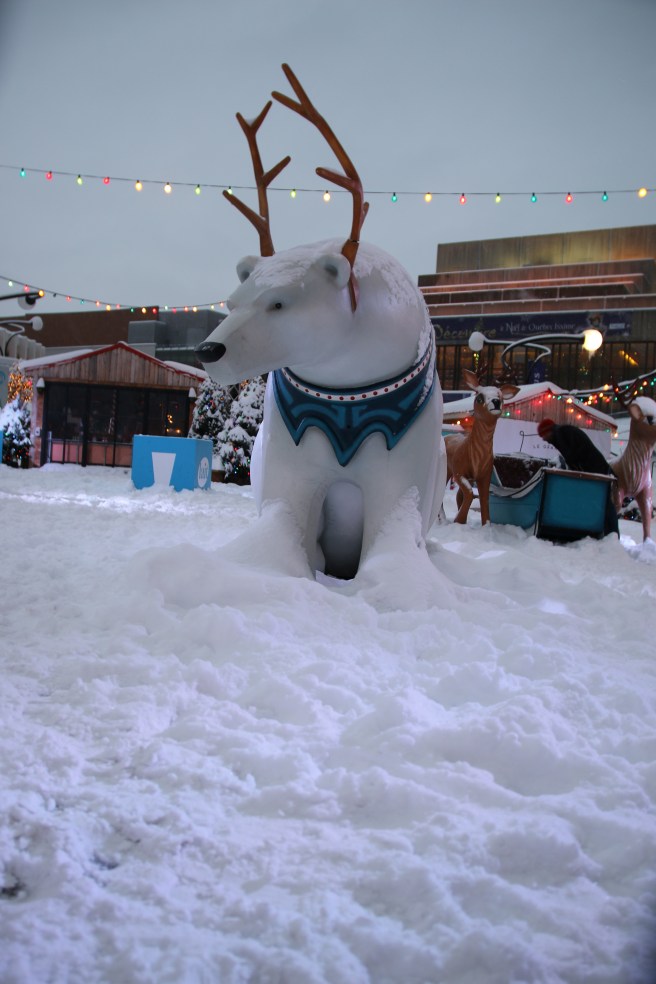
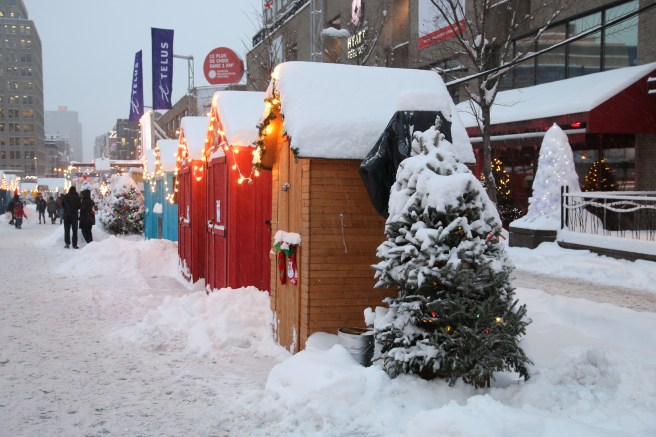
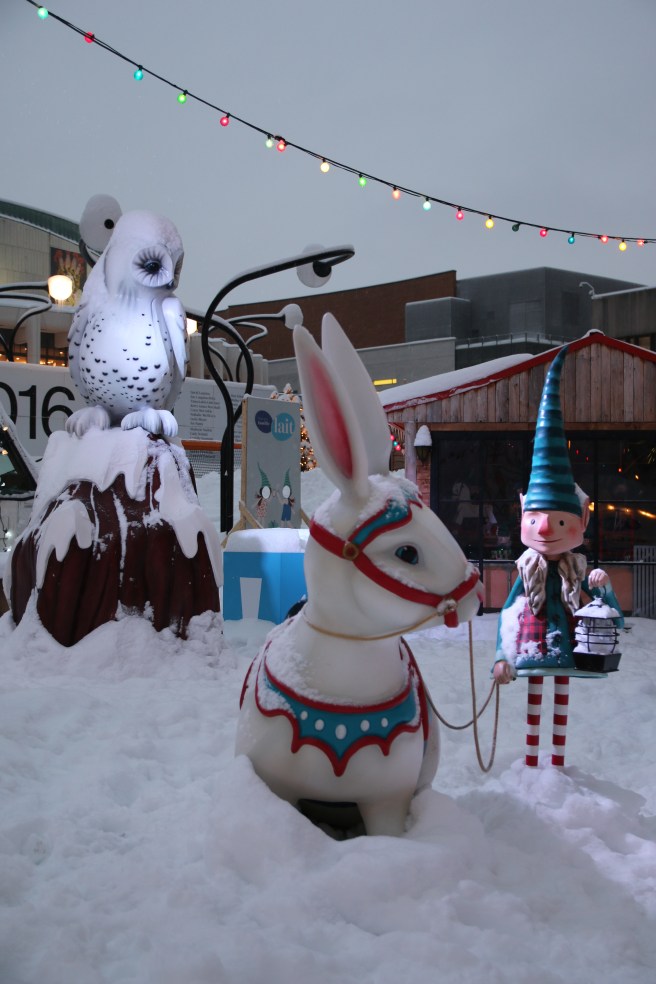
After leaving the Deck, I wandered over to Quartier des Spectacles, to see the much maligned Christmas Tree. I guess it’s harder to see what the tree itself looks like with all of the lights etc. on it, but I think it seems fine. I also walked through the square, looking at the various animal features and little huts that are set aside for weekend festive events, and took a few shots on the way. It’s a really nice setup, and the snow makes such a big difference to the display. Getting here today was well timed.

img_5986

This is the much maligned Christmas Tree. The tip broke off during transport. But it is a real tree and I think the locals want to keep it as is. Because it’s real.

img_6003

img_6005

img_5994

img_6008

After wandering through the square, I headed over to The Club for dinner. Most of the retail sector in Montreal is primarily conducted in French. The welcome is always Bonjour (Welcome), and as I indicate that I speak English by saying G’Day or Hello, the discussion changes to English. However not every discussion works out exactly as planned. For example, I requested a bitter beer for a drink to go along with my meal order, and I received a pitcher (ie. a jug of beer). I then ordered a meal of a Cuban sandwich and plate of poutine. This is my first sample of poutine, the mix of chips, cheese and gravy allegedly invented in the 1970s. It tasted exactly what you’d think it would taste like.

Anyway, I stayed on and finished the pitcher of beer, it tasted okay as a beer, and then walked back to my hotel (16 blocks) and then again headed off to bed.

December 11, 2016

Today was a beautiful day (minimum temperature -12C, maximum -3C so it was time for a wander around Montreal. I had breakfast at the hotel and then headed off to the Old Port to visit the Pointe a Calliere Museum of History. The museum is built on archaeological sites, which are able to be walked through in the basement.

The museum was named after Louis-Hector de Calliere, the Governor of Montreal from 1684-1699, and then the Governor of New France from 1698-1703 until he died at the age of 53. New France was an area that partly covered by what is now Canada and United States of America. He built a chateau on the Point. The museum also had artifacts from the building and the tools used by the family.

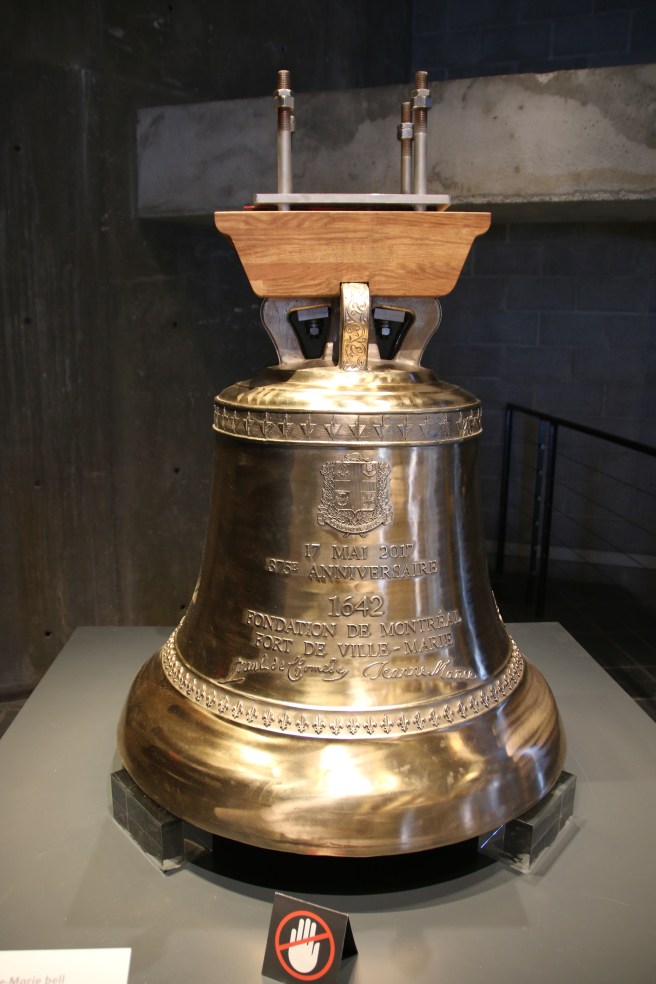
The first item I come across is the Fort Marie-Ville Bell (the Fort is one of the archaeological sites presented in the museum which was placed in this area of Montreal). The bell is a replica of that which was situated at the Fort’s chapel.

11dec-01

The next item I came across was an exhibit on the treaty of 1701. The main indigenous peoples of the area were the Iroquois, and they had ongoing battles for decades with the French. Governor Calliere issued an invitation to the indigenous groups (around 1300 representatives of approx. 40 of the First Nations groups attended) in the hope of achieving peace. With behind the scenes negotitations, bartering of goods and some famous speeches, agreement was reached and a treaty was signed on 4 August 1701.

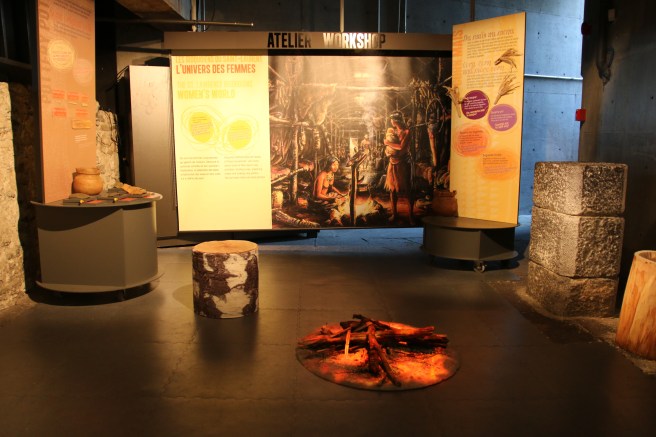
A big part of the underground displays were showing a series of the lives of the Iroquois and artifacts of tools etc. that they used. Herewith below a photo of the kinds of cooking, heating and other day to day activities, especially by the women who were the heads of the family.

11dec-02

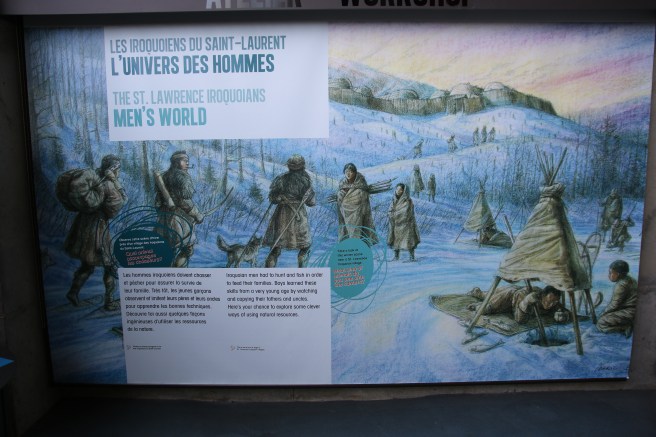
There were also some displays of the role of male Iroquois in their society.

11dec-03

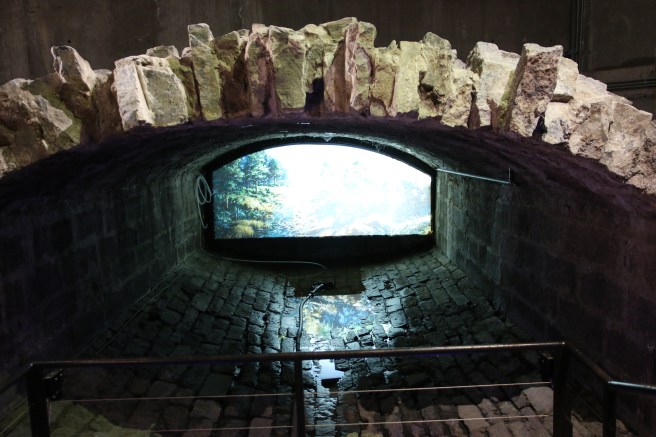
Another interesting point in the underground display was an actual part of the original sewerage system created in the 1700s. It smelt sooooooo good.

11dec-04

They also created some under glass presentations of what the Point looked like based on their archaeological findings across 6 different time periods. It wasn’t possible to get photos directly over these displays, but I did get one from the front, which I can hopefull’t possible to get photos directly over these displays, but I did get one from the front, which I can hopefully manipulate on the computer some time in the future. For example, here is one from 1734.

11dec-05

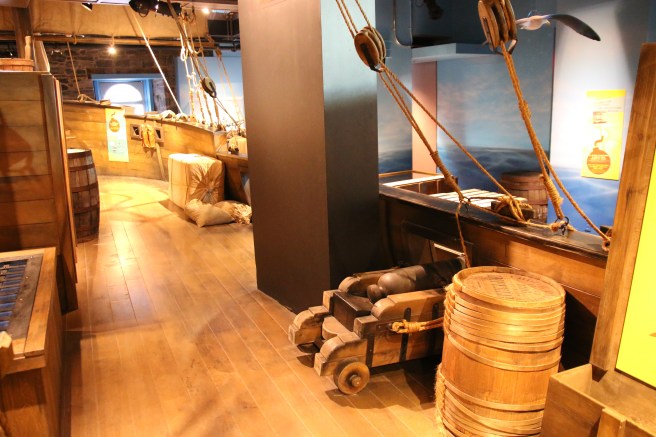
Here is a display of a pirates ship, made mainly for kids to play on and demonstrate the different skills of pirates etc. This is part of an exhibit called “Pirates or Privateers”, which is meant to allow people to see whether they have what it takes to become a privateer. The privateers were armed private vessels authorised by the King of France to engage with enemy merchant ships during the period around the British-French war. The kids seemed to be having fun. I had to wait around for a while to get a couple of photos without them and their parents in it. I hadn’t brought my Photo Release forms.

11dec-06

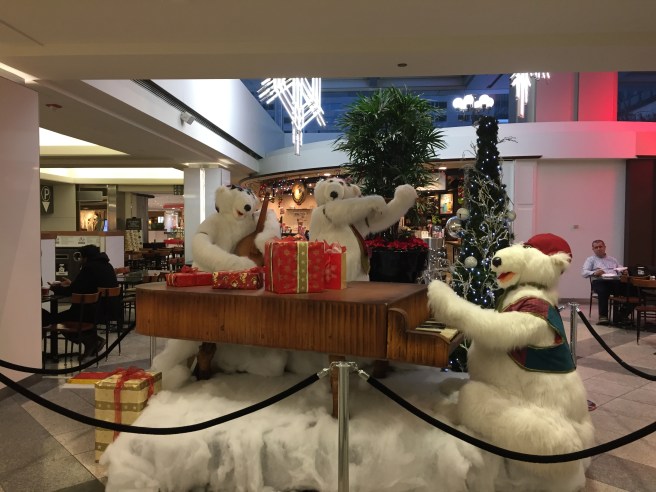
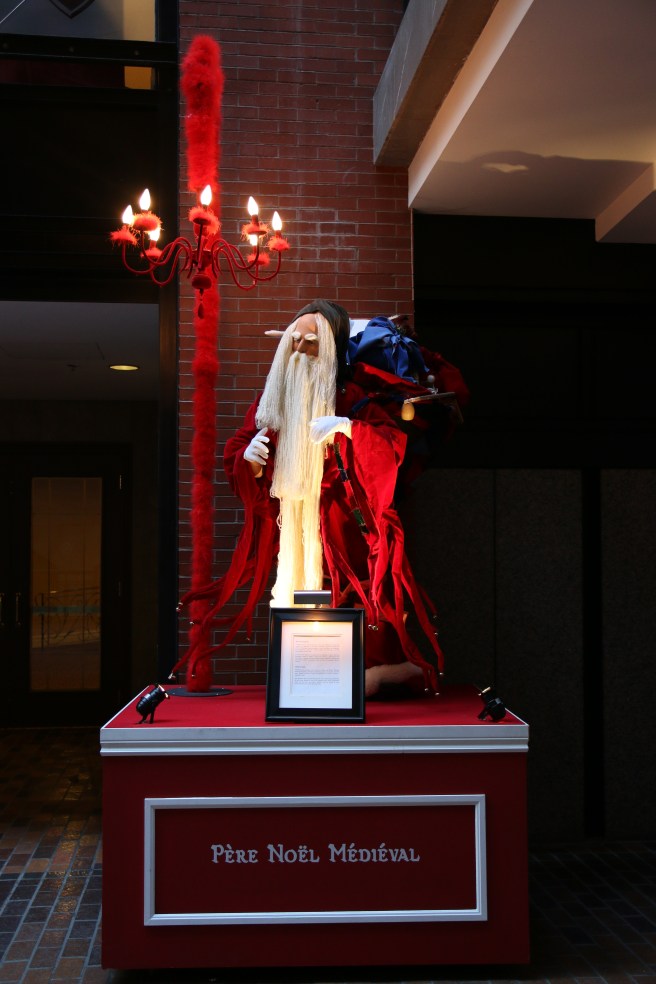
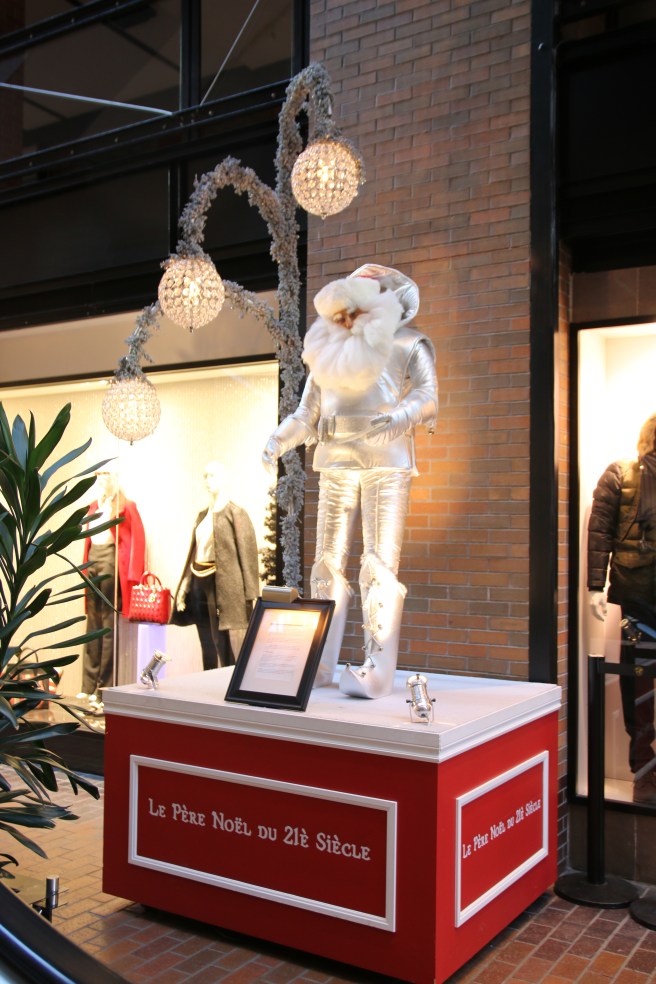
I then headed off to the Musee des beaux-arts de Montreal on the other side of the city. On the way there, I stopped off in an upmarket mall to take some photos. It seemed others had the same idea. There was a bunch of people in different character outfits who were having photos taken. I also saw Medieval Santa, North Pole (20th Century) Santa, and 21st Century Santa.

11dec-07

img_5720

11dec-08

Medieval Santa was from 12th Century Europe where he travelled on foot from his hamlet to deliver gifts, at a time where castle doors were left open to welcome weary travellers.

North Pole Santa is the one that generally we have been brought up with, the jolly grandfather figure who keeps his list of naughty and nice children, manufactures toys and gifts with his elves, and distributes them across the world on Christmas Eve.

21st Century Santa has advanced because his job is international, using technology such as a smart phone and iPad (see his left hand) to keep track of children, toys, and events. The silver thermal flight suit apparently helps fly quickly through the night air.He now travels in a sleek ultra-hovercraft.

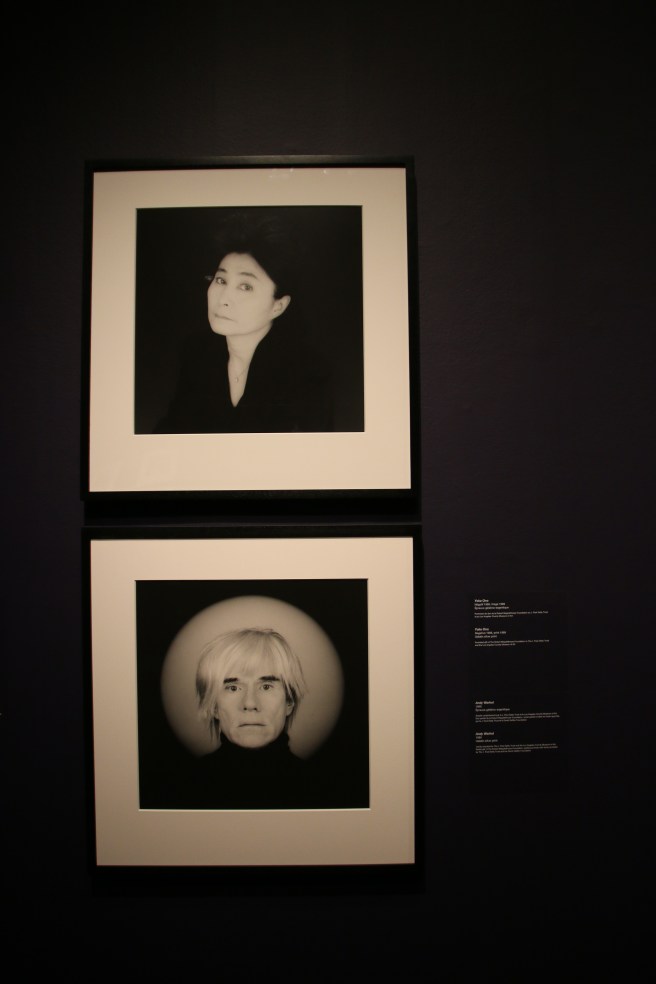
I then continued on to the Musee des beaux-art (Museum of Fine Art). There were 4 different exhibitions, so I went into the Robert Mapplethrorpe – Focus: Perfection exhibit. Having seen some of his later work and recall reading somethine at the time (1990) of the Cinicinatti Art Gallery being charged for onscenity by displaying some of his photos at the time.

It was interesting to see his early  interest in photography and also in its use for design – since that’s what he studied before getting into photography. And his friendship with Patti Smith, a great singer in my opinion – I saw her last week in a tribute to the late Leonard Cohen. Who was from Montreal. There is a tribute concert here for him which I tried to get a ticket to, but it was sold out in about 10 minutes.

Anyway, back to the Mapplethorpe exhibition. Here are a few photos from the exhibition. I haven’t included any of his later work with the gay community or BDSM as they weren’t really my cup of tea. He had quite a good range of skills and by (a) having patrons relatively early in his career who could procure him the top quality equipment to undertake what he wished to do, and (b) by understanding that he would succeed better by controlling much of his photography in his own studio, including working with and placing the subjects, developing and printing his own outputs, he was able to oversee his own career. His ability to communicate with different society groups from the gallery owners and purchasers of art to the more bohemian subcultures, allowed him to expand his horizons and build quote a strong career, and also to experiment in areas outside the normal range of photography. Herewith a couple of more of his clean photos.

11dec-09

11dec-10

After the museum, it was getting dark so I headed back to my hotel.

I decided that I would like to grab an English language newspaper to read at breakfast the next morning so I went downstairs to the front desk and found that they were all in French. So I went on line to look for grocery stores and headed out to grab a newspaper. The first one didn’t sell papers, the second only had them in French, the third had them in French and Chinese, and the fourth only had French. That was two and a half kilometres of walking. Luckily I did in the end find one that sold English newspapers, and it wasn’t on my list. It is also open 24 hours per day so I can go and buy one before breakfast if I want.

I then found a nearby Taiwanese restaurant selling main meals for $10, which is fine with me, so I had dinner there and read one of the newspapers I had purchased. One of the articles was a story about a Buzzfeed article and whole social media story that has grown up around the “tall, skinny’ scraggly” Montreal Christmas Tree being voted the “world’s ugliest Christmas tree”. So I will be heading over to the Quartier des Spectacles to check that out.

After dinner I headed back to the hotel and off to bed.

December 10, 2016

I woke up at 6am in my compartment. It was not the best sleep I’ve ever had, due to being used to a larger mattress, however it was pretty good. At 8am, I went into the dining car for breakfast.

img_4355

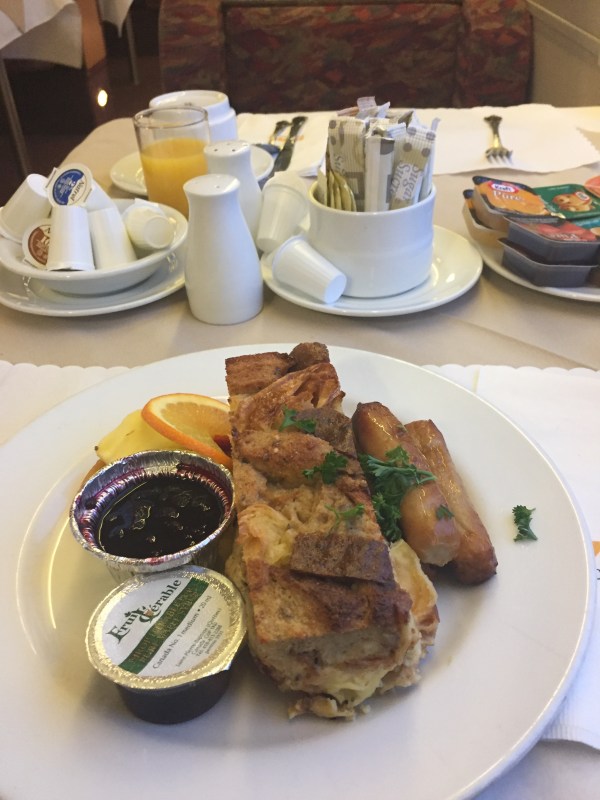
It consisted of a bread and butter pudding and sausages with berry jam and maple syrup. Along with a couple of cups of coffee. Very well cooked. Then I then headed back to my compartment and packed up for detraining in Montreal at 10am.

I ended up catching a taxi to my hotel even though it was only 6 blocks, due to the difficulty in managing all my bags in the snow. I’m staying in the Hotel Espresso on downtown Montreal.

After checking in I went for a walk with the intention of purchasing a UV filter for one of my camera lenses. A gentleman asked me if I would like to buy a ticket for the hockey. Then another did. By the time I got one block, I had been offered tickets from 4 men. So I looked around to see where I thought the hockey stadium would be and headed over. It was the Bell Centre, the home of the Montreal Canadiennes. One of the staff advised me that there was a women’s hockey game on during the day and it wasn’t too expensive. So I found the box office and bought myself a ticket. There was a men’s hockey game on in the evening so I bought one for that game too. For the men’s game, I had a choice of a front row seat for $440 or one about 20 rows up for $140. I bought the cheaper seat. For the women’s game, all tickets were $15.I bought a lunch of hot dog, fries and lemonade and headed in to prepare for the game. The hot dog was about half the size of the ones we have, but the rest was normal.

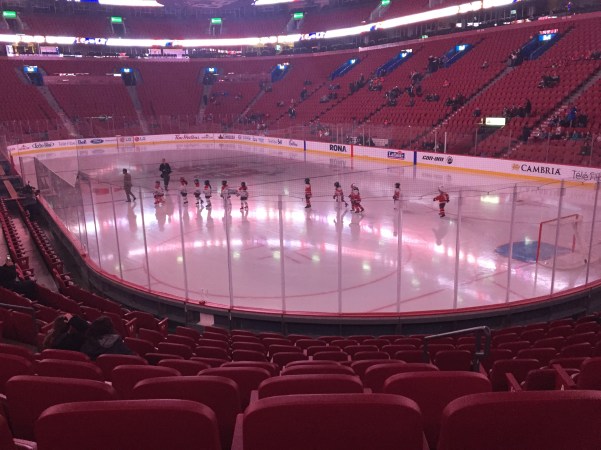
Cameras are banned from the stadium, but smart phones with cameras aren’t. This is a photograph of the stadium’s ice rink from my seat. This photo shows a bunch of ankle biters who skated over any then sat with the women on their bench when they came out a few minutes later.

img_4365

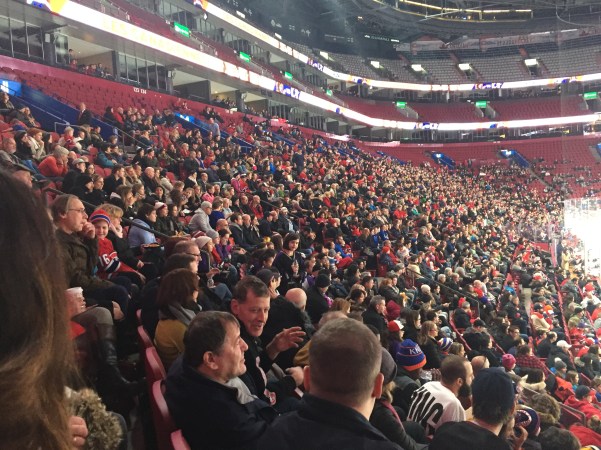
The game of ice hockey plays for 3 periods of 20 minutes each, but the clock stops for various infringements, penalties and dropping of the puck by the referee / umpire (there are 4 of them), with a 17 minute break between each of the periods. Just enough time to head out, grab a beer, and get back to your seat. There are 5 field players and one goalie on each team on the ice at any one time, and they change over any time there is a stoppage. Herewith a photo of the crowd for the women’s game. Great to see so many people (and kids especially) attending the game.

img_4412

Here’s a photo of the game itself.

img_4372

Les Canadiennes ended up defeating the Calgary Infernos 1-0. It was a great game, especially since it was my first. Interestingly enough, there was no goalie on the ice for the visiting team for around the last 20 seconds of the game. So they had 6 playing on the ice. Interesting.

It was pretty cold and windy when I left the stadium, so I rested a while in my hotel room, then rugged up with my gloves, scarf and woollen hat, and headed back to the stadium for the men’s game.

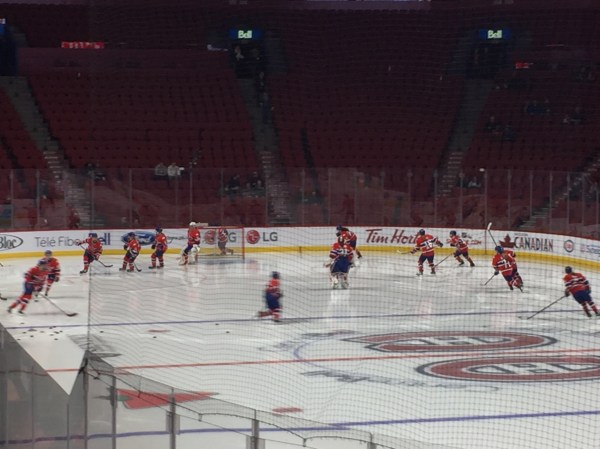
For the men’s game, Les (Montreal) Canadiennes were playing the Colorado Avalanche. The ceremony started at 7pm with everyone standing for the USA National Anthem followed by the Canadian Anthem (with flags projected onto the ice).

The game started off strongly for the Montreal team, getting 5 goals in the first 9 minutes of the game. Two of the goals were propelled from behind the rear of the net and flicked into the goals by another player. This is difficult for the goalie to see and set up for The other goals (there were 6 in the first period) seemed to be due to the goalie for the Colorado not getting into position and dropping down early enough. I know little about the game, but was really impressed with both goalies from the women’s game, and think they were the best players in the game, constantly deflecting and stopping the puck from many angles.

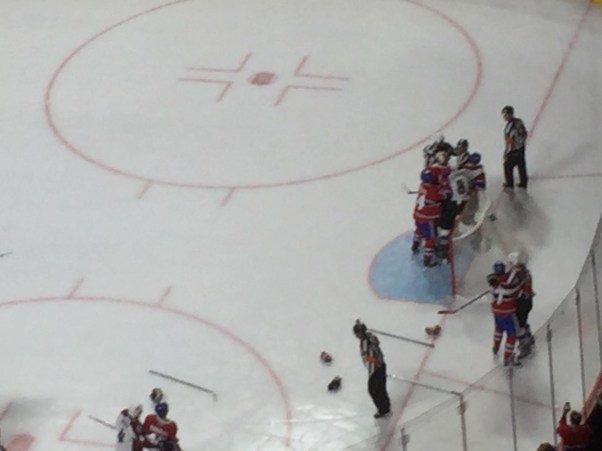
In the second period, the Montreal team scored three goals and the Avalanche one goal. The final goal for Montreal in that period was scored with 0.1 of a second left in the period, and so had to go for review. The crowd were very animated when the screen showed the final second in slow motion. In the third period, Montreal scored one goal and the Avalanche nil, so the game ended 10-1. It was a great game overall, except there was one big brawl with about three minutes to go, after a Montreal play pushed over a Colorado player against the wall.

img_4489

When there is a serious incident / penalty in the game, it seems that the offending player gets 2 minutes off the ice, meaning that there are 4 field players against 5. So the team with the lesser players goes directly into defence mode.

In all, it was a great game and I was glad I had stumbled onto it. Although I still have to buy my filter for my camera! Anyway, I headed home and had a Pumpkin Spice Kahlua before I went to bed.


December 9, 2016

Got up and had breakfast. Packed my bags. Read half of the last story of my Kathy Reichs novella. Then it was check out and head on down to the railway station to catch the “Ocean” train from Halifax to Montreal. I would recommend the Halliburton House Inn to anyone wishing to spend any time in Halifax. It’s a small boutique hotel with staff who work hard to provide you with an enjoyable stay. And the beds are comfortable.

I have two suitcases, a large backpack (Mindshift 40 Litre) for my camera gear, a small carry bag of my Surface Pro and accessories, with my iPad added, and a small backpack of the gear I needed on the train (sudoku and crosswords, books including on the train ride across Canada, medications, electrical recharge gear, etc.). I got to Via Rail and checked in my suitcases and sat down to read the rest of my book. It was 11am and the train wasn’t leaving until 1pm.

So at 12.30pm they started boarding the train. The train ride was going to be for 22 hours from 1pm Friday to 10am Saturday (we were to be adding an hour on the way West), so I booked a 2 person sleeper compartment (there are no 1 person compartments on the “Ocean” train. I am travelling from Halifax on the East Coast to Vancouver on the West Coast completely by train. Part of my budget is to have a sleeper compartment for any trip longer than 19 hours. Even though the seats in the front carriages (for sit up passengers) recline for the night, I have no great desire to sit in one seat for that whole time, apart from using the shared carriage or being one of those passengers going to the dining room carriage. It’s a big part of the treat of this holiday for me.

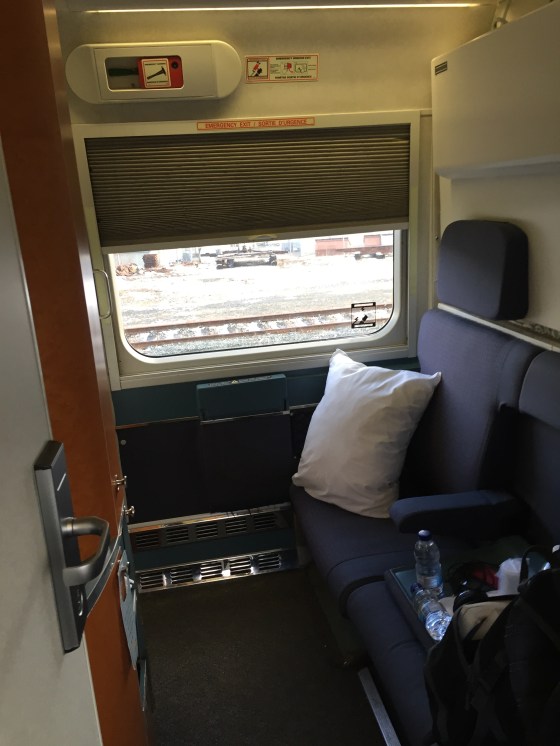
I went up to the sleeper compartment check in and got my “Sleeper Plus” wristband and directions where to get on and which compartment I was in. I was in 38-10, being carriage 38 compartment 10. I also set the time for my lunch slot before heading out to the train. The compartment was set up for seating once I got on. Here it is.

img_4296

img_4297

Just as I was settling in, a Via Rail employee, Britney, came to introduce herself. She said she was allocated to carriage 38 to assist in making my journey comfortable, and proceeded to show me the lights etc. She agreed to pop in at 7pm to change the seating into the bedding arrangement. She was quite pleasant and I did see her a few times during the trip. After packing a few things I continued reading a book until it was time to head off.

For passengers with compartments (about 3 couples and 1 single person per carriage for the 4 carriages that were being used), we also had a lounge car on both sides of the dining car, each of which had a little shop selling food and drinks including alcohol during the day hours, as well as access to the final car on the train, the dome car. It was 2 storey, with the lower half consisting of a tea and coffee, biscuits and fruit zone, an enclosed seating area with what felt like soundproofing, seats around the walls in the back half, and access to the back window for photographs. The upper half was two columns of double seating looking forward outside and over the train in front, with the windows in a dome and giving 360 visuals. On the times I visited (I got some good sets of 2 minute videos out the back window) there were usually 4-5 people in dome, and no more than two at any time in one of the lounges.

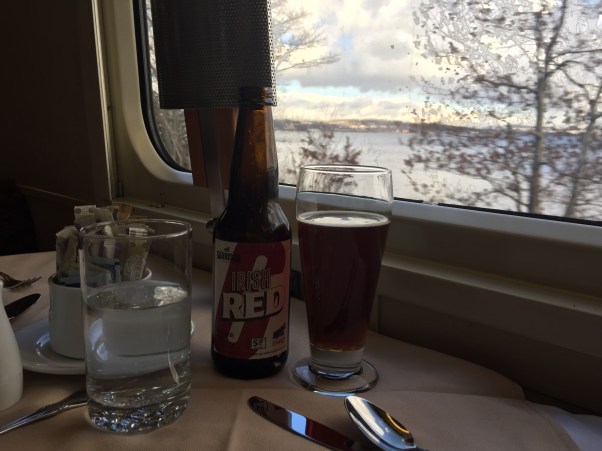
At 1.15pm I headed off to the dining car. I had soup of the day (minestrone style – spiral pasta with beans, carrots and onions) and spaghetti bolognese, washed down with two stubbies of Garrison Irish Red (Garrison being the brewery in Halifax that I visited).

img_4302

I followed up with a thin slice of tart and cream and a pot of tea. For Sleeper Plus passengers, meals are all free, so of course I had to have each course.

Then I headed back to my compartment and mostly spent the rest of the afternoon looking out of the window, taking photos out of the window, spending a little time in the lounges updating messages etc (the lounge and dining cars had Wifi for guests). I couldn’t concentrate on reading due to the rocking of the car, but I did have an audio book I listened to. It’s hard to take decent photos out of the train (the trees along the side of the track both hide interesting features), but here are a couple I thought were interesting.

img_4308

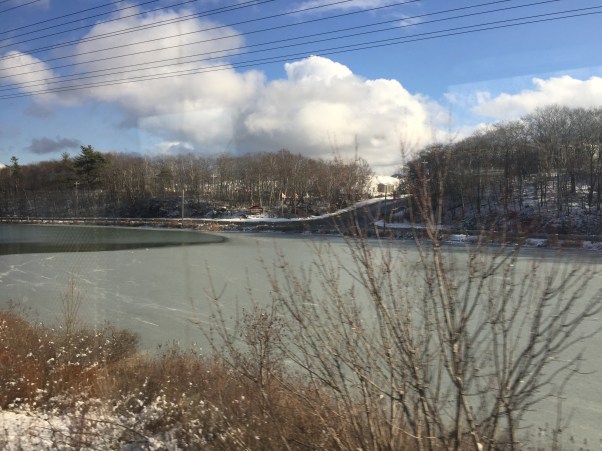
The photo above shows a small lake that is mostly iced up, and has already been used by locals for ice skating, however has not fully frozen over (see .he mid-left side which is till water) and so has some risks for skaters.

img_5473

At 6.30pm, I headed back to the dining car for dinner. I had a small tart for entrée with a piece of salmon for main meal. Again washed down with Irish Red, followed by dessert and tea. I had a chat with Britney, and she said that on the “Canadian” train – which are the legs between Toronto and Vancouver – there is a full kitchen, unlike the “Ocean” which is this trip, and so there will be fuller meals. She has been on those legs as part of her role, and believes I’ll get to see some great parts of the country including the prairies.

I then headed back to my compartment, she came along after about 20 minutes to change the lounge into the bedding format, and I changed and went to bed. The bed was not as comfortable as a hotel room, but it was fine for one night.
December 8, 2016

Well I didn’t get to do too much today. It’s my last day in Halifax, so just mopping up before I head off to Montreal for a week tomorrow.

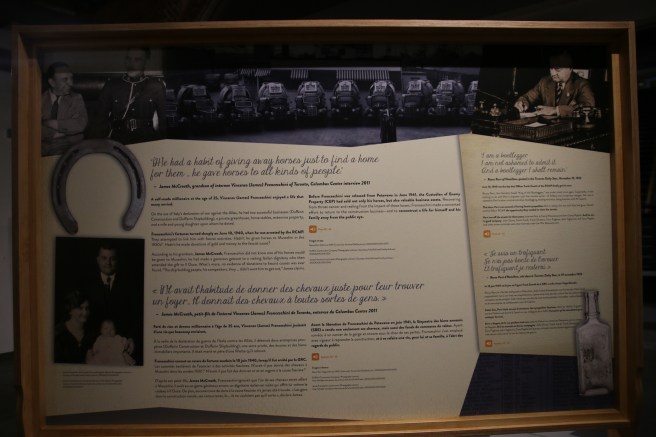
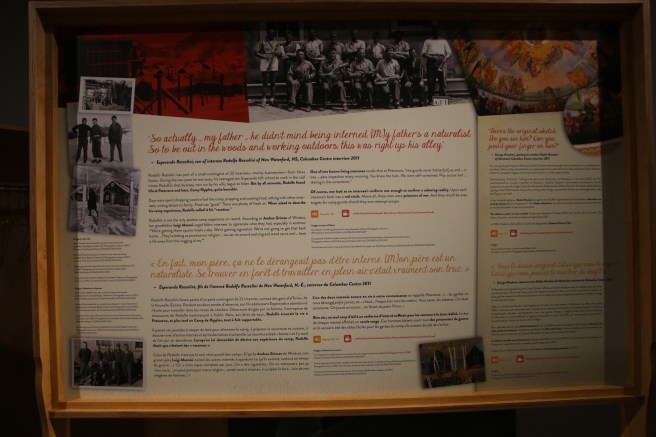
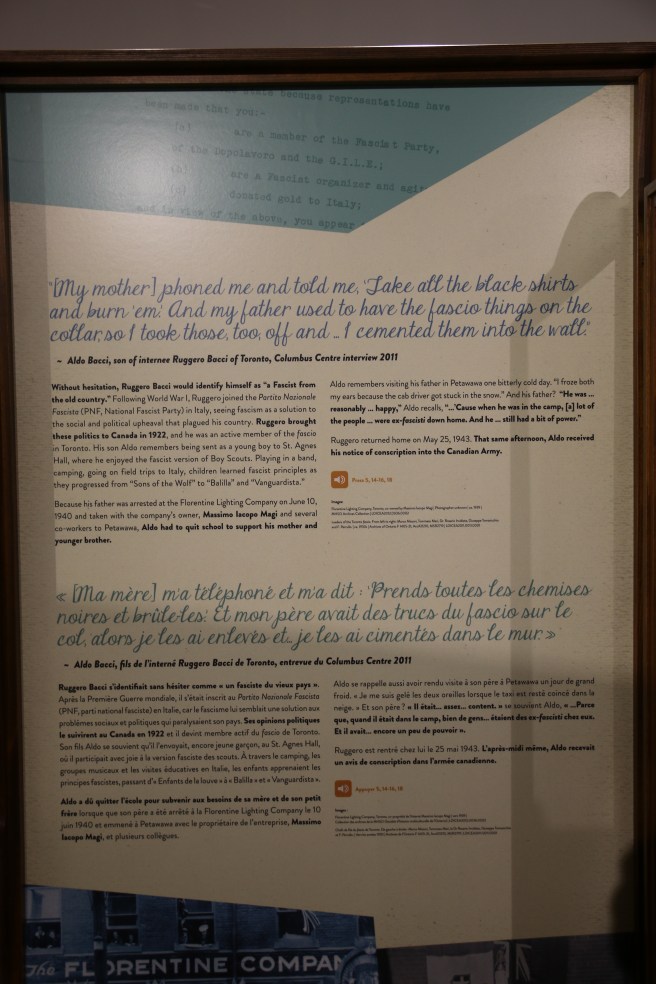
After breakfast, I chilled out for a couple of hours reading in my room, and then I headed back to the Museum of Immigration. I went into the short term exhibit on the impact that the decision by Benito Mussolini to enter World War II on the side of Germany had on the lives of Italian Canadians. Various members of the public, including business partners, some clergy, neighbours, colleagues etc. reported on others to the RCMP (Royal Canadian Mounted Police), causing a range of people to be incarcerated whilst investigations took place. Herewith a small number of story board photos. There were also many recorded stories that I got to hear. Listening to the various stories was quite fascinating.

08dec16a

08dec16a1

08dec16a2

08dec16a3

dscovered08dec16a4

I then headed over to the overall Canadian Immigration gallery. This told of the various stages /times in detail of the time from the mid 1500s where Canada started to be discovered by the non-indigenous peoples, and the various periods from then to the present time that immigration impacted that Canadian people. The stories were generally more about the migration events and settling in of the new arrivals, rather than the economic and social benefits of the migration – although there was some of this near the end.

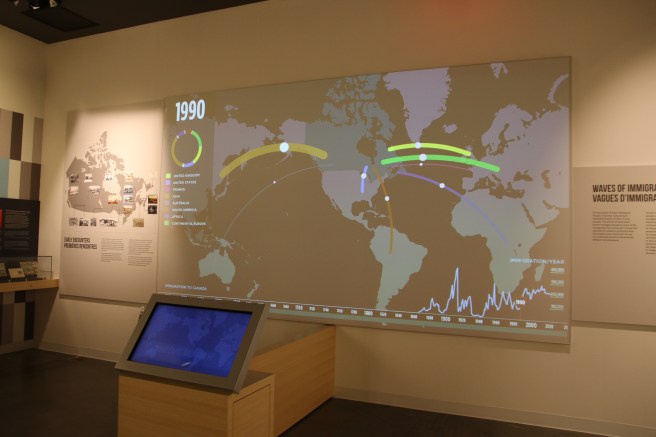
There was also a large screen demonstrating the number of migrants through the whole period to date (it shows a map of the world and a line from those countries where the migrants came each year. A thin line for a (relatively) few migrants, and a thick line for many. Herewith a shot of 1990 (years being on the bottom of the screen, numbers to the right.

08dec16b

It was interesting to learn that the highest migration numbers came from the period 1896 to 1914, when the then Prime Minister, Sir Wilfred Laurier, implemented a push to settle the Western part of Canada as a high priority. This peaked at a migration level of 400,000 in 1913, with the reduction in free movement at the outbreak of WWII leading to a significant reduction in migration.

Migration to Canada has continued such that the annual intake is around 200,000 per year since 2000 or so. The drivers are many, including war, as well as the discrimination felt by people in other countries, including women especially where there are no education options, gay people especially in Islamic countries where it is crime, and so many areas of unrest in the world.

The stories recorded either verbally or in writing demonstrate the happiness of those migrants to be allowed to stay and contribute to their new country.  Some of the issues they are confronted with include:

  • How to achieve a sense of belonging
  • When does a person stop feeling like a migrant
  • What des it mean to be Canadian

So not much different from Australia and other countries with migration programs.

Whilst I was in the museum, I took a short citizenship test to see if I could pass to become a Canadian. I obviously had to make most of the answers up given I don’t know much about it. I ended up only getting 3 out of 8, I needed 6 out of 8 to pass. 😦 One thing I did learn was that Lacrosse was invented in Canada.

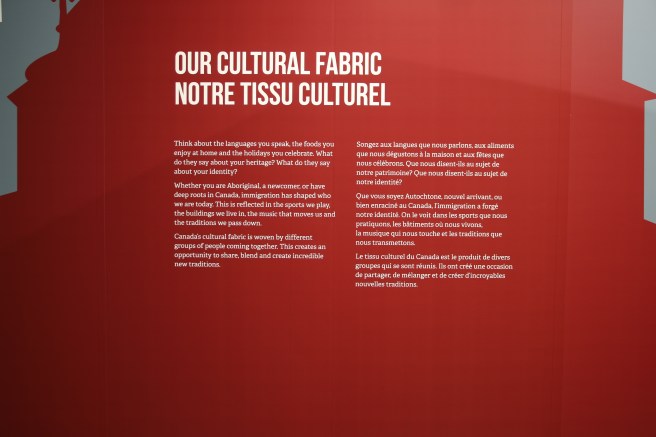
One final photo from inside the Museum is one of a number of message boards that made me think about contributions to society.

08dec16c

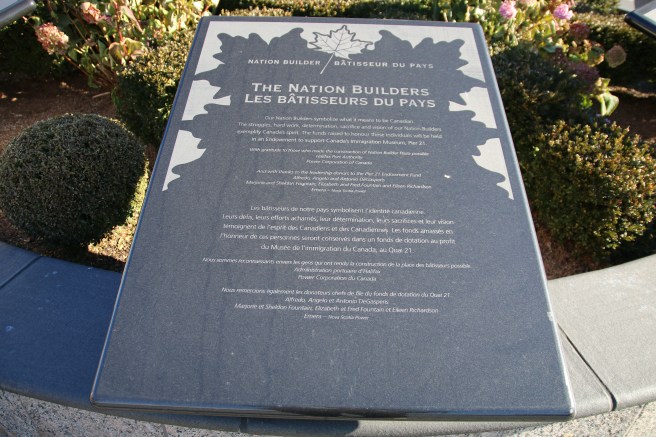
Outside the museum is a little garden contained within 7 or 8 granite message boards relating to Nation Building (which reminded me of Utopia, the ABC Comedy series, but these ones were successful). Here is the central message board and one with a short story.

08dec16d

08dec16e

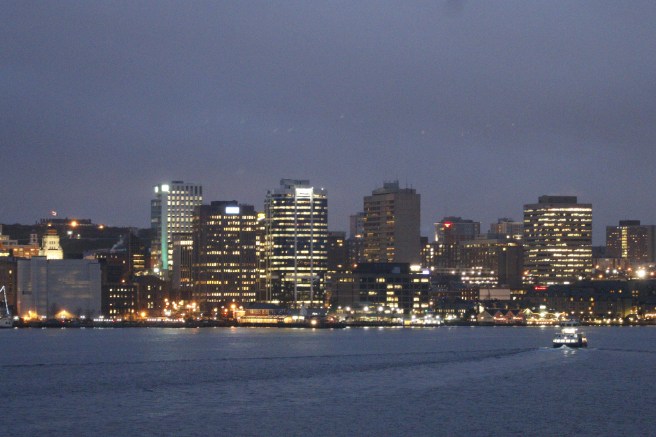
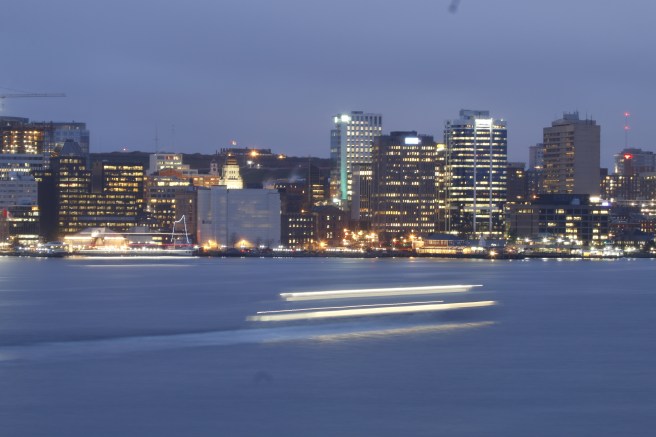
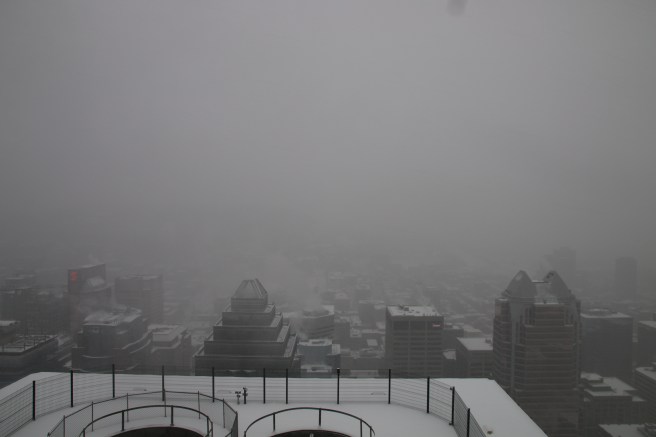
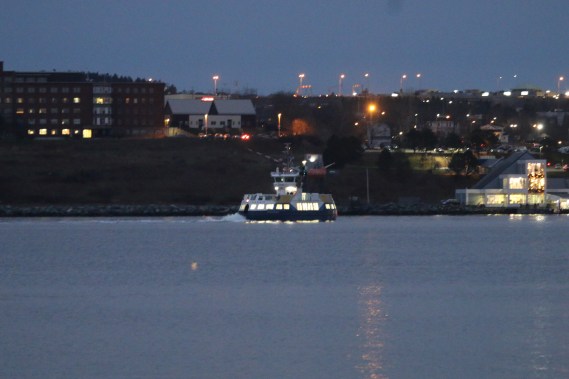
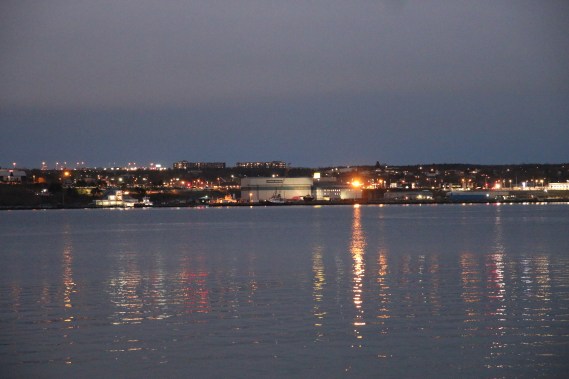
After leaving the museum, I took a stroll down the Boardwalk to the Ferry terminal, a couple of kilometres away. I took one of the ferries across the rived to take a few little photos of Halifax City as the sun was going down. However whilst I was in the museum, the weather (0 degrees C), turned from sunny to cloudy, and it had rained. Which it decided to do again when I arrived across the rived – and there were no undercover spots to take photos. The rain really more sprinkled, and it came and went, so I got a bunch of photos. I have a number to stitch together to make panoramas when I et home. Anyway, here are a couple of photos.
08dec16f

08dec16g

The second photo was opened for 10 seconds shutter speed, hence the parallel lines being a ferry in the middle of the water and one at the back left.

After that, I headed back to my hotel for dinner. I had checked my food and drink budget for the trip, and was $550 under budget as of this morning, so I could afford to blow out on a good meal. The various prosciuttos in the entrée (along with the duck pate) were delicious and complemented the Gewurztraminer. The salmon, from the West Coast, was delicious, as good as an Aussie salmon. Interestingly there is a ban on salmon fishing on the east coast, but not the west. The berry tart (with icecream made on the premises) for dessert was very tasty – the icecream did have a strong condensed milk flavour. The only negative thing from the meal was that the sherry tasted more sour than sweet. All in all a good evening, and then up to my room to pack.

I have had a couple of people ask me about all my eating and my weight / whether I am feeling okay – since I did spend a lot of time in Alaska tasting a lot of different American foods, Luckily I have 8 weeks to sample Canadian food. Anyway, don’t worry, I feel perfectly health and my weight is fine. I bought a set of digital scales from Walmart that I am just getting used to. I haven’t read the manual for them yet, but I’m pretty sure they are weighing about 3-4 kilograms on the heavy side of accurate. So the scales probably just need to be calibrated properly and I’ll do that in the next day or so.
December 7, 2016

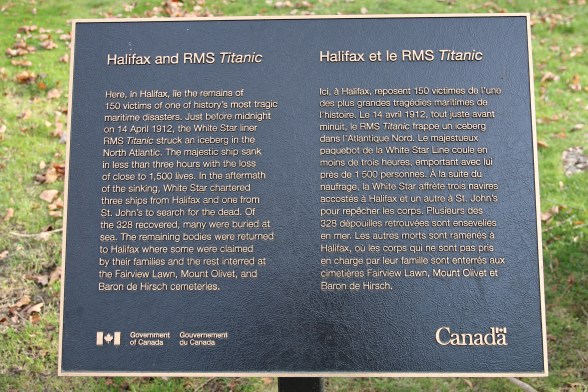
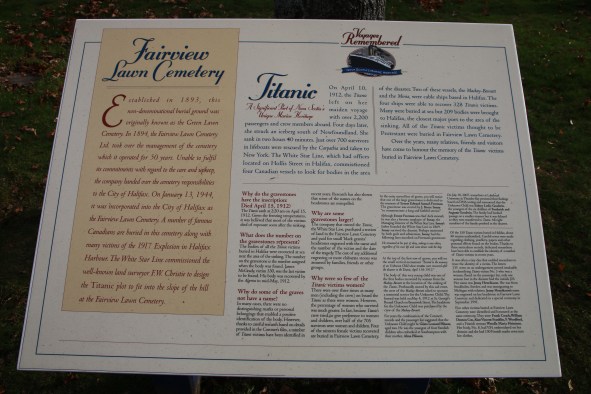
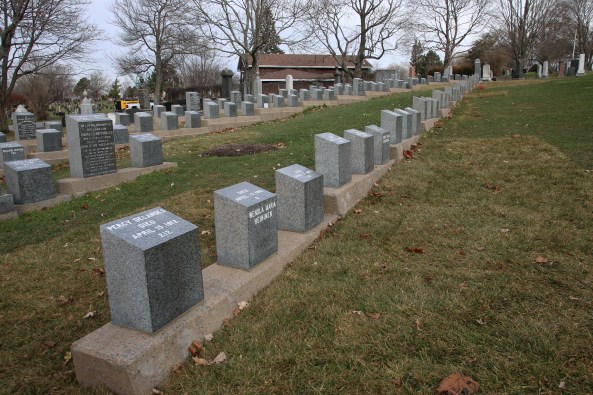
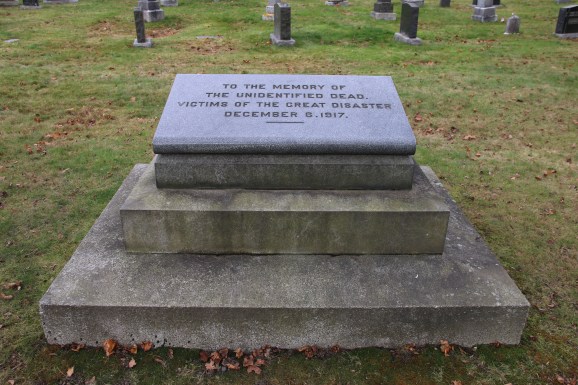
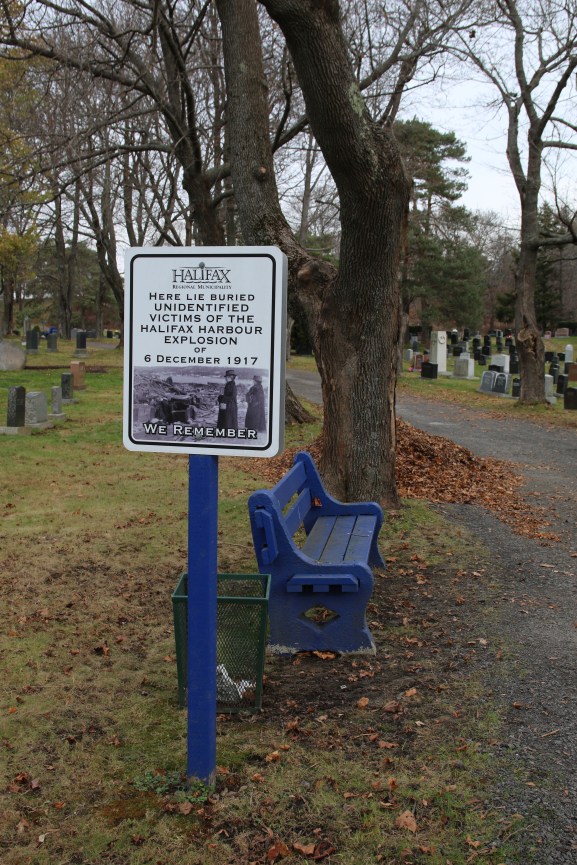
After breakfast, I headed off to catch Bus 9 to the Fairview Lawn Cemetery. This is where the majority of the 150 bodies recovered from the sinking of the Titanic in 1912 and not claimed at the time by others were buried. It was also where a number of the unidentified remains of victims of the Harbour Explosion in 1917 were buried, and has a monument to them. Without wishing to be morbid, I was unaware of the harbour explosion, or the burying of Titanic survivors in Halifax, when I planned to visit the city. Having heard so much about Titanic growing up, it just makes sense to make a respectful visit to the site.
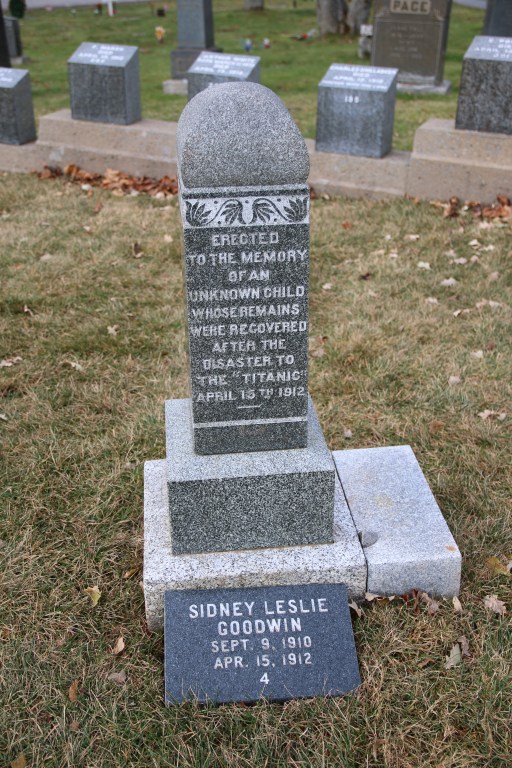
Here are the two plaques which provide some information on the burials, the design, as well as the relatively recent identifying of the “unknown child” through DNA testing. So I have also included a photo of the overall Titanic cemetery stones and the specific stone of the former unknown child.
07dec16a

07dec16b

07dec16c

07dec16d

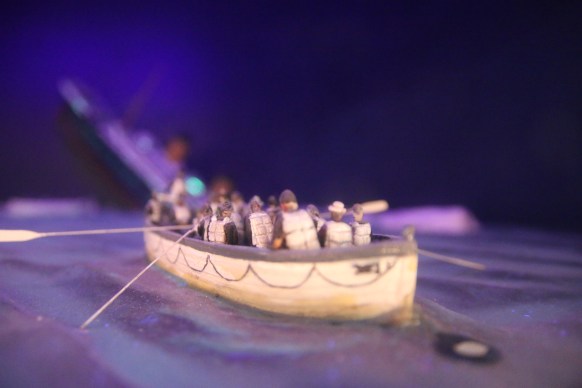
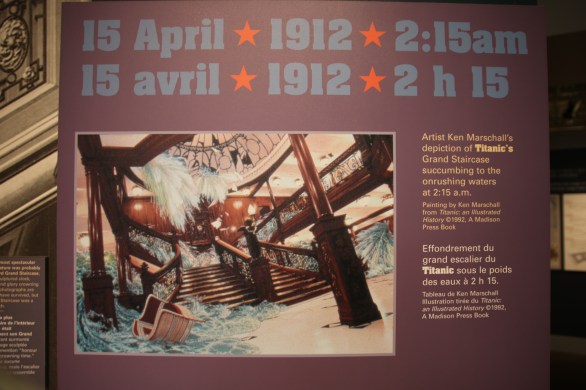
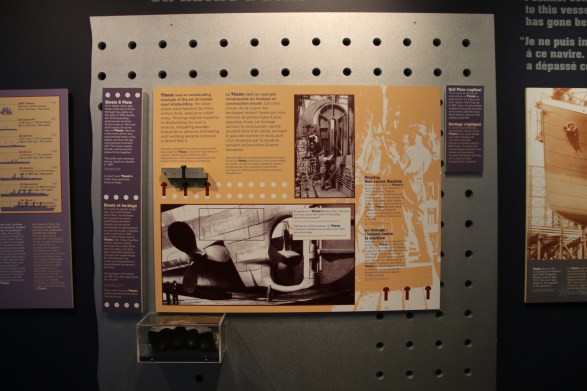
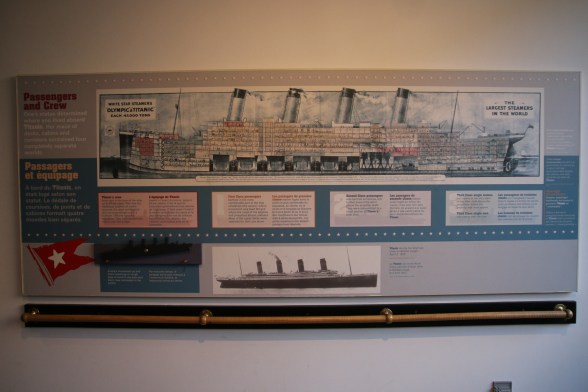
Going back to my visit yesterday to the Maritime museum, herewith a few other photos from the Titanic exhibit. A couple are photos of small-scale models of the ship going down and the shipwreck itself (camera up close to increase the size). Others are informational about the construction and design of the ship and living quarters, as well as an artist’s impression of the impact of the waters on the “great staircase”.
07dec16e

07dec16f

07dec16g

07dec16h

07dec16i

07dec16j

Regarding the model of the row boat in the front with the Titanic in the background, I took a number of photos of the display, with different parts in focus. So I hope to use some focus-stacking software to try to stitch together the whole scene (it also includes the iceberg) all in focus.

Herewith also a photo of the memorial to the Unidentified Dead from the Halifax Harbour Explosion, and one of the sign next to it.

07dec16k

07dec16l

After this I walked a couple of kilometres to the Halifax Shopping Centre to buy a couple of items I could not get downtime. As part of this I saw a couple of police officers escorting a young child through the shops. Lost child I assumed. Then I saw another police officer and another young child. Two lost children – I suppose that happens. Then after another minute I walked into Walmart and saw another 3 or 4 police officers with young kids. Then they were in every aisle. Bring your kid to the shops day? So I asked one of the staff and they said that every year on this day, police officers take underprivileged children out to buy them and their families gifts, and take them to get something to eat as well. I saw one police officer and a child being pushed on a trolley by another officer. So they were having fun too. It seems to be such a nice gesture.

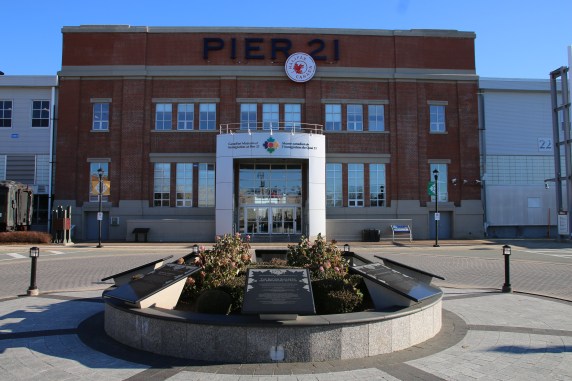
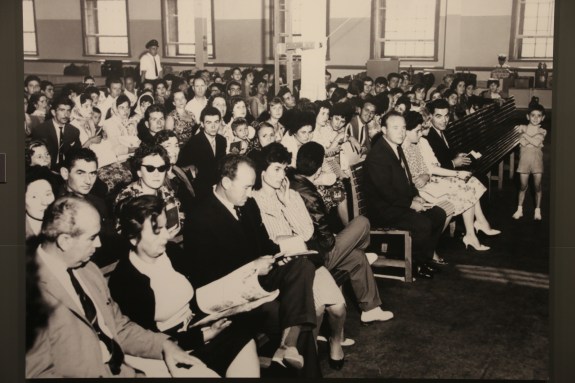
After I got back to the hotel, I rested my feet for a half hour, had a coffee and then headed off to the Canadian Museum of Immigration. The Museum is at Pier 21, which is the building that was opened in 1928 and used to process around 1 million immigrants before it closed in 1971 (with more immigrants not coming by aircraft there was no longer the need for this particular facility). Halifax was the one site in Canada used for processing immigrants in this time that was on the ocean, and was also the city closest to Europe from where most of these migrants emigrated.

07dec16m

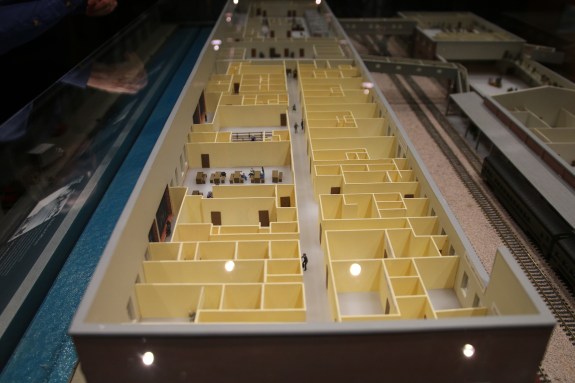
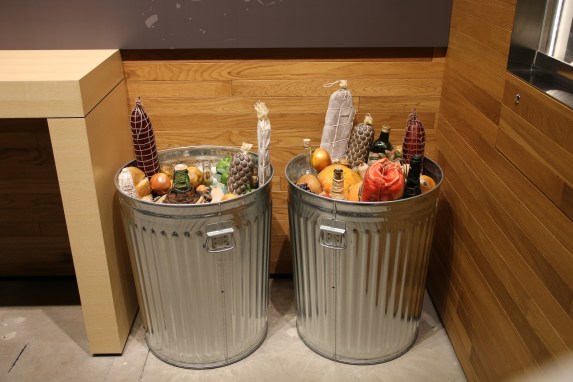
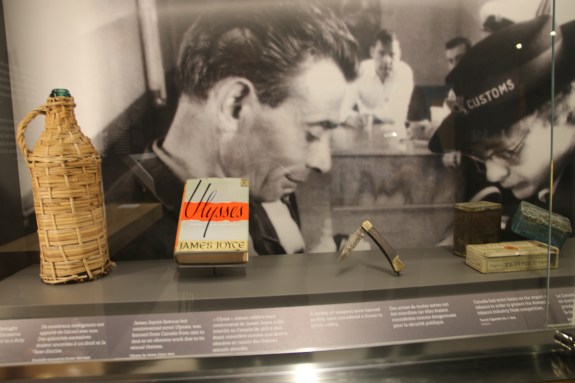
The display starts from a small model of the inside of the facility, from when they come off the boat, wait to be processed, and all the different sections such as where their belongings are checked and certain items confiscated (such as food and drink, certain knives, offensive literature (for the time), etc. – see below).

07dec16n

07dec16o

07dec16p

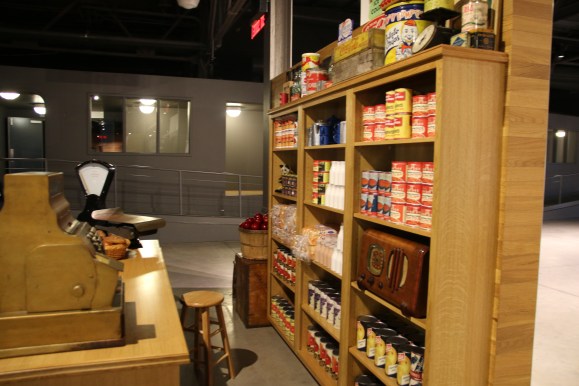
There was also a mock up of the shop that the migrants purchased food from to replace that which was confiscated, or if they needed to stay more that the day for various reasons – medical issues needing resolving, documentation not in order, etc. – plus food for their onward journeys.

07dec16q

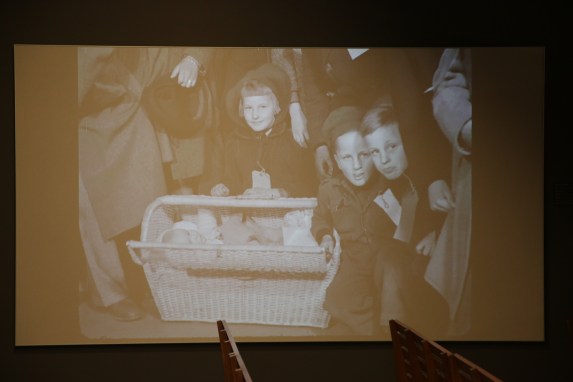
There was also another short film and photos of the time, in the mock up interview room.

07dec16r

07dec16s

There was significantly more set up, including full size cabins the migrants travelled in, full sized train carriages including cooking implements (70 per carriage) that the migrants then travelled to their final destination in, information and models of doctors and nurses, and many other exhibits. All demonstrating the Canadian support for immigration during this period. We have some of these museums in Australia too, which the presenter hopes to one day visit.

After seeing this area, I sat down to watch a 20 minute film on stories from a number of migrants covering the past 30 years or so, although one was a Vietnam draft dodger from the USA so some of the stories stared earlier. But all were up to the last 5 years or so. They were will intertwined and the stories showed their sheer happiness for being allowed to move to and seek work / contribute to their new country. They all had different reasons for coming here, civil war being a common one, as well as one man from Pakistan who was gay, and one from Russia who was given a week to leave the country or be murdered. So an interesting sample. Although these all seemed to be success stories (which are generally the significant majority) and there was no real negative stuff.

After the film I left as the museum was closing. So I took a wander down along the Boardwalk and took some photos. I also took a ferry across the river just to see some of the basic sights of the city.

07dec16t1

07dec16t2

07dec16t3

07dec16t4

07dec16t5

07dec16t7

I’ll wander back out tomorrow with a tripod and a couple of different lenses to see how I go.

After that I walked back to the hotel, poured a glass of Kahlua I bought today (Pumpkin Spice flavoured), added some liquid coffeemate – I had no milk – and it tasted pretty good. Now it’s bedtime.