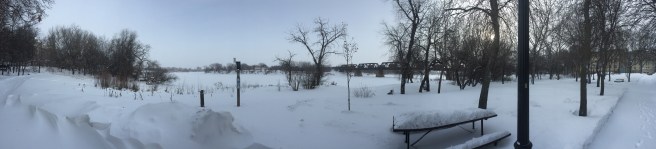
Today I headed over to the Manitoba Museum. I took a pathway along the frozen river. The main river is the Red River, with the smaller offshoot coming off the fork being the Assiniboine River. The name comes from the Assiniboine peoples who were one of the First Nations from areas including the central area of Canada including Manitoba, the province of which Winnipeg is the Capital.
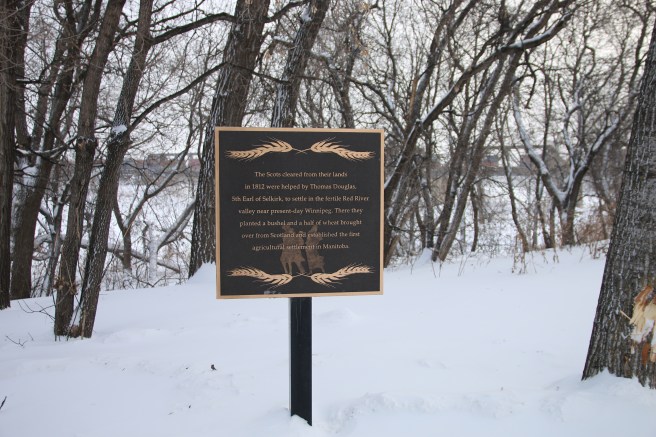
On the way, I passed a plaque / sign on the riverfront relating to Scots being cleared from their land in 1812. It turns out that in the 18th century to early in the 19th century period, there was a series of clearances (the Highland Clearances), or forced displacement, of of Scottish people from their traditional land tenancies, which resulted in a change from small scale agriculture to large scale sheep raising by the aristocratic landowners. These Scottish peoples were moved to the coast, as well as North America (including Canada) and Australasia. Thus, some of these peoples settled in the Red River valley close to where Winnipeg is settled.
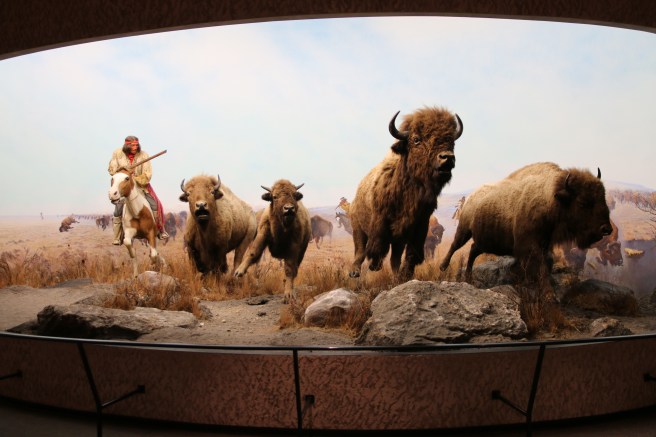
Winnipeg sits within the Canadian Prairies, which covers the provinces of Alberta, Saskatchewan and Manitoba. The museum has a large range of exhibits, with a walkthrough of the main gallery being a bit like an Ikea showroom, where the walkthrough is defined and you just start and follow the triangles. This is the exhibit right at the start, and represents the Red River Buffalo Hunt, which the Metis’ undertook on the open plains to catch, kill and process buffalos. In many cases, the whole families took part, some to hunt the buffalos, the others to process the meat and skins. Metis is a French word derived from a Latin word meaning “to mix”. They were described as generally a mix of First Nation mothers and French Canadian fathers from the early 1800s, and by the mid 1800s they were the largest mix in the province.
It’s a precursor to the whole gallery which is very visual as well as having some of the newer technology electronics. But mostly it’s displays, and some of them are quite large installations.
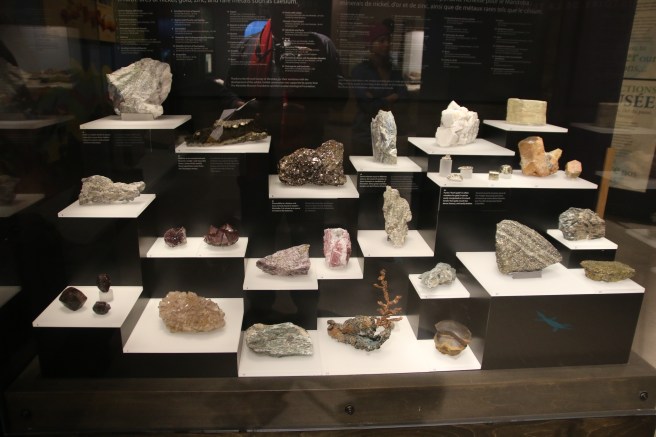
The gallery then moved into minerals. The geology of Canada is made up of various minerals, the backbone of North America, which are between 1.7 and 3 billion years old. There is a display of minerals from “the Canadian Shield” representing this backbone.
After this, the next section related to fossils found within the rocks that archaeologists and others have uncovered. There were some very interesting displays including large fossils, or at least examples of them, in this section. After a display with questions around the extinction from 65.5 million years ago, the displays moved onto the Ecosystem, and where herbivores and carnivores fit. There were also some neat childrens’ areas, including one where they are taught to use a brush and trowel to look for artefacts in soil. Then I turned a corner and got scared by these skeletons.
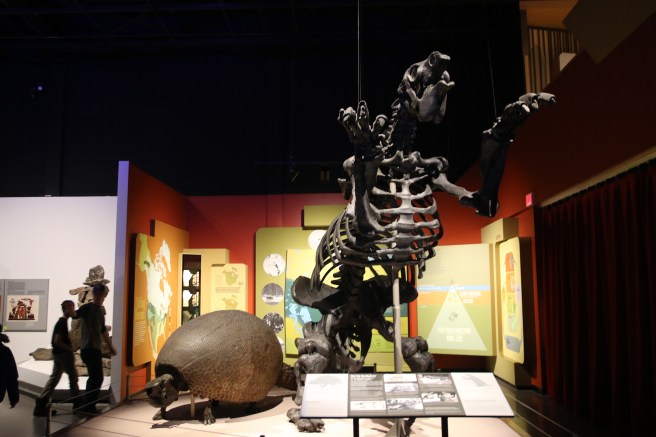
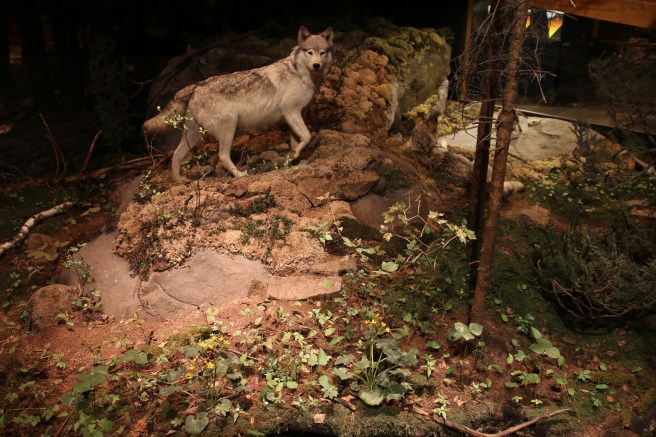
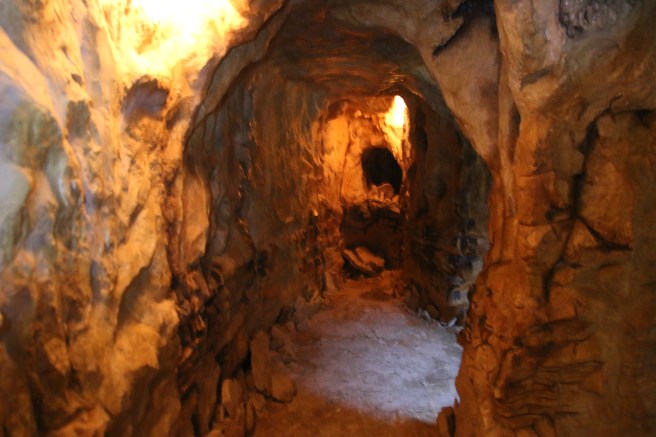
Then next few displays were around current day animals and their hunting of other animals, the various lifestyles of the First Peoples including hunting, cooking, and use of tools in their daily life. Much like the similar displays in Halifax and Montreal. But I really liked some of their installation style displays that showed different parts of daily life. One was a cave with torches available to walk through and look for bats.

At the end of this gallery was a replica ship, the Nonsuch, which was built as a merchant ship in 1650 and travelled in 1668-1669 under the Captaincy of Zackariah Gillam. It was the first ship to travel into the Hudson Bay – the large Bay to the north of Manitoba and Ontario – the path of which then became a regular trade stop. The model was open to the public but the queue was pretty long so I just looked over the side and headed to the next gallery.

The following gallery was based around the changing environment and the exploitation of various parts such as forestry and mining. There were a number of interesting displays including models and equipment / vehicles used in this area. This followed onto the interrelationship between the First Peoples and settlers, including the development of treaties. It included information about First Peoples fighting for the country in the World Wars.
Interestingly, the next gallery was made up of a mockup of a street and a railway with two stories of buildings that were full sized to walk through, but the buildings themselves were narrow. It included a church, barber, grocery store, pub, and a number of other buildings and shops. It was really neat.
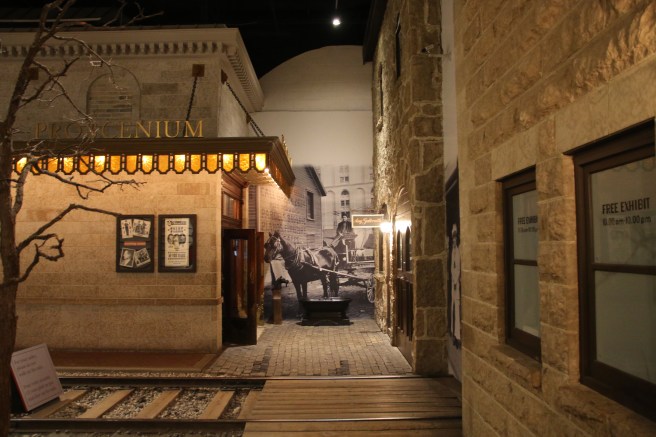
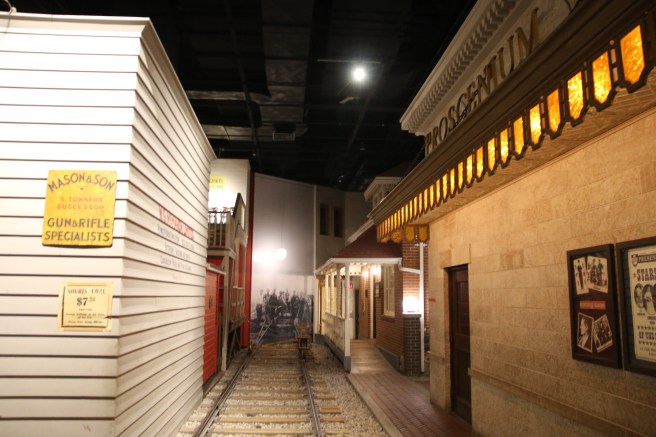
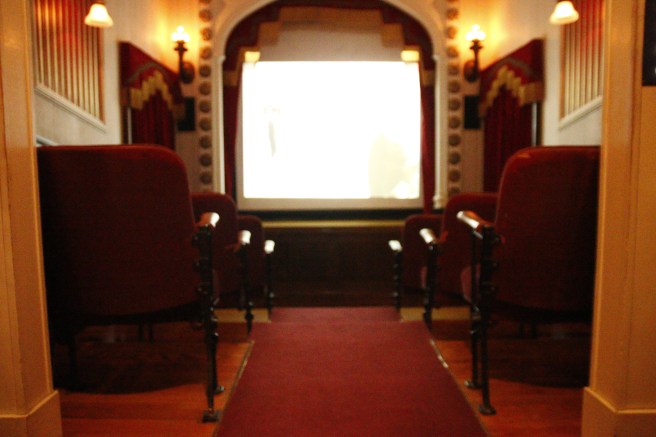
I sat in the movie theatre for about 10 minutes to watch a couple of Charlie Chaplin films. I always enjoy laughing at his exploits.
That was the end of the museum. All in all, a very interesting series of exhibits with a lot of interesting things to learn about the history of the lands and its peoples, and well worth a few hours to visit. I then headed over to the collocated Planetarium and Science Discovery Centre. I saw a 25 minute film on the Planetarium roof / screen narrated by Harrison Ford called “Are We Alone”. It was interesting but definitely created for a younger audience. However the visuals were great.
I then went into the Science Centre, which again was more for families but I did get to play with some of the exhibits. There were a huge number of different things kids could play with, and definitely some parents using the exhibits to teach their kids some things around water flow and nature.
So then it was after 3pm and getting even colder, so I headed back to my hotel to have a Canadian Crown Royal whiskey and dry or two. I then watched more of the current affairs shows in between watching the USA beat Russian on goal shots in the Junior Ice Hockey semi-finals.
Then it was 10pm and I turned off the TV and went to bed.
 mattravoblog