The train was due to arrive at Winnipeg Station at 8am, so I got up at 6.45am, had breakfast and a shower, converted the bed back to the lounge, packed my bag to disembark and then headed to the dome car to grab some video on my GoPro. At around 8am the train was stopped around 20 minutes short of Winnepeg. We were advised that there was to be a delay of around an hour, as the train coming the other way had been delayed significantly, and was at Winnipeg Station being prepared for the leg from Winnipeg to Toronto.
In the end, we didn’t reach Winnipeg Station ourselves until 11.30am, 3 and a half hours delayed. But given the level of snowfall and storms in the central and eastern parts of Canada, these delays aren’t surprising.
I got to the hotel at 12.30pm, and checked in. I then went for a walk to the Canadian Museum of Human Rights. It was only 3 blocks away but it took me some time. It was soooooo cold. It felt like it was colder than Anchorage Alaska. The temperature was -19C, but with the wind it felt much worse. This is the museum.
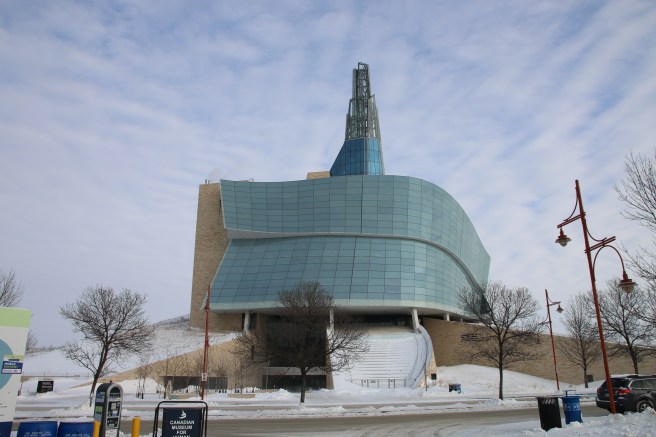
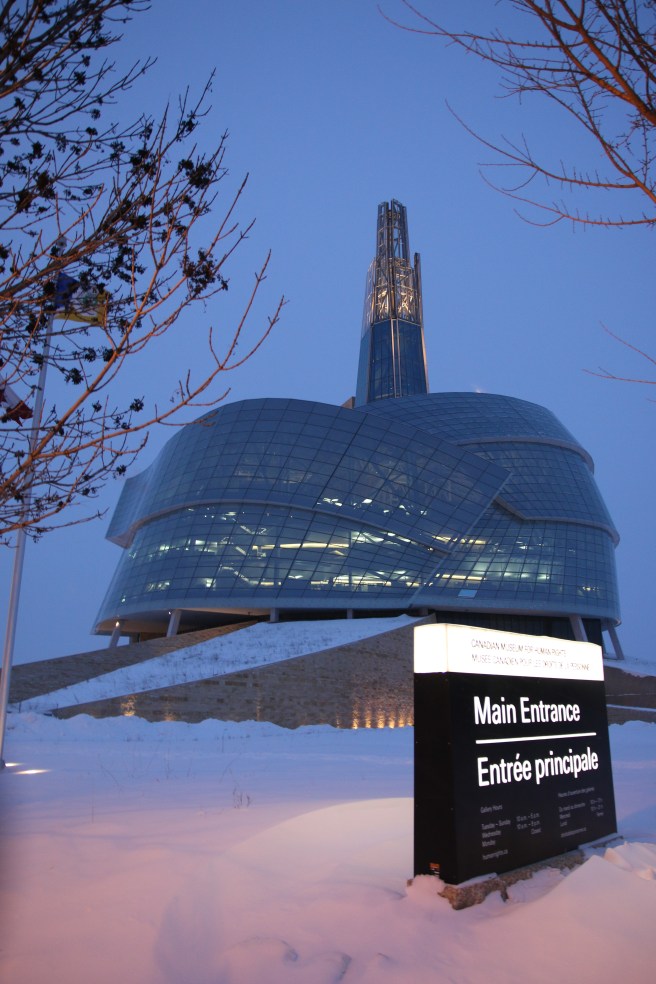
The museum itself was fascinating. The museum has 6 levels of galleries, with stairs then up to an 8th floor viewing room. On the ground floor is one of the temporary exhibitions (which you can always tell as they are the ones you aren’t allowed to take photos at).
This exhibition is called “1867 – Rebellion and Confederation” and is in line with the 150th Confederation of Canada celebration. The exhibition gives a long history of the period up to Confederation on 1 July 1867. It starts in the 1830s when the area consisted of Upper Canada, Lower Canada, Nova Scotia, New Brunswick, Newfoundland and Prince Edward Island. The issue with the regions was that they had different values and power was in the hands of a small privileged group of mainly British citizens (including the Governor General and his advisors), these regions being British colonies.
The exhibition then provides visual and audio-visual presentations around groups of reformers wanting to bring democracy and shared values. The reformers’ demands were variously rejected and so this led to rebellion and battles in 1837. The loyalists (keeping the status quo) won and this led to 1500 arrests, 250 deported (including to Australia) and 50 rebels were hung. Over time this situation led to the “Act of Union” in 1840, passed by the British Parliament. The Act established the Province of Canada, created a single Parliament, but also caused significant opposition due to banishment of French language for official use, and suspending specific French responsibilities etc. Over 15 year, the groups worked within the Act to remove the most onerous sections. This led down the path to the Confederation in 1967.
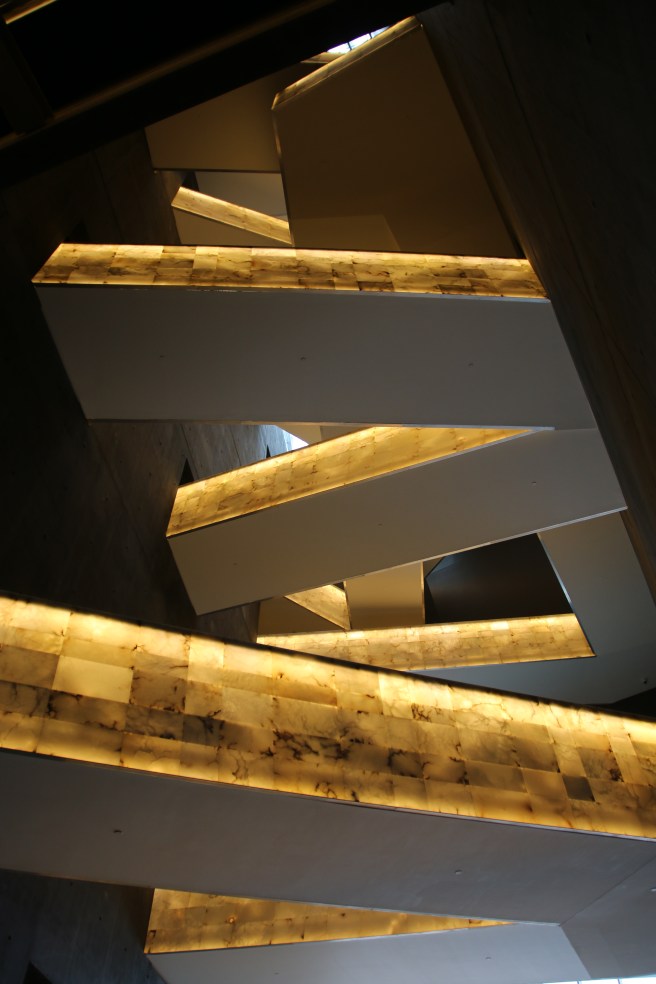
The museums levels are linked by a series of ramps. These ramps are made from Alabaster with lighting behind, to “light the visitors’ path through the rights museum”.
The second level gallery’s displays are around “What Are Human Rights”. This includes different displays as well as video of 6 specific people who talk through what they believe are human rights and why. The museum itself does not provide one specific answer to this questions. Different people have different ideas. There are also stories from around the world of peoples who have been active against those people and organisations (including Governments) who have sought to reduce rights, including freedom of speech. An example here is a Chilean arpillera (vivid patchwork stitched onto sacks) to protest against Augusto Pinochet’s dictatorship (1973 to 1990).

Also on this floor are displays entitled “Indigenous Perspectives” being the concepts of rights for the First Nations, Metis and Inuit peoples; and “Canadian Journeys”, which provide stories of different Canadians’ experiences in human rights.
The level 3 gallery “Protecting Legal Rights in Canada” covered legal aspects of Canadian human rights and how they have changed over time with legal changes. The gallery has a circular desk with 13 or 14 touch screens to enable the visitor to see and hear the digital living tree of changes.
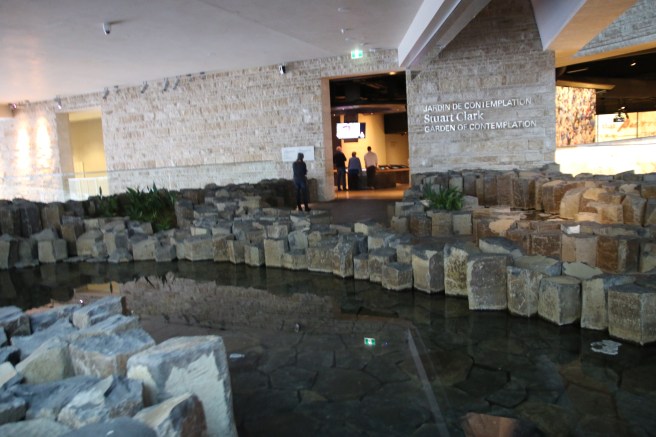
It also has a garden of contemplation in the middle. The rocks are basalt imported from overseas. Basalt was chosen as it is one of the types of stone that are found on all continents on earth.
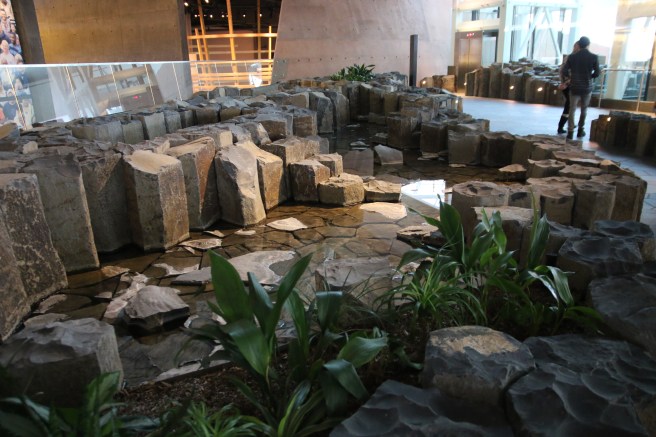
The level 4 gallery has a range of topics including “Examining the Holocaust” and relates to the build up of issues from the end of WWI through to WWII but has terrible stories of what occurred to Polish, Jewish and other groups over this time; “Turning Points for Humanity” which is based around the 1948 Universal Declaration of Human Rights and peoples working tirelessly to convert this into reality; “Breaking the Silence” which is around people speaking out about mass atrocities, and has a special set of digital study tables and other resources around Genocides; and “Actions Count”, being low key and not so low key action taken by various members of the communities to push back against human rights.
An example in Canada is “Pink Shirt Day” which occurs annually to commemorate a day when a year 9 student was bullied and called gay by other students in Nova Scotia for wearing a pink shirt to school. Two year 12 boys found out and bought 75 pink tshirts which they lined up with their friends to wear and hand out at school the next day in support of the younger student.
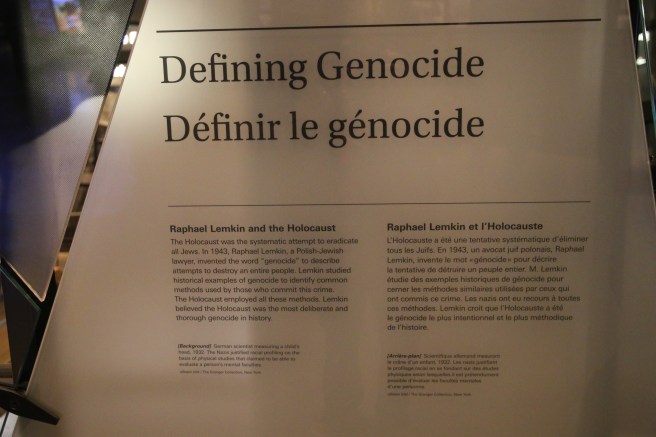
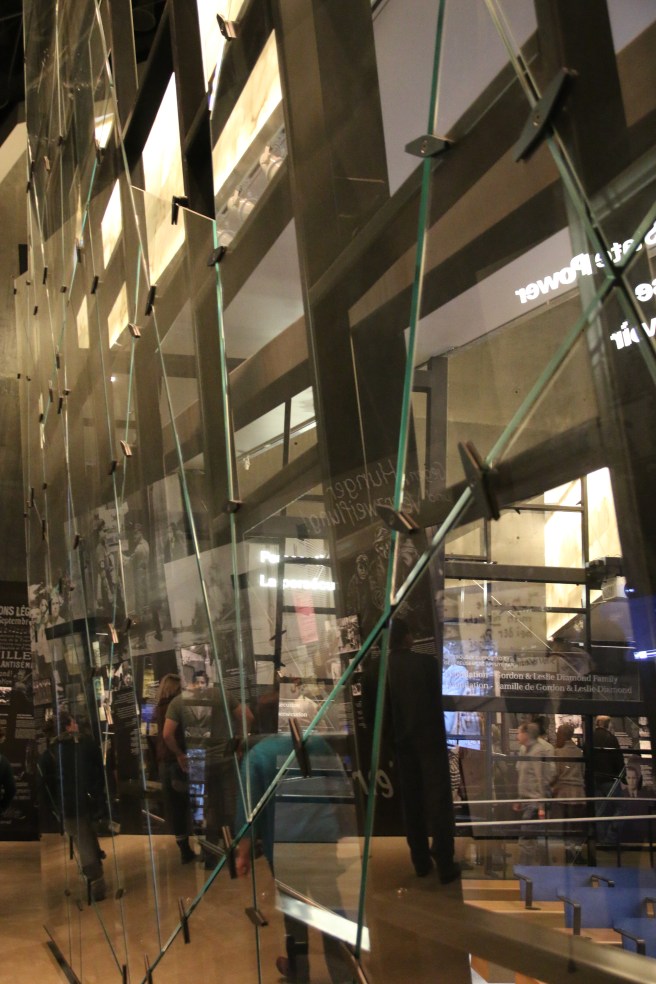
The photo of glass panels represents a wall of broken glass, which is based on Kristallnacht, or “the Night of Broken Glass” on the nights of 9-10 November 1938 when paramilitary forces and German civilians launched a pogrom against Jews by ransacking Jewish homes, hospitals and schools, which included the deaths of 91+ Jews and tens of thousands of males being incarcerated.
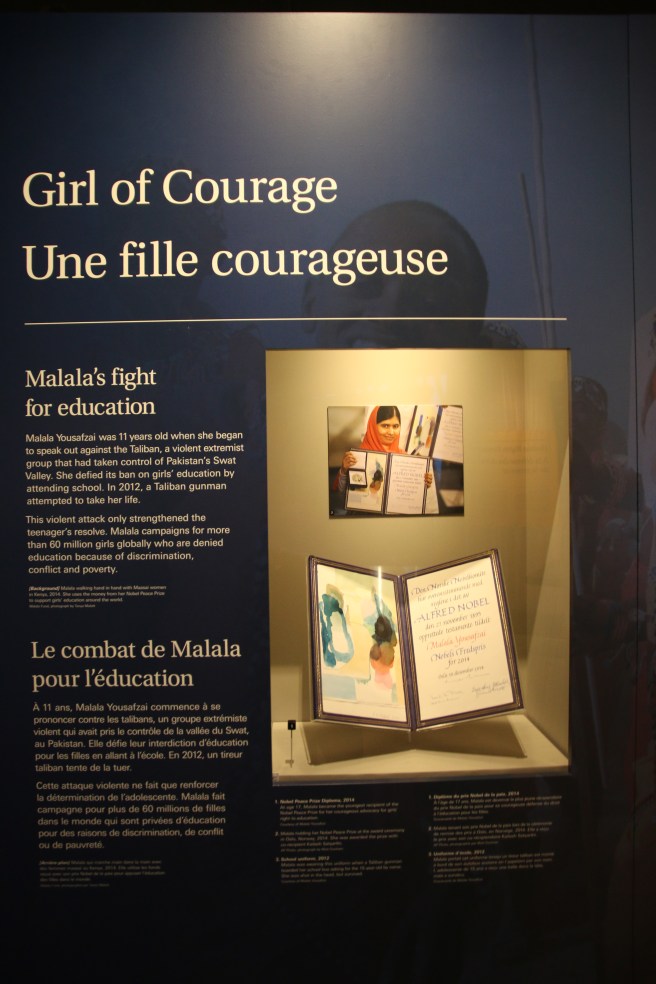
The level 5 gallery covers “Rights Today” and again uses multiple audio-visual as well as models and samples of different materials etc. to look into current issues in human rights internationally. One of the displays was of Malala Yousafzia, the girl from Pakistan who pushes for education for girls around the world. The display shows her Nobel Peace Prize as well as the dress she was wearing as a schoolgirl when she was shot by the Taliban.
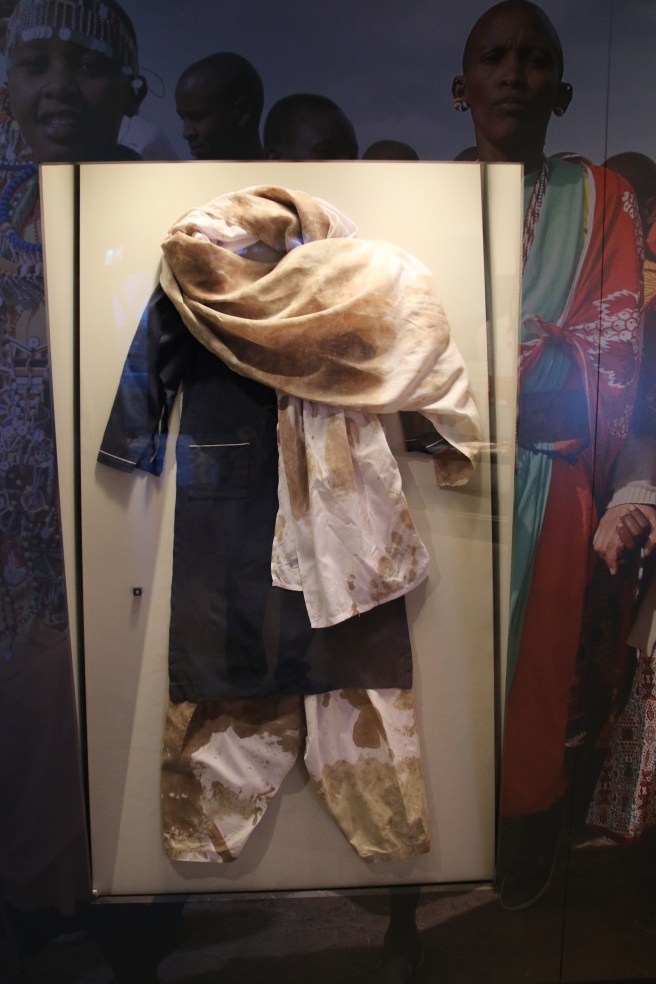
The level 6 gallery, the second of the temporary exhibition spaces, had an exhibition entitled “Empowering Women”. This provides some of the work and connections from a range of women across Asia, Africa, and the Americas including creating grassroots cooperatives and how these have been transforming their communities. There are video as well as Virtual Reality headsets that display different women’s groups achievements. The VR headsets had to be booked as they were quite popular. I unfortunately didn’t have the time to wait for them but I did watch the video with headphones. The stories showed how strong the women of these communities were to continue on and develop these cooperatives, including at times when their husbands and sons had been murdered by guerrillas and other killers.
The visit was fascinating, and after 3 hours I had still only scratched the surface of what was available. However they were closing so I got kicked out. I then headed back to the hotel for dinner, a shower, and some 24 hour news and a current affair channel hopping. That was exciting.
 mattravoblog