Today is Niagara Falls Day. I was picked up by the small bus at 9.15am and dropped off to get onto the full size coach. Which was full, so my camera gear went in the luggage compartment under the coach.
Then we headed off on the two hour drive to the Falls. The driver, Alex, advised that we would be visiting a wine school (the only one in Canada) for some wine tasting, then head off to Niagara Falls, and then visit a village called Niagara on the Lake on the return trip.
On the way, Alex talked about some of the history of Toronto as well as the falls.
Some of the information about Toronto he gave:
- Toronto is pronounced Toronno
- 13% of the population is chnese
- 55% of the population is not from Canada
- The current birthing rate to Toronto residents is 1.3, only half of that in New York, and so they need to accept immigrants just to keep things running
- Since 2004, housing prices have gone up by over 10% per year
- There is a section of apartments (called condominiums in Canada) just south of the city that was fields in 2004; it now has a significant number of condo apartment towers
- But as is happening in Australia, these are not full of people, 11,000 of them are owned by foreigners, many not resided in so the government is looking at options for them as they have increased prices of properties but are not adding to the economy (sounds like Australia and other countries where the middle class Chinese are investing)
- The average cost of a house in Toronto is just under $1m
- 280,000 immigrants entered Canada last year
- Toronto has 6 chinatowns, 3 little Indians and these areas continue to expand
- Toronto has minimal public transport outside the city centre
- It is very expensive to live in Toronto or Montreal, although Quebec City is cheaper
- Millions of Canadians spend Christmas and the New Year with their family, and then head off to Florida for winter
Relating to Niagara Falls and waterways
- The 5 great lakes in USA / Canada hold 22% of the world’s fresh water
- Canada has 3 million fresh water lakes, mainly in the north where there are few people but plenty of land
- The escarpment from which the water flows to Niagara is 2000 kilometres long and is 400 million years old
- The falls at full strength can flow at the rate of 6100 cubic metres per second
- It flows at an average of 2400 cubic metres per second because of the number of pipes taking the water out above the Falls to generate electricity (75% of the water is piped off). Ontario gets 65% of its power from nuclear, and 25% from hydro stations.
- The power station is 11 kilometres downstream from the Falls with the water travelling downwards for the first 10 km and uphill for the last 1km, using the pressure from the downflow to push the water up the last 1km
- 80% of the tourists visit in the period of May to September, 20% in the remainder of the 7 months
We reached the wine school and went into their shop to sample 3 types of wines. The first I had was an unoaked chardonnay, the second a rose, and the third was an ice wine. They were all very tasty. The wine school was opened around 6 years ago by Prince Charles. It is the only wine school in Canada. The wines are reasonably priced compared to normal wineries and shop wine due to them using unpaid students to do much of the work. They have two courses, a 2 year course on the winemaking side, which can then be followed up by a course on the business side of winemaking. They accepted 20 students in 2016, out of 2000 who applied.
Co-located on the same (very large) site is also a microbrewery school (which took 40 students in 2016 out of 6000 applications, and a horticulture school.
After our sampling, we headed back to the coach and got into the bus for the 20 minute ride to the Niagara Falls. It turns out that there were two Falls, and American side and a Canadian side. The well known horseshoe Falls are the Canadian Falls. There is also a less popular “straight” waterfall that are the “American Falls”. These being held by the Canadians versus the Americans are an outcome of the war of 1812 (which lasted between 1812 and 1815) between the Americans and the British and its North American colonies.
The basis of the war was pretty complex, with the outcome at the end being that when the land got divided up at the end, Canada as a British colony got the horseshoe falls and the Americans got the other. 95% of tourists come to the Canadian side (where you can see both sets of Falls – the American one is less than a kilometre from the other) rather than the American side where you can only see part of the horseshoe falls.
So we reached the famed Niagara Falls and were given 2 hours and 20 minutes to do what we wanted before being collected by Alex in the coach.
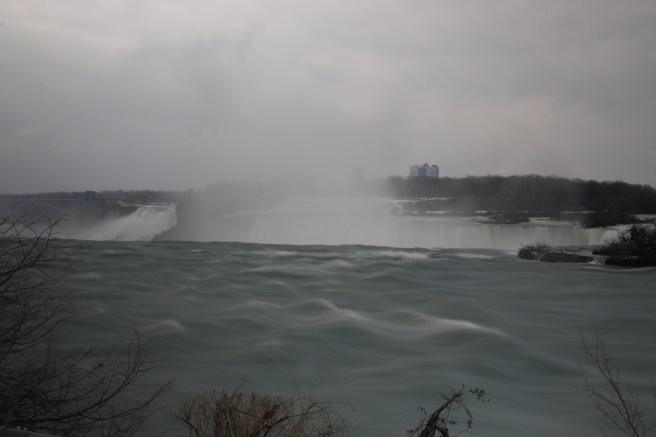
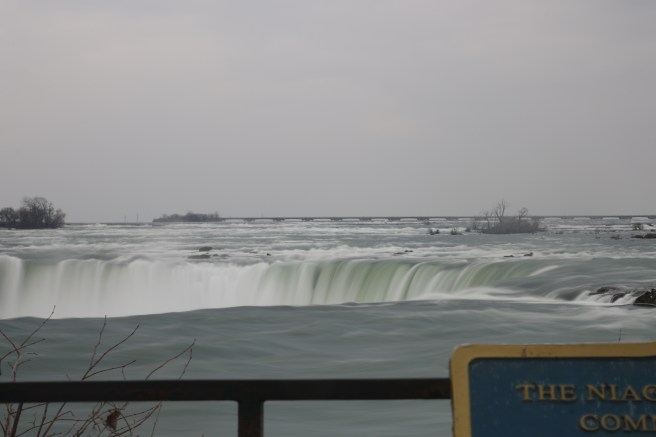
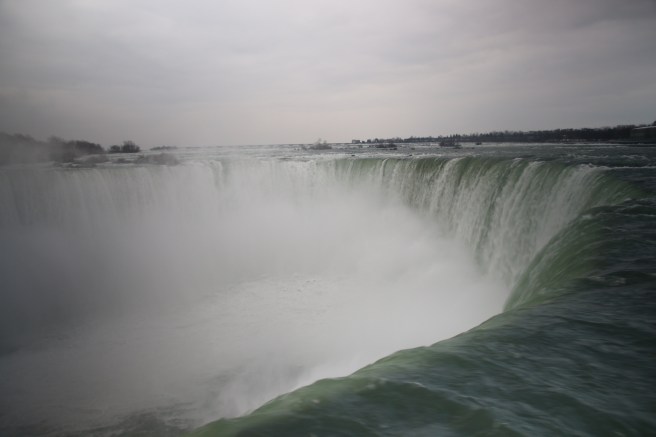
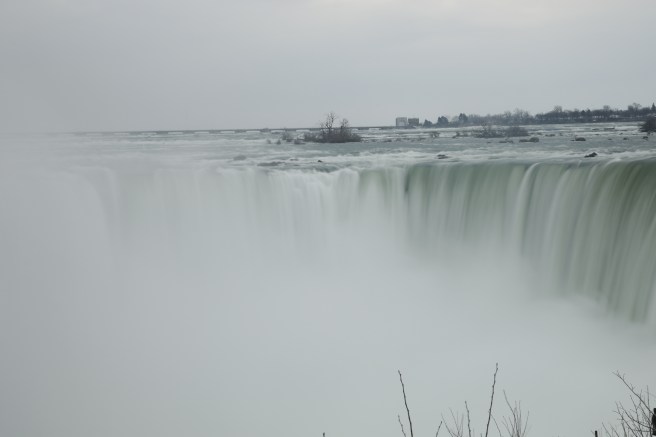
I took off and managed a series of photos over the next two hours, at different speeds and aperture settings. The first few were from the river at the back of the Horseshoe Falls, then from the side, and finally from the front. I also took a few of the American Falls and the bridge next to it. The mist covering the centre of the Niagara Falls themselves was marginally disappointing as it would have been nice to see the whole waterfall without it, but that’s what waterfalls do. It was great to visit the Falls after seeing so much about them as a kid. I even took a half dozen selfies (mostly in the rain). Also, what looks like a long narrow bridge right to the back of the river above the Falls, is not a bridge. It is actually the “control tower” which moves up and down, pushing water into the 13 tunnels.

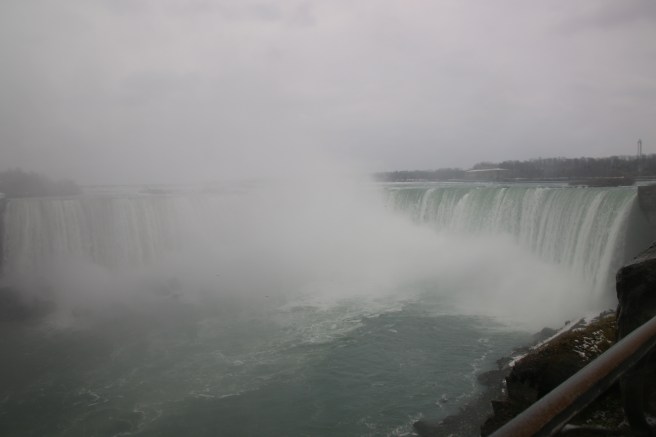
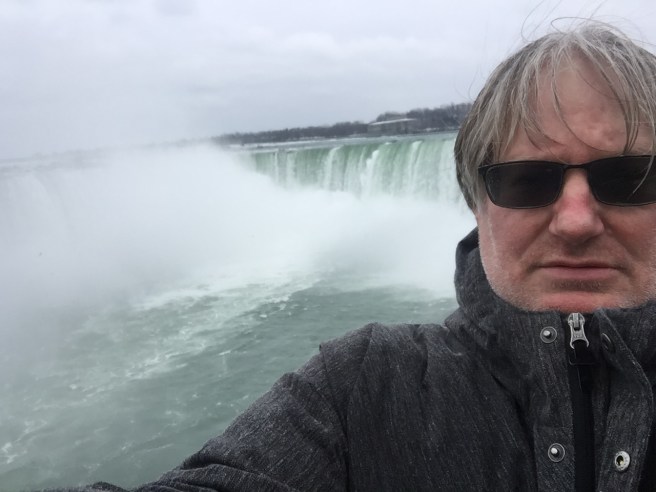
On the way from the Niagara Falls, we stopped off at a corner of the river below the Falls, and looked across at Lewiston, New York State. Alex gave us the story of when, during the 1812 war, the Americans over on the New York State side (they had 4500 troops) launched an attack on the Canadians (they had 200 troops). The Americans were confident that they would overpower the Canadians due to their significant mismatch in numbers. However, they only had 13 rowboats. And someone forgot to check the water speed. So when they put their rowboats into the water, the boats and troops sped quickly down to the water given the water pressure. So the Canadians won because the Americans had lost their boats and couldn’t get across the water. We then hopped back into the coach and headed to Niagara on the Lake.
We then reached Niagara on the Lake. This is a quaint little village on Lake Ontario that tourists visit for icecream, chocolate and festivals (I bought the first two). The properties in Niagara itself are worth around $200K, those in Niagara on the Lake are worth around $850K. The houses aren’t very old, they are built in the style to look like they were built decades ago with gables etc., rather than the straight-line generic style of houses presently built in other places.

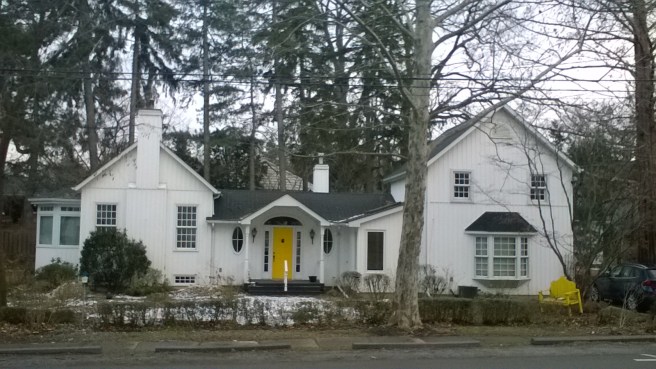
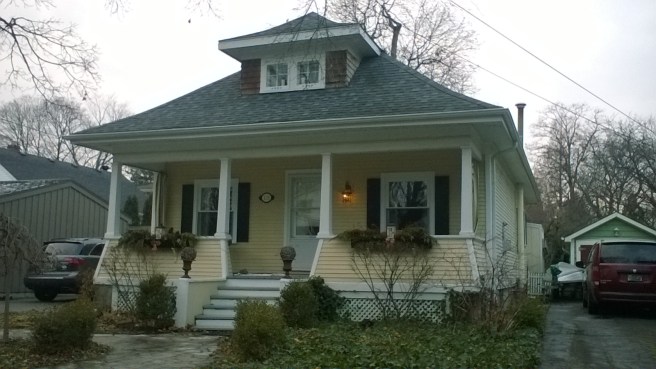
We had 40 minutes to wander through the village, I also headed down to the waterfront for 10 minutes to see Lake Ontario.
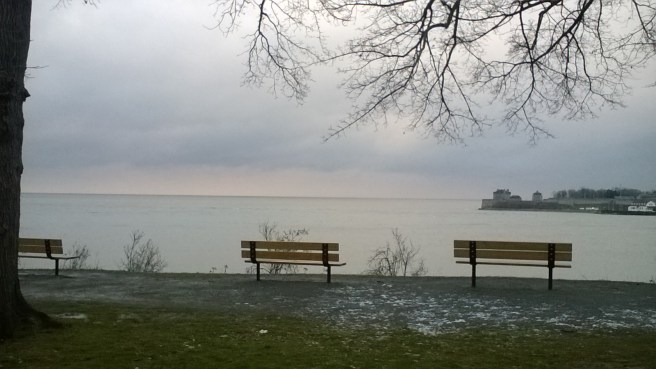
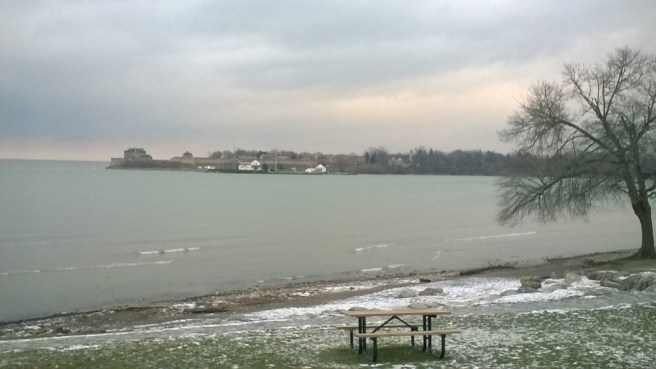
I then traipsed back to the coach, hopped on and we took the drive back to Toronto. I was dropped off a couple of streets from my hotel, and then got back there, unpacked and left all my wet gear out to dry overnight. I then jumped into bed.
 mattravoblog