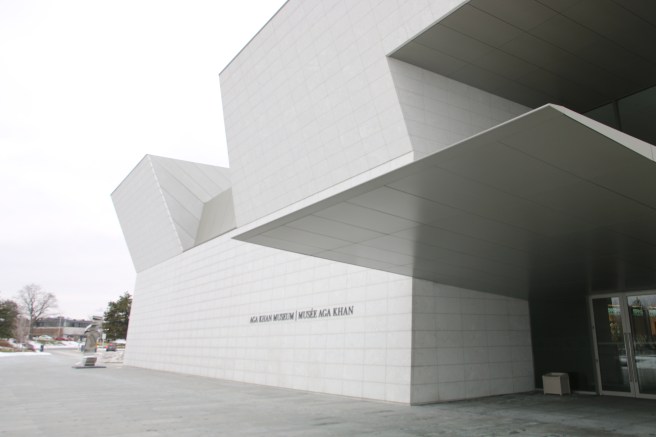
This morning I headed off to the Aga Khan Museum. It took one tram followed by a bus, and one hour, to get there.
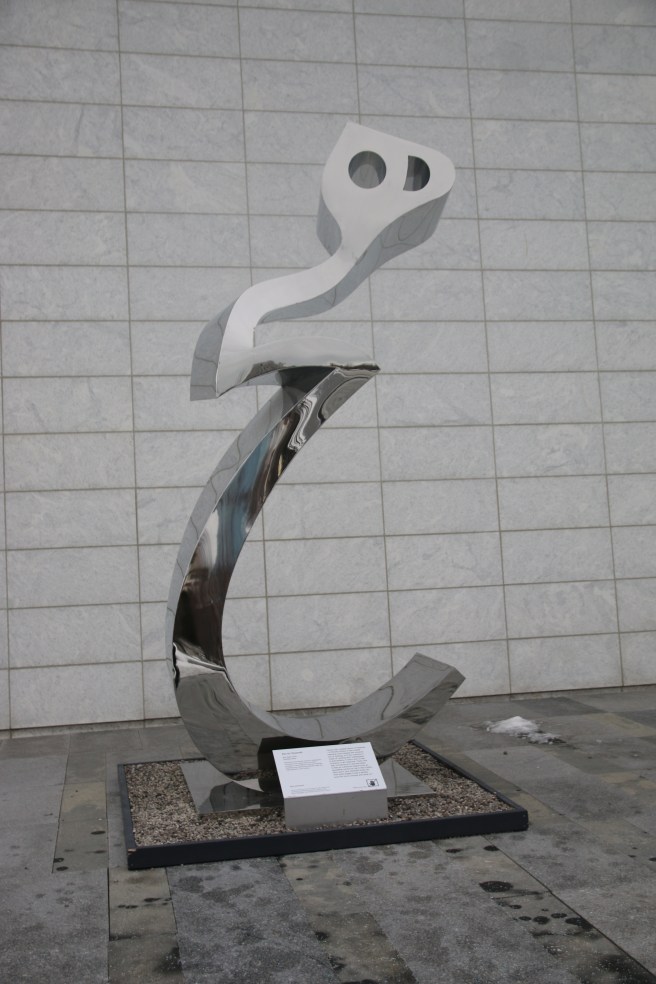
The sculpture outside is called “Big Heech” and was created in 2014 by Parviz Tanavoli. The artist states: “Heech has multiple layers of meaning – in Persian Sufism it has a great meaning: God created the universe out of nothing, so if the universe is made of nothing then nothingness is everywhere, in every part of the universe, in all creatures. That’s one way of looking at it, and the other is that as a physical shape it has an appealing volume to me; it has a head, eyes and a very beautiful body. So from both angles it was a perfect word for me to choose and work on”.
The museum is made up of three main exhibit spaces, as well as a shop, café, education centre, restaurant, patrons lounge, and auditorium. The exhibits at the museum display various artworks and artifacts from various periods based mainly around the middle east, and how they have changed over time.
The one on the first (ground) floor is the permanent exhibit. The two on the second floor are temporary exhibitions.
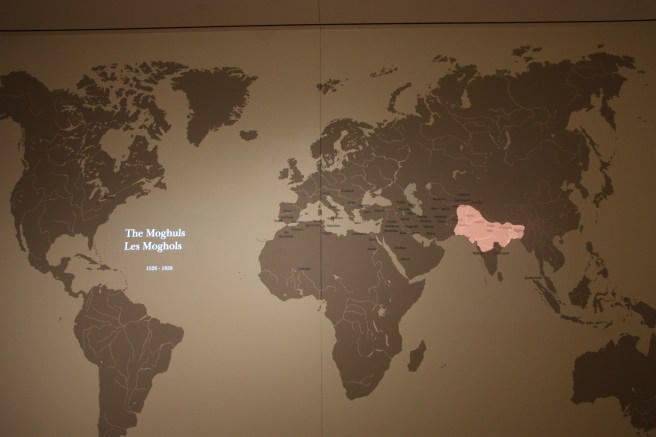
On one wall, the permanent exhibit shows a map of the world, with timed overlays of different periods over the centuries.
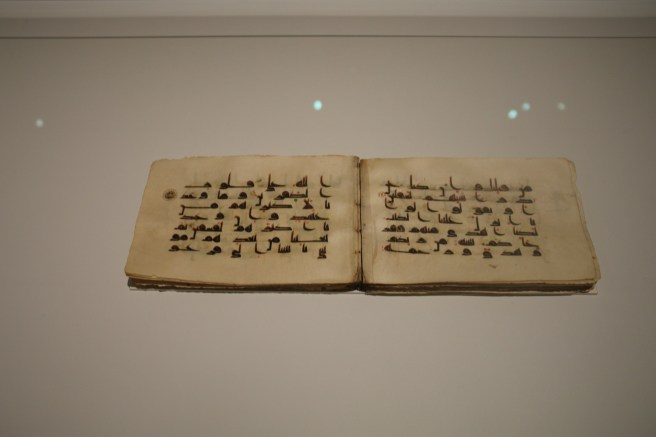
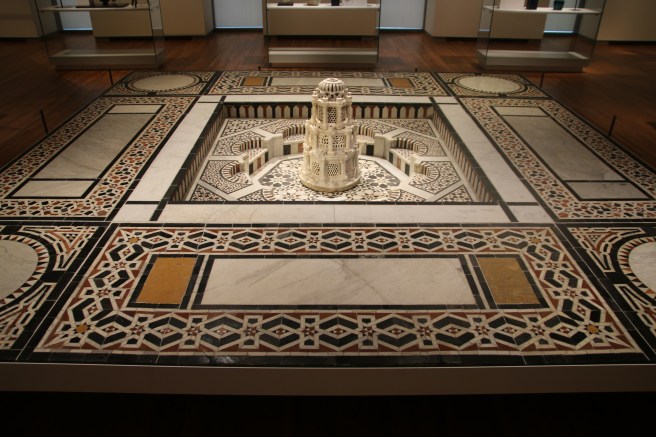
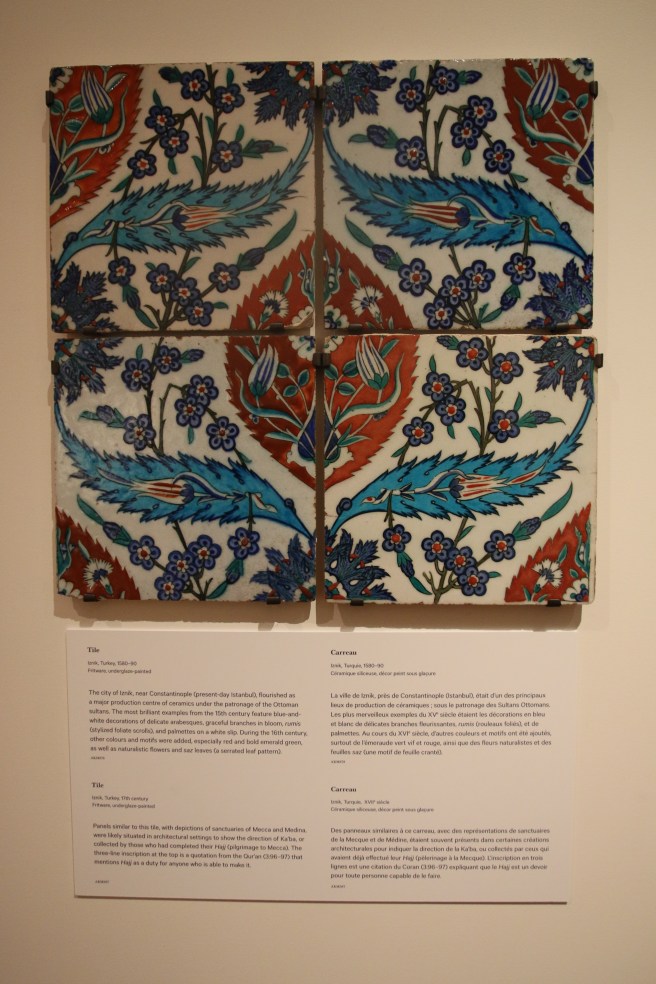
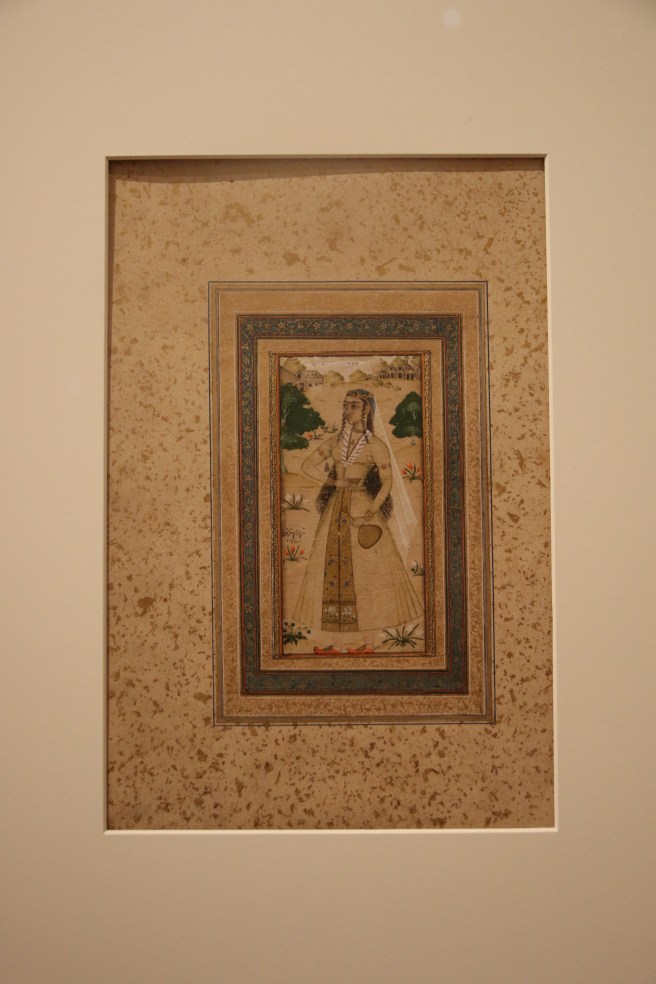
As I walked through there were various exhibits in glass cases or on the floor. The below photos show (a) a copy of the Qu’ran from 9th to 11th century, (b) a Fountain – marble and sandstone mosaic from Syria – 16th century and later (the fountain is original), (c) Tiles – from Iznik, Turkey 17th Century design, and (d) a painted drawing for a book – “Young woman in Indian dress” signed “Shaykh Abbasi” from Isfahan, Iran dated 1683.
There were also small storyboards for different countries and eras, discussing the various artistics / architecture, books, textiles, and so on occurring in those different ages, including the cross-pollination of different art styles etc. and how they travelled through different countries and cultures.
After finishing in that area, I put my camera away and headed to the two upstairs exhibits (no photography was allowed).
The first exhibit I went into was entitled “Syria – A Living History”. The display held 5000 years of artifacts. It talked about the Tale of the Deluge from 5000 years ago, told in the first Epic of Gilgamesh. It was this flood that Noah was added to later in the Qu’ran and the Bible.
The history of Syria talked about it first being Aram, the land of Aramaeans. And how it developed over time, being on the major trade routes (Incense Road, Persian Royal Road, and the Silk Road), which then led to the development of different cultures, as well as the different battles that occurred over time.
The displays included various buildings shown as they would have looked over time, as well as a tablet display (which was picked up and walked around in a set space, viewing what the room in Aleppo looked like with different rugs and paintings of stories from the Old and New Testaments. There were many different artefacts on display. The main lessons from the displays were around the intercultural impact of art, bringing different styles through trading and the changing peoples and multiple religions in different countries over different time periods.
The second display related to the Alhambra (The Red Castle) palace and fortress in Granada, Spain. The initial portion was originally constructed in the 9th Century as a small fortress, and was then renovated and expanded in the 13th Century in the Moorish architecture style. It then has a long history of being utilised by different rulers, who added to the site over time, until today when it is a major tourist attraction. There is a scale model of the site and the buildings, and would be one of the most popular tourist attractions in Spain.
In 2010, Alvaro Siza and Juan Domingo Santos were successful in an international competition to design a “New Gate of Alhambra”. Siza had visited Alhambra in 2009 and created various journal entries around his imagining of the design. The first part of the display gave the history from 300AD to the present, with the second half being around Siza’s ideas, musings and designs, with design maps, sketches, 3D models etc. It was quite fascinating to see design take shape from the very first ideas, through to scale models of the finished product, and a few books Siza has written.
After this, I headed back to the bus stop to take my reverse journey back to the hotel. The Aga Khan Museum is really worth the time to visit for anybody interested in history and art or archaeology.
After a short rest I rugged up, grabbed my camera kit and headed off to the ferry terminal. After waiting a while, I caught a ferry across the river to Wards’ Island. Toronto has a few islands which together are called the Toronto Island Park, with ferries going to three of them. Only one, the one to Wards’ Island, is open in winter. It’s part of their National Park but people live on it.
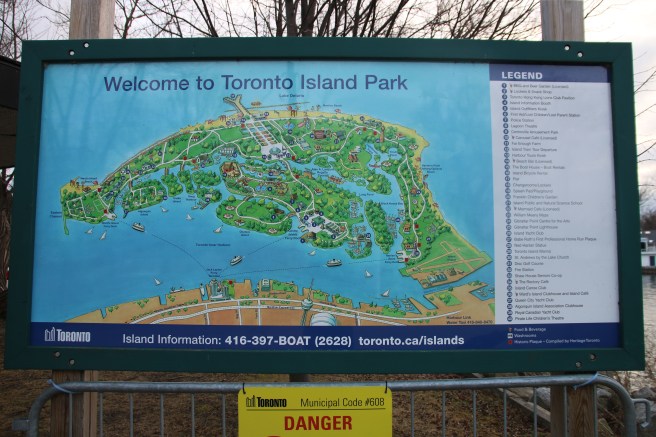
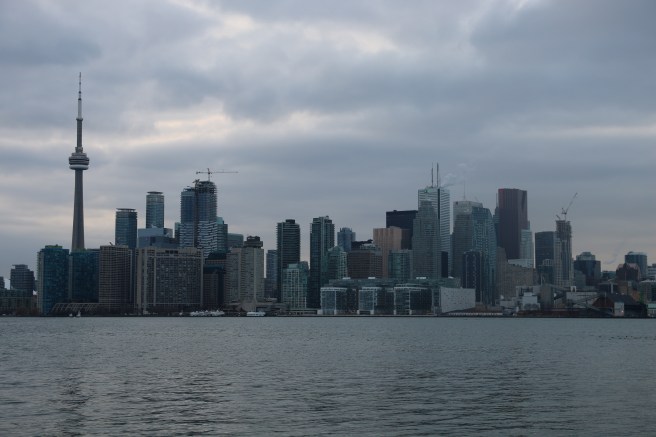
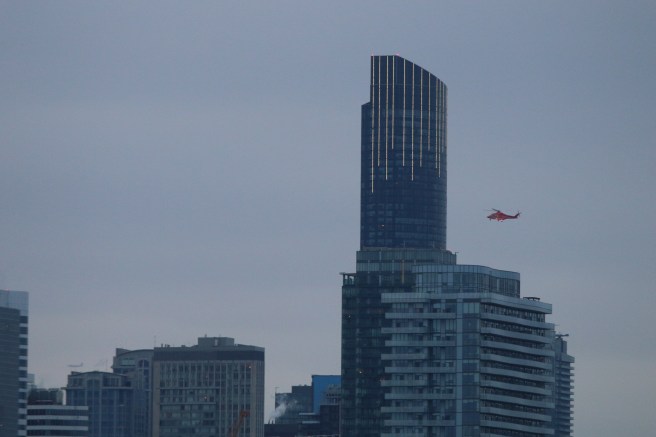
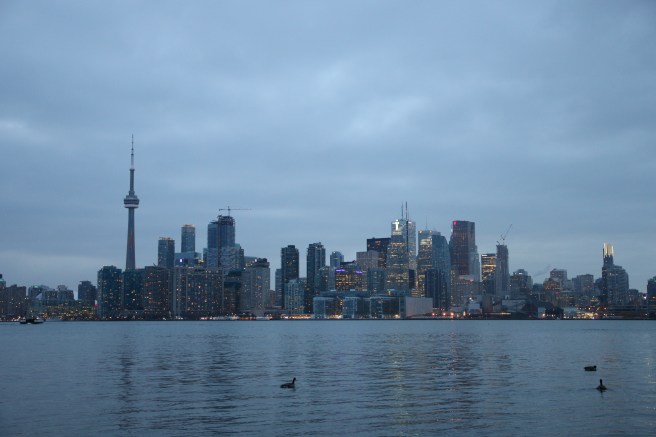
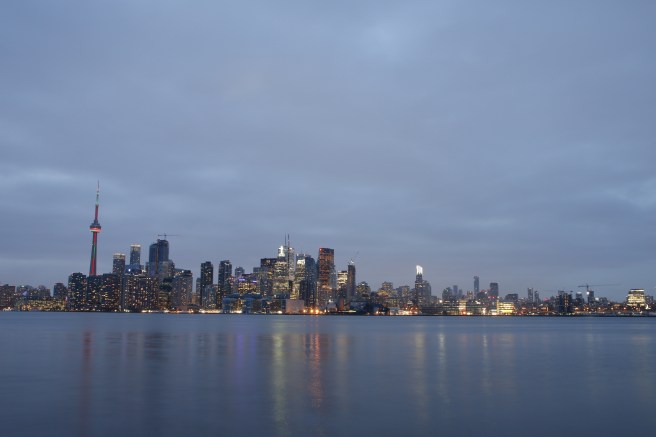
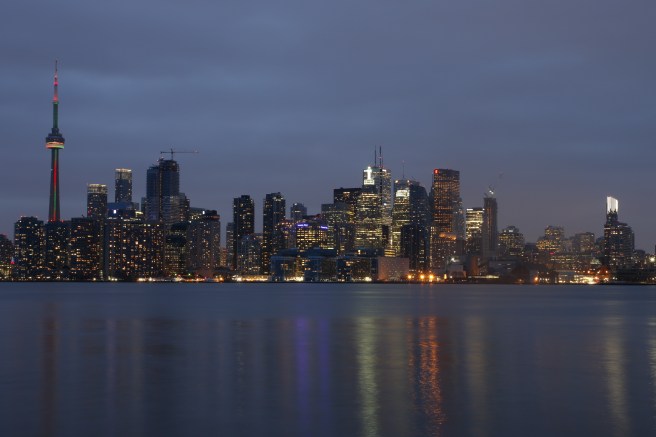
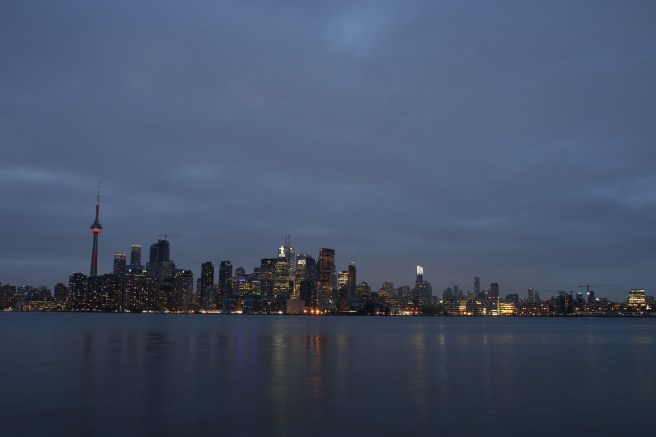
The islands have beaches, a massive fun park (closed in winter along with most forms of tourism entertainment) and bridges interlinking the various islands. The reason I took the ferry across was to take some photos of Toronto City as the sun went down. I gathered a range of shots with different times and apertures as well as some to stitch together later (hopefully). I really enjoyed watching the sun go down and the lights as they came on. There were also a few planes getting into some of the shots due to the Toronto airport being on the Eastern side of the Islands, to my left as I looked back – as well as a helicopter coming into land in the city. Herewith a few of my efforts.

By 5.40pm I had all the shots I wanted so I wandered back and caught the 6pm return ferry. On the walk back to my hotel, I wandered past the ice rink and tried to take some photos, but there were so many people on the ice that there was less movement in the shots than just large blobs of dark colours.
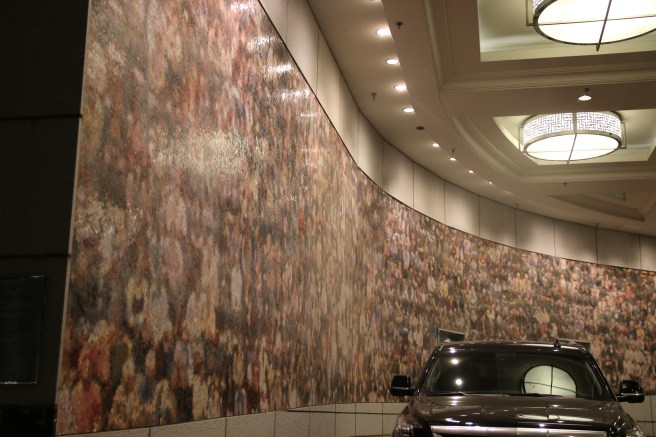
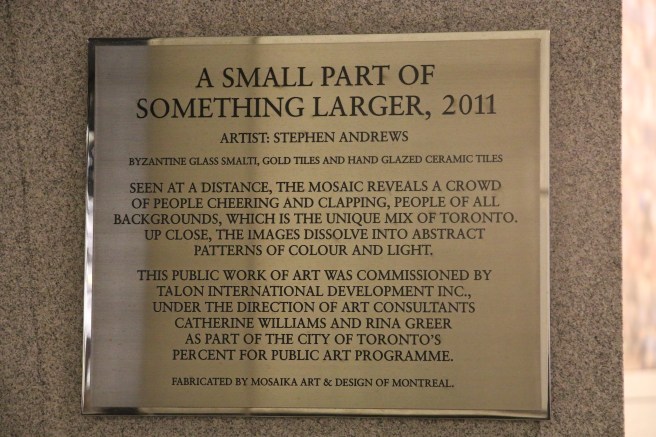
So I headed back to Trump International Hotel and took a photo of the mosaic I mentioned a few days ago, as well as the plaque from the artist. It’s a really well put together mosaic.
After that, I headed back to my hotel.
 mattravoblog