Today was a pretty busy day.
I headed to the Dundas East mall to obtain my hop on hop off city sightseeing bus ticket and then hopped onto the bus. Today I planned to visit an old castle / mansion, museum and an art gallery, and with the distances, the hop on hop off bus seemed the best way to get around.
The first stop was Casa Loma. There was quite a queue to get inside. As I waited outside in the cold and wind, I thought that this was surprising for an old castle. However when I got inside I saw they had lots of Christmas events and displays for children, so I could see why parents would take their kids.
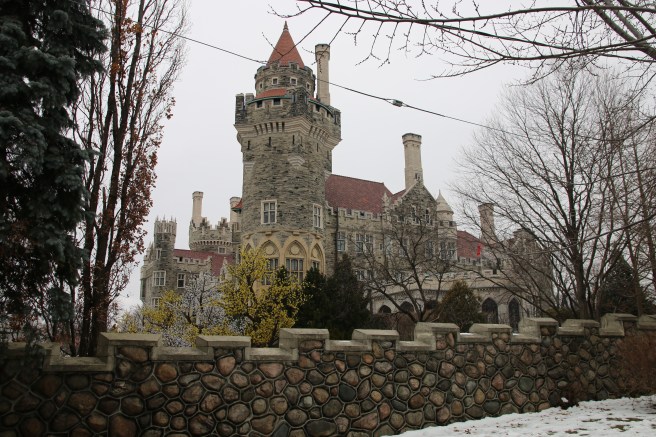
Casa Loma (meaning Hill House – and known in Toronto as “the Castle on the Hill”) was built in the period 1911-14 in what it calls a “Gothic Revival” style. It sits around 150 metres above sea level. The main and second floor serve as a museum to the property itself, and its uses over time; with the third (top) floor now the museum of The Queen’s Own Rifles of Canada. Note: In Canada, the ground floor is called the first or main floor, and the one above it is the second floor, unlike back home where the first floor is the one above the ground floor. The builder of the property, financier Sir Henry Pellatt (he was knighted in 1905), had been a rifleman in the Queens Own Rifles, joining in 1876 at the age of 17 and rising to the Commanding Officer role. During the owners time in the property, it was used for many grand occasions for the city.
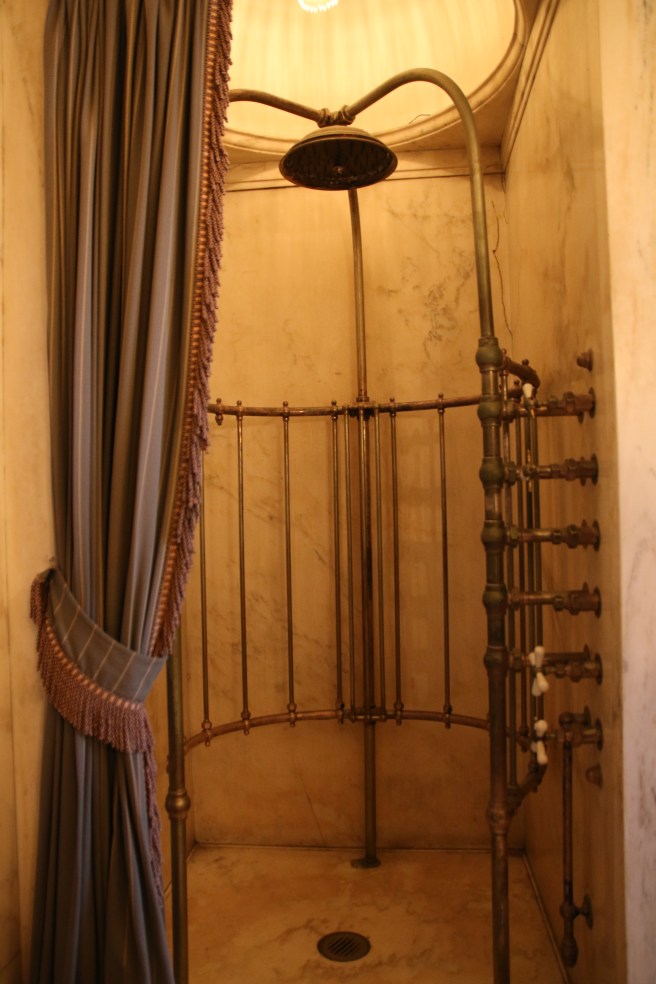
The owner had a huge sale of property after the First World War due to the increased rates and taxes being charged, and the rest of the cost of living at that time. This allowed him to remain in the property for a little under 10 years before he had to move out. It then went through various hands and for various roles, including for research during World War 2. It underwent a significant decade and a half renovation until 2012 and, as had occurred on and off since the late 1920s, became the tourist destination that it now remains. I’ve included some photos below, including of the newspaper article regarding the sale, and a picture of the male owner’s shower (he and his wife had separate bedrooms, bathrooms and offices). The shower cubicle had six separate taps for the different faucets.
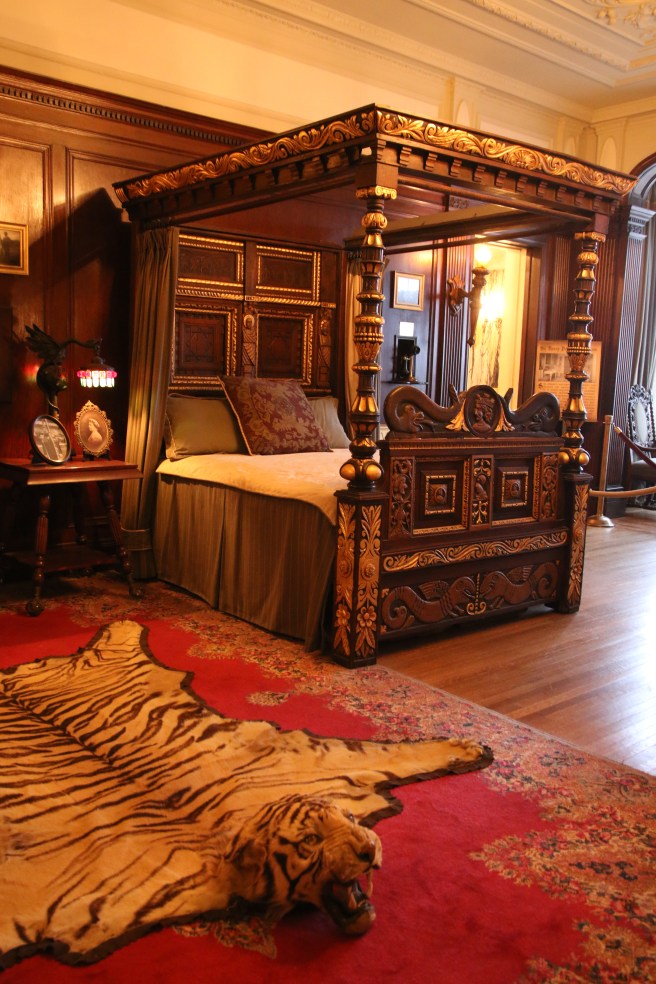
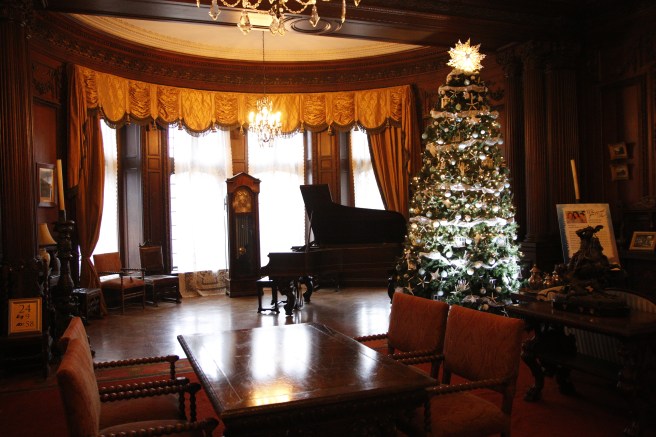
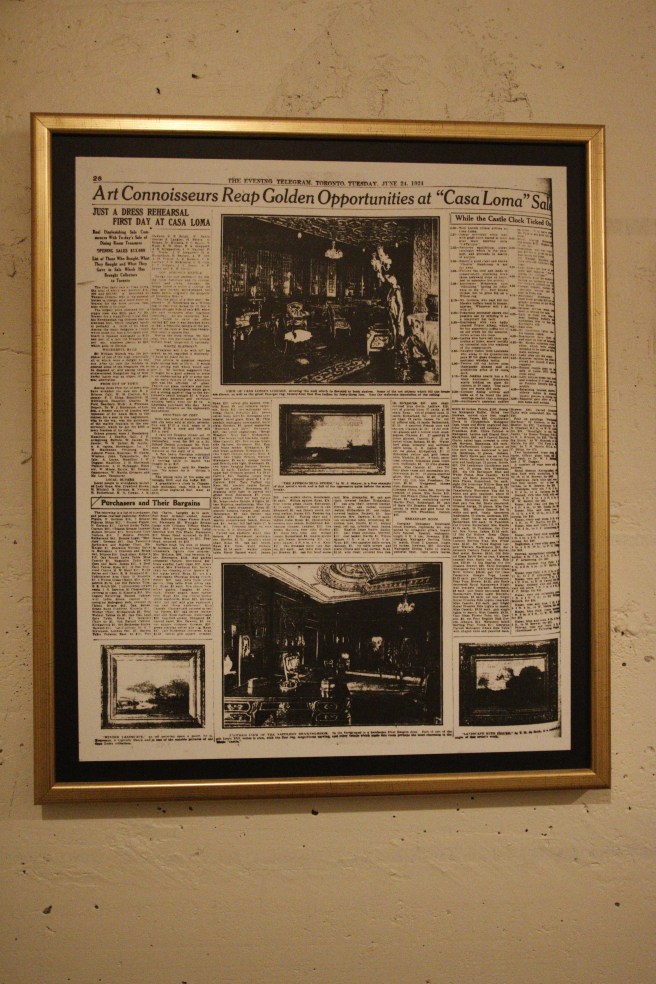
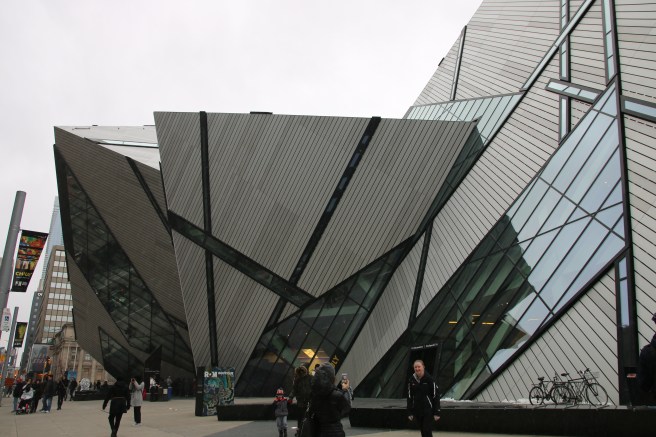
After viewing the property throughout and heading up the narrow stairs to the spires, I headed back to the bus stop to await the next hop on hop off bus. I alighted at the Royal Ontario Museum (known as ROM). It was obvious that I had chosen a day when most of Toronto wanted to head out and see the sights, because the queue here was quite long. It took about 25 minutes to get my ticket. Herewith the entrance to the ROM.
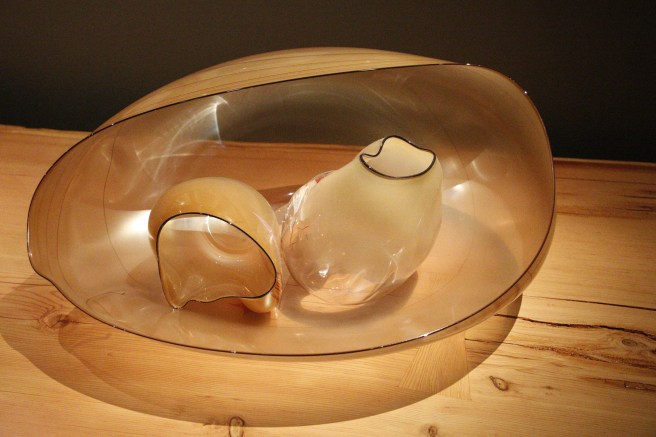
The number one exhibition at the museum was the Chihuly display. Dale Chihuly is an American glassblower and sculptor. The exhibition explores the life, work and global impact of Mr Chihuly. In the late 1970s he experienced first a car accident which left him blind in one eye, and then later a bodysurfing accident which left him unable to hold a glass blowing pipe. So he then became more of a producer / entrepreneur who was able to step back and design the sculptures and installations, whilst using others as glassblowers to make the various items. The colours and complexity of he and his team’s various works are particularly stunning to see first hand. Given half the population of Toronto was in the same room as me, and the other half was outside trying to get in, I sadly had no chance to use my tripod to take really good timed shots of the works. They were so much more full of life than I have been able to capture.
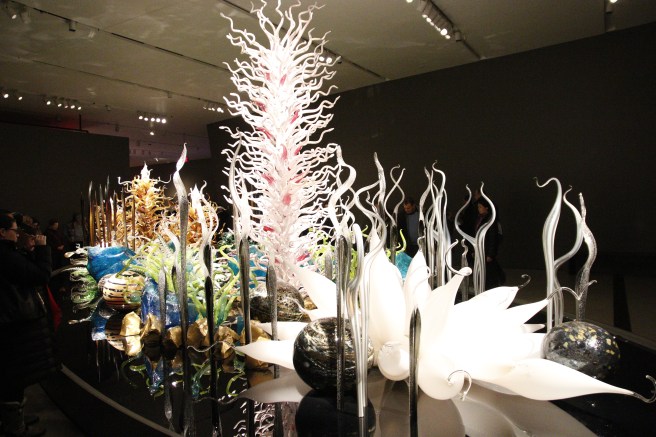
The first sculpture below is called Laguna Torcello, dated 2012. Mr Chihuly wrote that whilst his works look like they come from nature, he doesn’t see specific images and set out to make them.
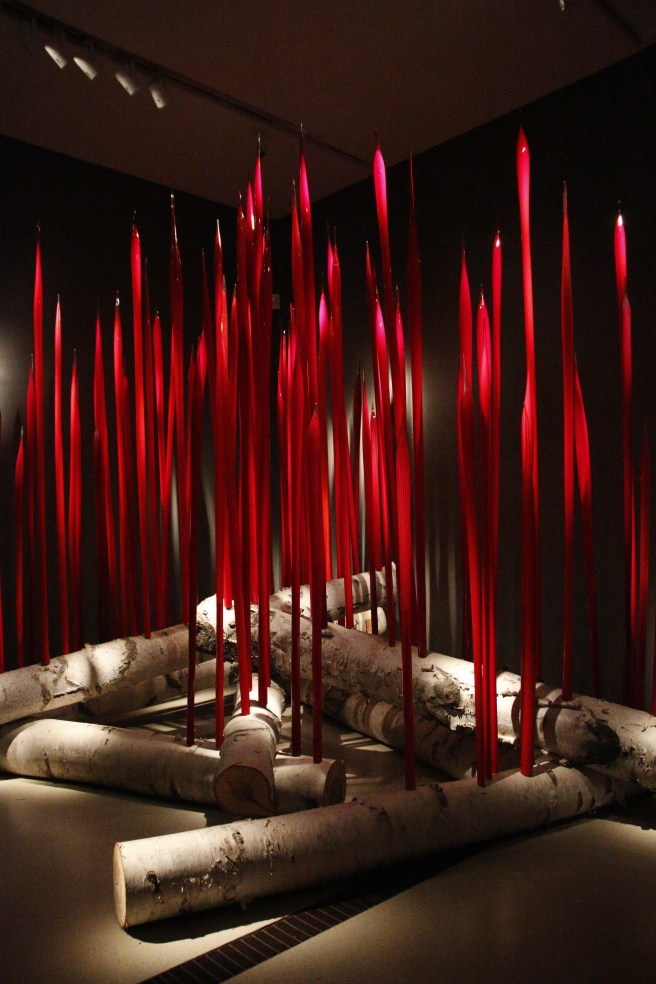
I’ve tried different camera settings to get close to the best shots without people in front and trying to reflect close to the colour of the glass items, which means the surrounds may be darker or lighter than it really was. For example, of the first of these next series (Sapphire Neon Tumbleweeds, 2016), if the surrounds were any lighter, then the light tubes would turn out white. However I think these settle reasonably well.
Mr Chihuly’s Seattle Boathouse studio holds a range of baskets and blankets made by Northwest Native Americans. The baskets inspired a display of glass baskets made as part of his Northwest Room, 2012 installation. The last photo is one of those baskets.

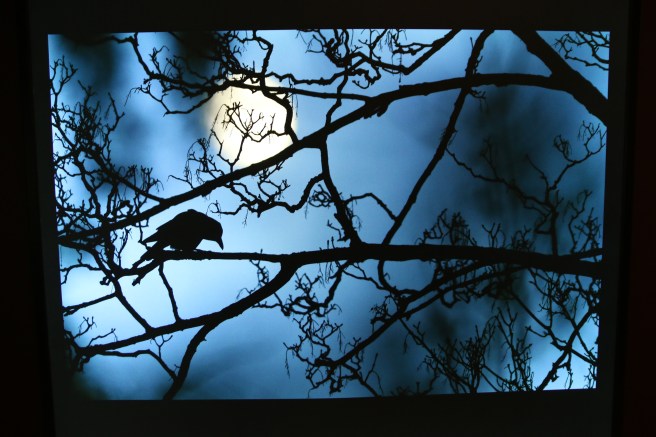
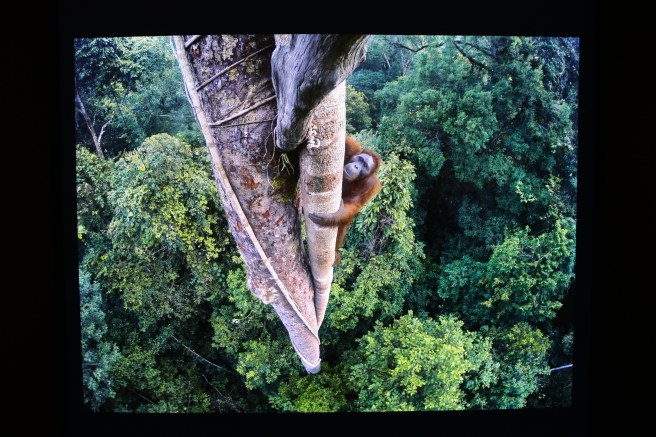
I left that exhibition to head into the “Wildlife Photographer of the Year” exhibit. The competition consists of a number of categories, and different age groups. There is also an overall winner of the Adult and Junior categories. There are some magnificent photographs, especially from the juniors. Some were inspired by birds, some by bears, or lambs etc. The stories that went with the photos seem to as much inspire the choice of winner as the photographs themselves. Many spent quite some time at different sites, waiting for the right one to come along, and it did.
Below are two of my favourites. The first was taken by leaving a camera (in one spot in a national park where rangers dump carcasses) for just under six months, and setting the camera to take a photo around once every minute. The second was taken by a junior who was walking through the Swiss Alps. I like the playfulness. The final two are the overall winners, the first by a junior (16 year old Gideon Knight in the UK) taken at a park near his home, and the second by a biologist and photojournalist (Tim Laman in Borneo) working with his wife on the Gunung Palung Orang-utan Project.


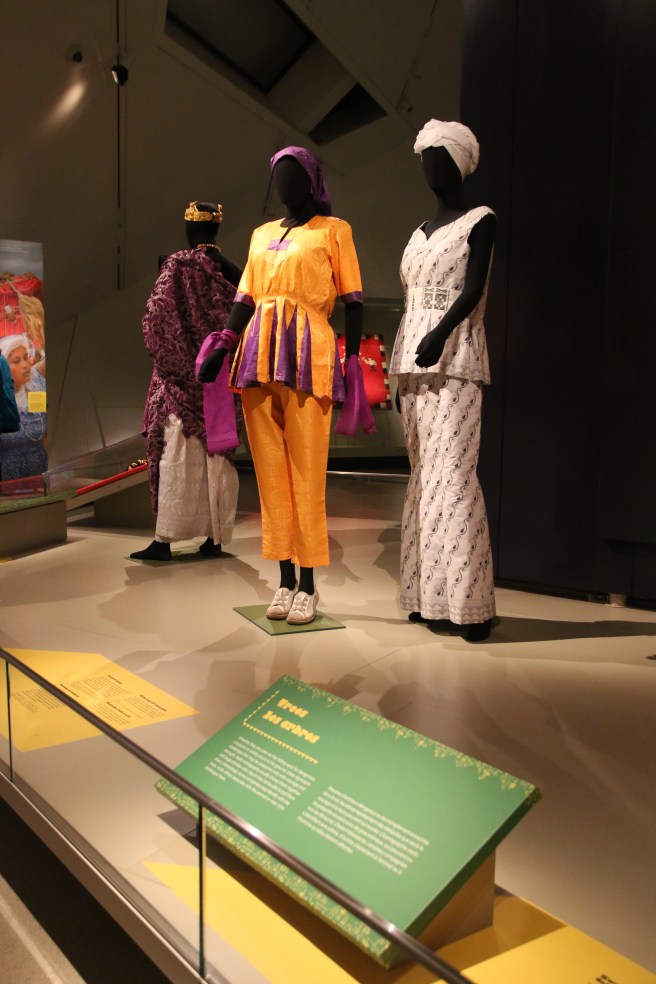
After that, I went for a browse in the “Art, Honour and Ridicule” display of the ASAFO Flags of Southern Ghana. ASAFO flags are visual representations of military organisations used in Fante communities known as “Asafo”. The Fante are one of the many culturally and linguistically related groups known as Akan. The Fante live along the coast in Central and Western Ghana. Each Asafo – company – has their own flag. The primary roles of the Asafo were to exert power, exercise political influence and maintain conduct within their community.
The flags were interesting, however I was more interested in their dress, and how they display the various parts of their Asafo in what they wear. According to the display, Asafo members manifest their sense of pride and company spirit through their dress. Each member’s choice of dress reflects and interesting mixture of uniformity and individuality. Whilst companies and subgroups wear specific colours and sometimes ensembles made of identical textile patterns, a great deal of variation is accepted in what people wear. This reflects the sense of multiplicity and self-fashioned belonging as well as keeping with the grassroots character of Asafo associations.

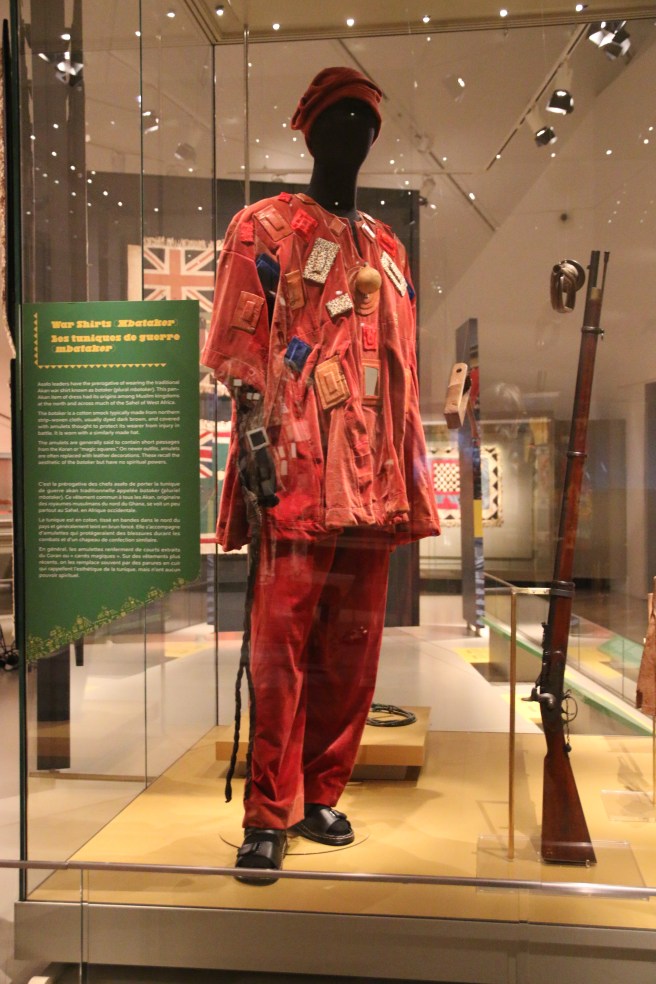
After this display, I left the ROM and headed back to the bus stop for the next bus. I hopped on and then back off again a couple of kilometres further down, at the Art Gallery of Ontario (the AGO).
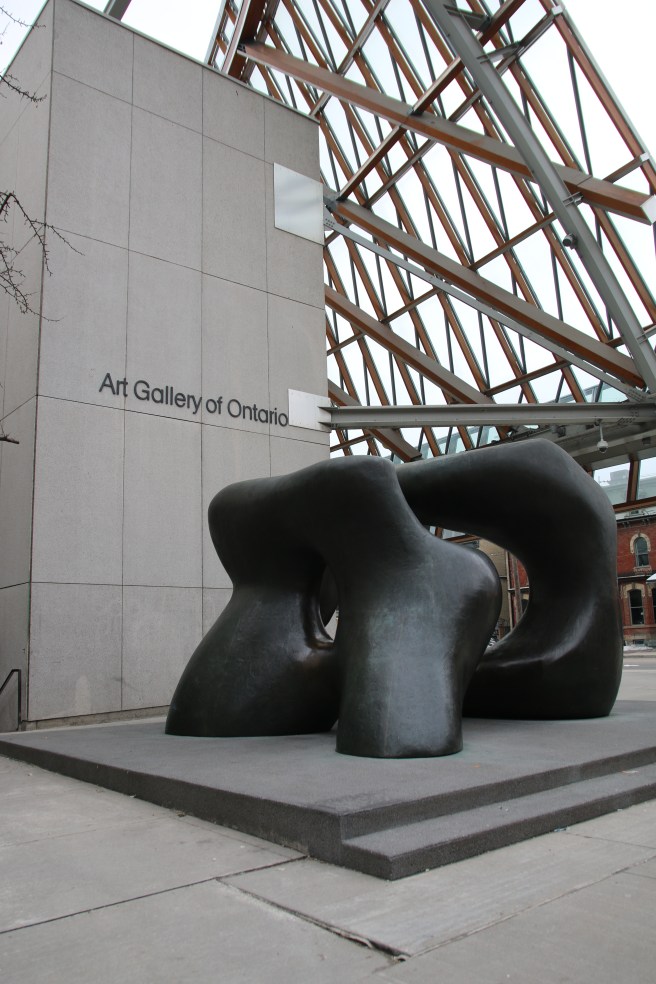
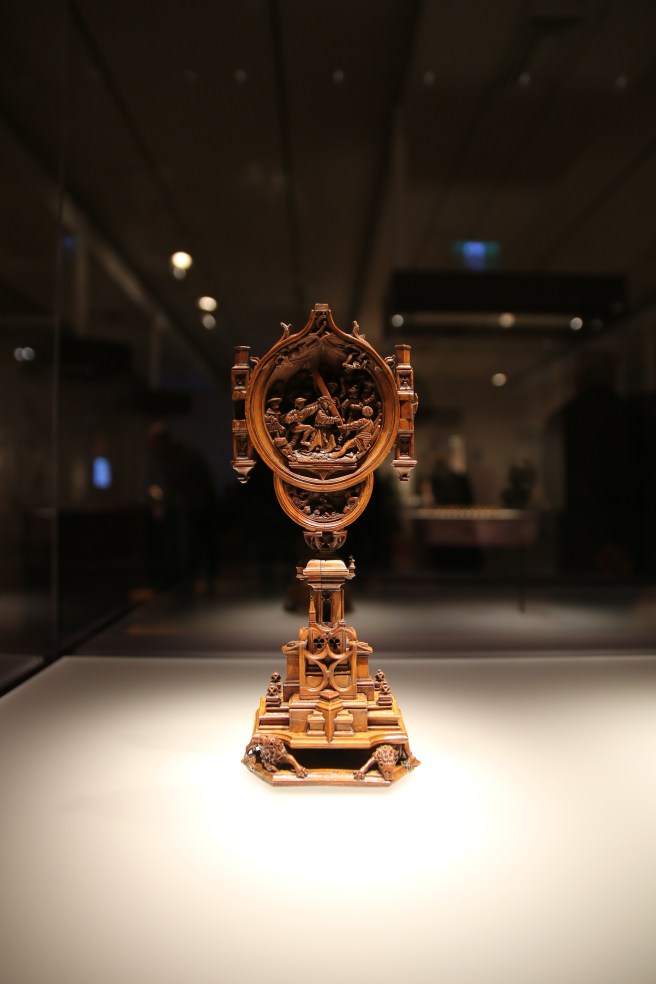
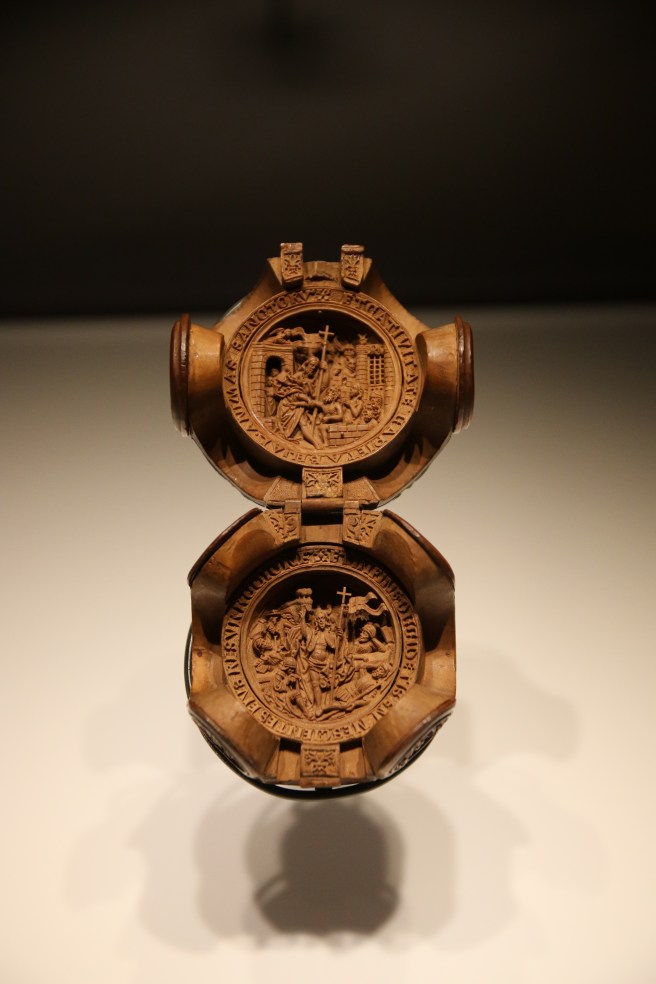
I first went into the Small Wonders exhibit. This was a display of Gothics Boxwood Miniatures. It was fascinating to see the small six of these miniatures carved from blocks of wood with such fantastic small details. One of the videos of a current woodcarver talking about the work that goes into this indicates that it would take him upward of two years to make one of these. Getting the wooden box from two blanks to be carved into the circular shape is reasonably easy with a lathe, but to do the fine work would be time consuming, if he could work out even how to do it. These items were made in the 1500s and 1600s. Here are a couple of examples, followed by a photograph of a set of workman’s tools from the 1600s. I can only imagine trying to use those tools to come out with these miniatures.
The first miniature below is about 10 centimetres tall, whilst the second is of two round halves, each around 3 centimetres in diameter.

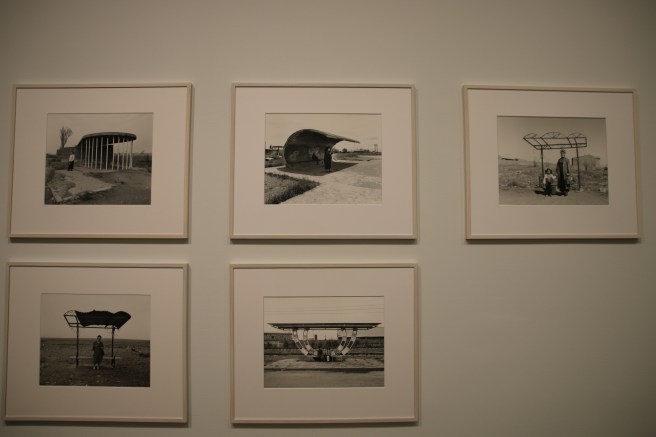
After that, I headed into the AIMIA-AGO Photography Prize exhibit. The set up is four spaces, each with photos and backstories of the four finalists, with the public to vote on the winner. Herewith a few photos (black and white) from the winner, Ursula Schulz-Dornburg, with a theme of the built environment and its place in society.
From that exhibit I headed into one called “Francis Alys: A Story of Negotiation”. Mr Alys is a Belgian artist who has lived in Mexico for the past 30 years. According to the display “His poetic work engages with urgent social issues through painting, drawing, sculpture, performance, video and photography. A Story of Negotiation presents three of Aly’s large-scale projects”.
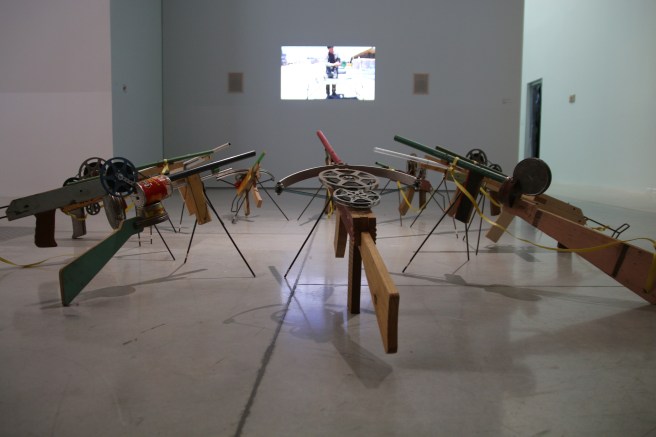
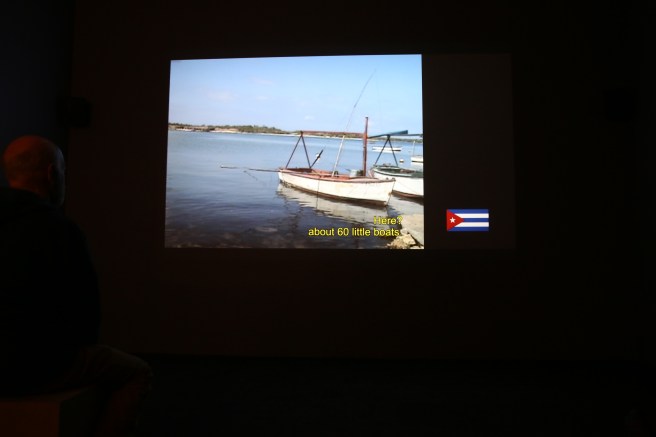
The first photo below is from the display Reel-Unreel, where in 2013 he was embedded as a war artist in Afghanistan. The second is a screen shot of a video called “The Bridge” which he filmed in 2006 that explores border politics between Havana, Cuba and Key West, Florida. In this video, he has arranged for a “bridge” to be built from Havana going North and Key West going South to bridge the gap. He did not tell each side what he was doing at the other side, and on the day of the “installation” he had around 30 boats from Key West and around 100 boats from Cuba. They all lined up tied by rope to each other, and then departed after a period of time. You could certainly tell which were Cuba’s boats (mainly small wooden row boats with a few inboards) and the USA boats (medium size fiberglass mainly.
After viewing that exhibit, I had to wait around for 1 hour to access the final exhibit “Mystical Landscapes”. Due to the popularity, I had been given a 5pm timeslot, with the rest of the museum closing at that time. So I headed to the AGO bar for a beer and some bar snacks, and then headed back at 5pm. There was no photography allowed in this exhibition.
There was a very large number of paintings with landscapes at night and during the day. Some of the paintings were by Vincent Van Gogh, Paul Gaugin, Claude Monet, Edvard Munch, and some of the others I have not heard much of but liked were by Paul Nash, Felix Vallotton, and Emily Carr. There were over 100 paintings and paper works, and they gave a fascinating display of the different feelings and mystique of different landscapes at varying times of the day and night, and the impact that these had on artist and art professionals. We had the option of an audio player to listen into, and around a quarter of the people had them (as did I), however with the number of viewers I generally didn’t get the time to listen to the audio before being pushed between paintings. I did however take the time to look at some of the paintings in depth.
My favourites on display were Van Gogh’s “Starry Night over the Rhone at Arles”, Edvard Munch’s “The Sun”, Emily Carr’s “Sea and Sky”. They showed a different range of colours and brushstrokes but were to me quite peaceful.
After leaving the AGO, I headed back to my hotel.
 mattravoblog