Well I didn’t get to do too much today. It’s my last day in Halifax, so just mopping up before I head off to Montreal for a week tomorrow.
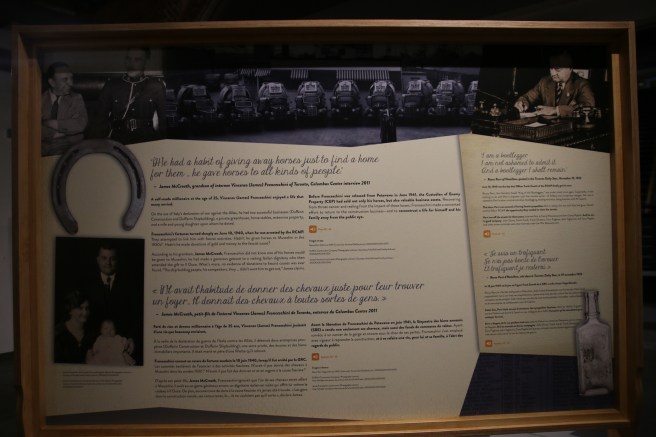
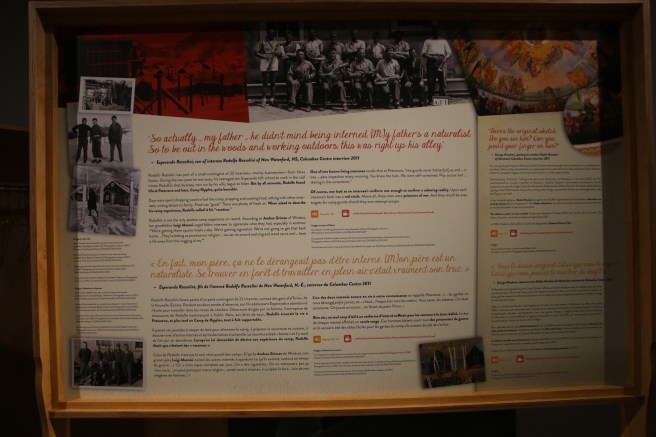
After breakfast, I chilled out for a couple of hours reading in my room, and then I headed back to the Museum of Immigration. I went into the short term exhibit on the impact that the decision by Benito Mussolini to enter World War II on the side of Germany had on the lives of Italian Canadians. Various members of the public, including business partners, some clergy, neighbours, colleagues etc. reported on others to the RCMP (Royal Canadian Mounted Police), causing a range of people to be incarcerated whilst investigations took place. Herewith a small number of story board photos. There were also many recorded stories that I got to hear. Listening to the various stories was quite fascinating.


dscovered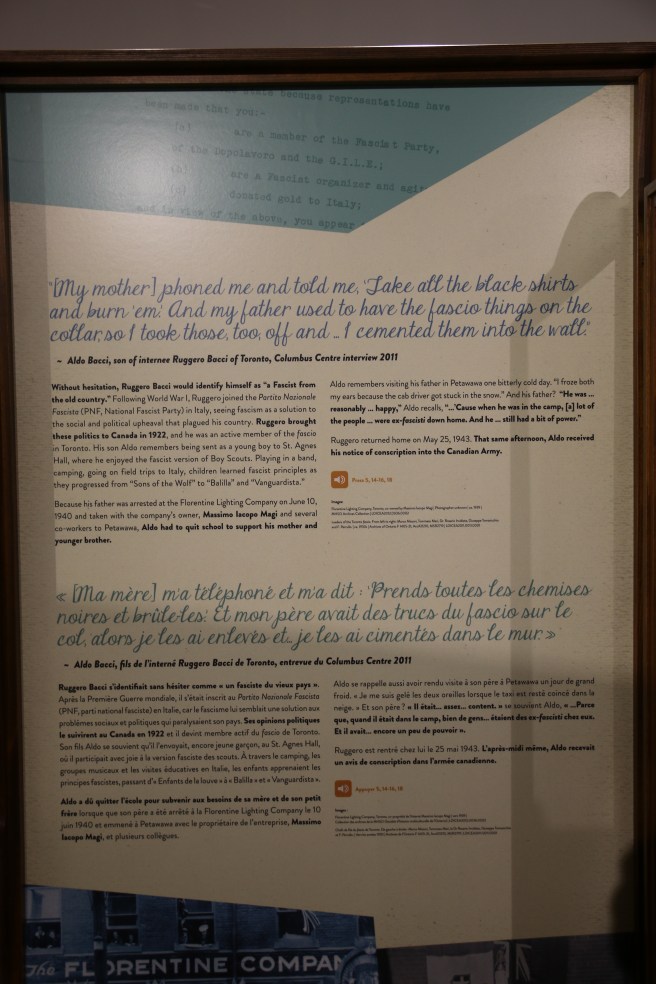
I then headed over to the overall Canadian Immigration gallery. This told of the various stages /times in detail of the time from the mid 1500s where Canada started to be discovered by the non-indigenous peoples, and the various periods from then to the present time that immigration impacted that Canadian people. The stories were generally more about the migration events and settling in of the new arrivals, rather than the economic and social benefits of the migration – although there was some of this near the end.
There was also a large screen demonstrating the number of migrants through the whole period to date (it shows a map of the world and a line from those countries where the migrants came each year. A thin line for a (relatively) few migrants, and a thick line for many. Herewith a shot of 1990 (years being on the bottom of the screen, numbers to the right.
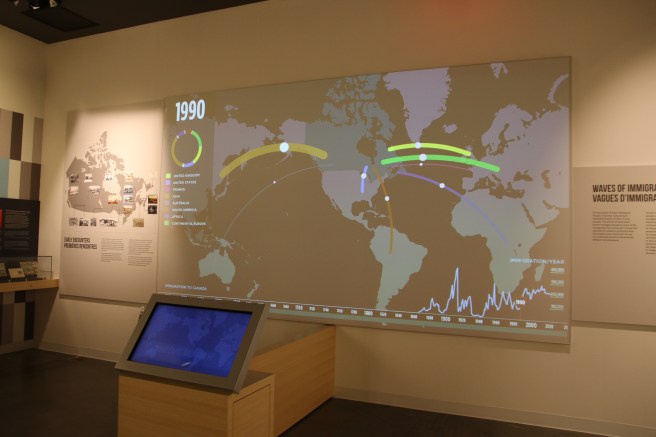
It was interesting to learn that the highest migration numbers came from the period 1896 to 1914, when the then Prime Minister, Sir Wilfred Laurier, implemented a push to settle the Western part of Canada as a high priority. This peaked at a migration level of 400,000 in 1913, with the reduction in free movement at the outbreak of WWII leading to a significant reduction in migration.
Migration to Canada has continued such that the annual intake is around 200,000 per year since 2000 or so. The drivers are many, including war, as well as the discrimination felt by people in other countries, including women especially where there are no education options, gay people especially in Islamic countries where it is crime, and so many areas of unrest in the world.
The stories recorded either verbally or in writing demonstrate the happiness of those migrants to be allowed to stay and contribute to their new country. Some of the issues they are confronted with include:
- How to achieve a sense of belonging
- When does a person stop feeling like a migrant
- What des it mean to be Canadian
So not much different from Australia and other countries with migration programs.
Whilst I was in the museum, I took a short citizenship test to see if I could pass to become a Canadian. I obviously had to make most of the answers up given I don’t know much about it. I ended up only getting 3 out of 8, I needed 6 out of 8 to pass. 😦 One thing I did learn was that Lacrosse was invented in Canada.
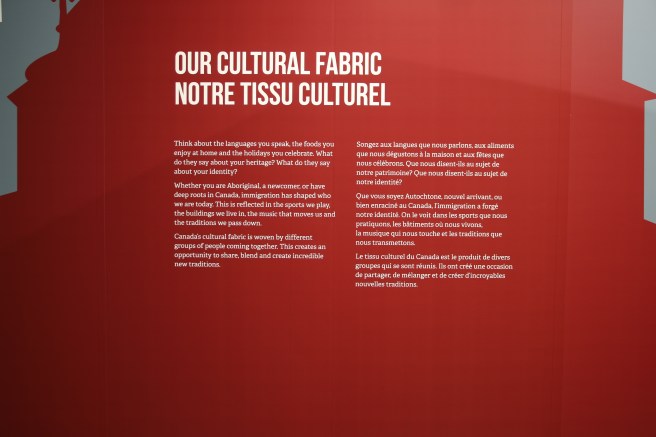
One final photo from inside the Museum is one of a number of message boards that made me think about contributions to society.
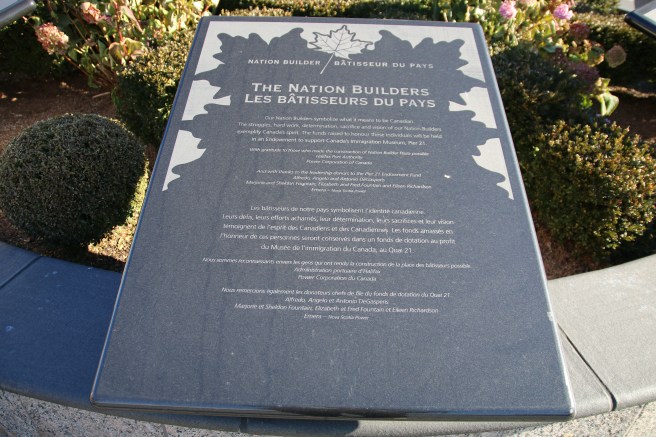
Outside the museum is a little garden contained within 7 or 8 granite message boards relating to Nation Building (which reminded me of Utopia, the ABC Comedy series, but these ones were successful). Here is the central message board and one with a short story.

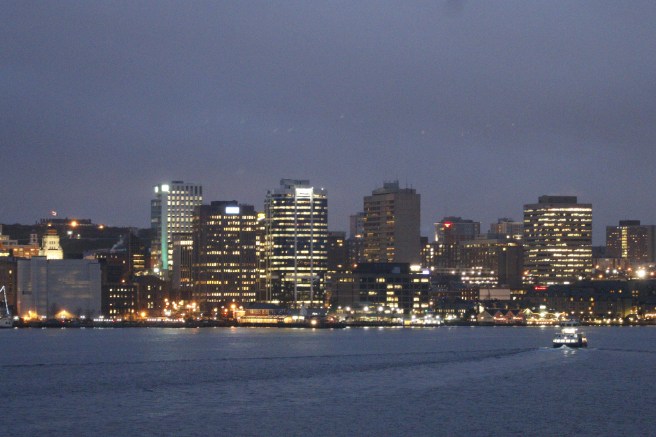
After leaving the museum, I took a stroll down the Boardwalk to the Ferry terminal, a couple of kilometres away. I took one of the ferries across the rived to take a few little photos of Halifax City as the sun was going down. However whilst I was in the museum, the weather (0 degrees C), turned from sunny to cloudy, and it had rained. Which it decided to do again when I arrived across the rived – and there were no undercover spots to take photos. The rain really more sprinkled, and it came and went, so I got a bunch of photos. I have a number to stitch together to make panoramas when I et home. Anyway, here are a couple of photos.
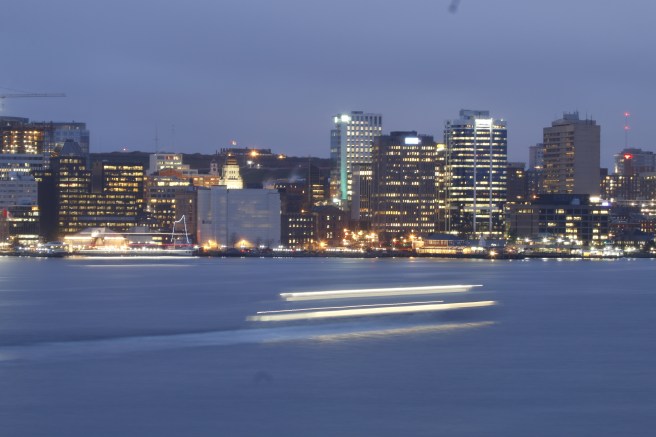
The second photo was opened for 10 seconds shutter speed, hence the parallel lines being a ferry in the middle of the water and one at the back left.
After that, I headed back to my hotel for dinner. I had checked my food and drink budget for the trip, and was $550 under budget as of this morning, so I could afford to blow out on a good meal. The various prosciuttos in the entrée (along with the duck pate) were delicious and complemented the Gewurztraminer. The salmon, from the West Coast, was delicious, as good as an Aussie salmon. Interestingly there is a ban on salmon fishing on the east coast, but not the west. The berry tart (with icecream made on the premises) for dessert was very tasty – the icecream did have a strong condensed milk flavour. The only negative thing from the meal was that the sherry tasted more sour than sweet. All in all a good evening, and then up to my room to pack.
I have had a couple of people ask me about all my eating and my weight / whether I am feeling okay – since I did spend a lot of time in Alaska tasting a lot of different American foods, Luckily I have 8 weeks to sample Canadian food. Anyway, don’t worry, I feel perfectly health and my weight is fine. I bought a set of digital scales from Walmart that I am just getting used to. I haven’t read the manual for them yet, but I’m pretty sure they are weighing about 3-4 kilograms on the heavy side of accurate. So the scales probably just need to be calibrated properly and I’ll do that in the next day or so.
 mattravoblog